Longevity Supplements: NMN, NAD+, Resveratrol, and Spermidine Explained
The longevity category is crowded with hype, but a few compounds keep showing up for a reason: NMN, other NAD+ boosters, resveratrol, and spermidine. These are the supplements most often discussed in connection with mitochondrial function, cellular repair, sirtuin signaling, and autophagy.

That sounds exciting, but it also creates confusion. Consumers hear phrases like “reverse aging” and “turn on longevity genes,” then assume the evidence is stronger than it really is. The better framing is this: these compounds are interesting because they target real aging-related pathways, but human outcomes data is still developing.
If you want a practical guide, here it is.
Why these supplements get so much attention
Aging is associated with several recurring biological patterns: declining NAD+ availability, weaker mitochondrial function, more oxidative stress, less efficient cellular cleanup, and accumulation of damage over time. Each of the compounds in this category maps onto one or more of those themes.
- NMN and NR aim to raise NAD+ availability
- Resveratrol is studied for sirtuin-related signaling and antioxidant effects
- Spermidine is mainly discussed in the context of autophagy and cellular renewal
The mechanism story is strong. The consumer mistake is assuming a strong mechanism automatically equals dramatic real-world anti-aging effects. Usually it does not.
NMN and NAD+ boosters

What NMN does
NMN, or nicotinamide mononucleotide, is a precursor your body can use to make NAD+, a coenzyme central to energy metabolism, DNA repair, and cellular stress responses. NAD+ levels tend to decline with age, which is why NAD+ support became a major longevity theme.
Human studies suggest NMN can raise NAD+-related biomarkers and may improve aspects of metabolic function, aerobic performance, or insulin sensitivity in some populations. A 2023 review of human clinical trials concluded that NMN appears reasonably safe and biologically active, while also emphasizing that larger and longer trials are still needed (PMC). A randomized controlled trial in healthy middle-aged adults also reported favorable effects on physical performance and safety markers (PubMed).
Should you choose NMN or NR?
NMN and NR are both NAD+ precursors. NR has a somewhat longer commercial history and a larger published human evidence base. NMN has become more popular in longevity circles and may appeal more to biohackers because of the surrounding narrative and newer data.
My practical take: either can be reasonable if the brand is reputable, the product is tested, and your expectations are realistic.
Resveratrol
Resveratrol became famous because of its association with sirtuins and the broader “French paradox” story. It is still one of the most recognizable longevity ingredients, but the honest take is that its reputation often runs ahead of the human evidence.
That does not mean it is useless. Resveratrol remains interesting for cardiovascular support, endothelial function, and antioxidant signaling, and it is often stacked with NAD+ boosters because the mechanistic pairing makes sense. A review discussing synergistic supplementation of NAD+-promoting compounds notes plausible interactions between NAD+ support and compounds such as resveratrol, although this is still a developing area rather than settled clinical practice (PMC).
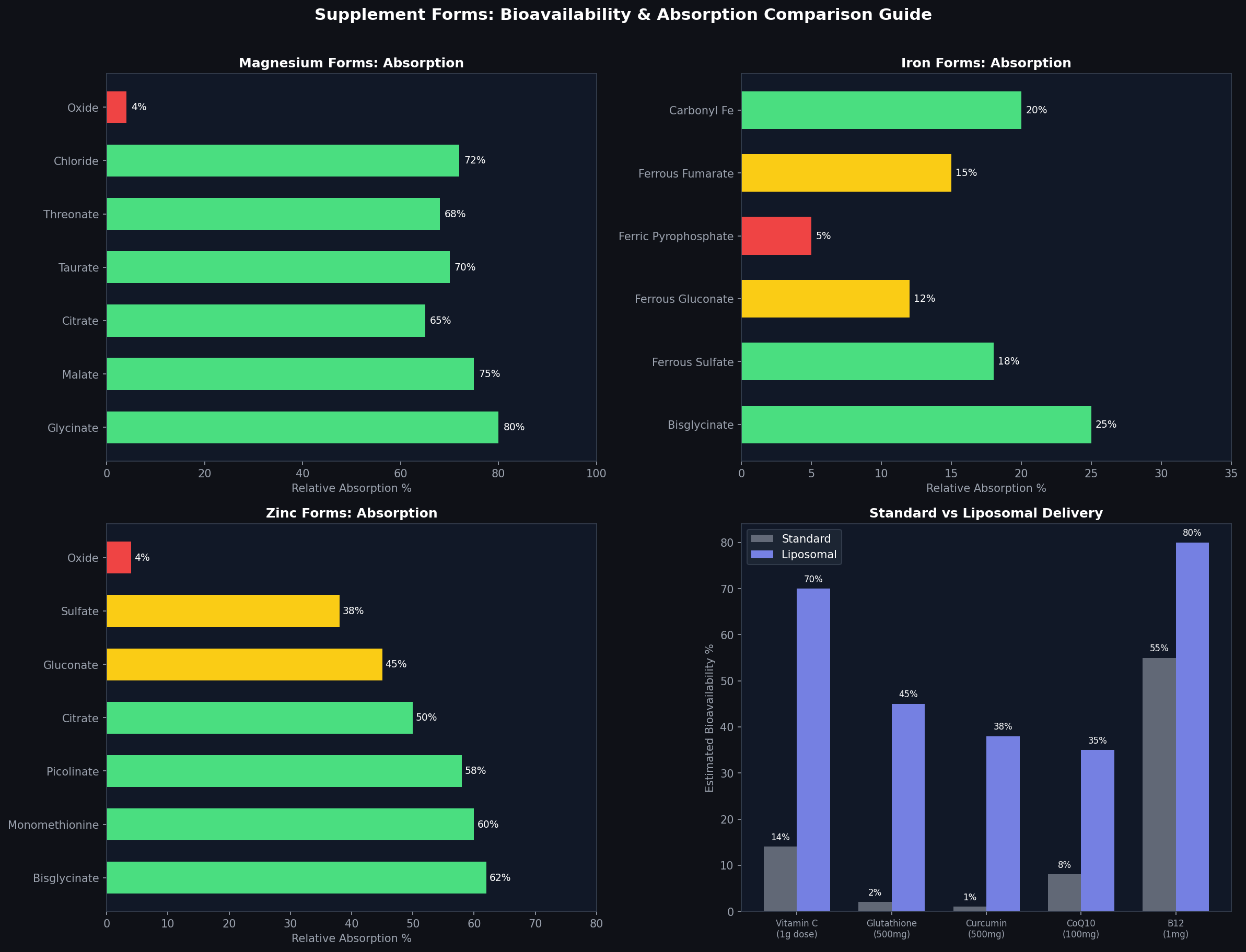
The main practical issue is bioavailability. Standard resveratrol is not absorbed especially well, so formulation quality matters more than with some simpler supplements.
Spermidine
Spermidine is the most interesting compound in this group if your main interest is autophagy, the cellular cleanup process often discussed in fasting and longevity circles. It is a naturally occurring polyamine found in foods such as wheat germ, soy, mushrooms, and some aged cheeses.
Human evidence is still early. Notably, a randomized clinical trial in older adults with subjective cognitive decline found that longer-term spermidine supplementation did not significantly improve memory or biomarkers compared with placebo (PubMed). That matters, because it is exactly the kind of disappointing but useful reality check the category needs.
At the same time, observational and mechanistic work still keeps spermidine relevant. It remains a credible “interesting, not proven” longevity supplement.
What a sensible longevity stack looks like
Foundation first
Before any of these, the real longevity stack is still:
- Resistance training
- Aerobic fitness
- Sleep
- Healthy body composition
- Blood pressure, glucose, and lipids under control
- Protein and micronutrient adequacy
If those are a mess, NMN and resveratrol are not the answer.
Then layer selectively
If someone has the basics dialed in and still wants to experiment, a reasonable minimalist approach might be:
- NMN or NR: choose one, not both at first
- Resveratrol: optional add-on if you specifically want that pathway exposure
- Spermidine: optional, higher-uncertainty add-on for people comfortable with thinner evidence
Product recommendations
ProHealth Longevity NMN Pro
Well-known in the longevity niche, often chosen for testing transparency and straightforward dosing.
Tru Niagen
The most recognizable NR product. If you want a more established commercial NAD+ booster, this is the obvious place to start.
Thorne ResveraCel
A convenient option that combines NR with additional supportive compounds. Good for people who prefer one bottle over a more custom stack.
Renue by Science Liposomal Resveratrol
Worth looking at if resveratrol is your main priority and you care about delivery format.
spermidineLIFE
Probably the most recognizable spermidine product and one of the few names consumers are likely to encounter repeatedly in this category.
FAQ
Do longevity supplements really work?
Some clearly affect biomarkers and pathways. That is different from proving they meaningfully extend human lifespan. Right now, the biomarker story is ahead of the hard-outcomes story.
Is NMN better than NR?
Not clearly. Both are plausible NAD+ support options. Brand quality and consistency probably matter more than tribal loyalty.
Should resveratrol be taken with NMN?
It is a common stack because the mechanism pairing is attractive, but it is not mandatory and it is not proven to be superior for everyone.
Is spermidine worth taking?
Maybe, if you understand the uncertainty. It is intriguing, but human evidence remains limited and mixed.
Internal-link suggestions
Link this page to:
/supplements/longevity-supplements/subtopics/nmn-vs-nr-vs-nad-boosters//supplements/longevity-supplements/subtopics/spermidine-supplement-guide//supplements/longevity-supplements/subtopics/do-longevity-supplements-actually-work//supplements/longevity-supplements/subtopics/best-longevity-stack-for-beginners//supplements/urolithin-a/
Bottom line
The best way to think about NMN, NAD+ boosters, resveratrol, and spermidine is not as “age reversal” supplements, but as evidence-emerging tools aimed at important aging pathways. NMN and NR have the clearest human biomarker support. Resveratrol is still interesting but less impressive in practice than in legend. Spermidine is compelling mechanistically and still waiting for stronger human proof.
If you want to experiment, keep it sober and simple: start with one reputable NAD+ precursor, add only what you can justify, and judge the category by evidence, not by podcast charisma.
Informational only, not medical advice. Longevity supplementation can interact with medications, medical conditions, and lab interpretation. Use extra caution if you have cancer history, liver disease, diabetes, or are under active physician management.
Sources
- Effect of resveratrol supplementation on lipid metabolism in healthy and obese cats. Frontiers in veterinary science. 2025. PMID: 40308696.
- A surge in endogenous spermidine is essential for rapamycin-induced autophagy and longevity. Autophagy. 2024. PMID: 39212197.
- Zatloukal J, Brat K, Neumannova K, Volakova E, Hejduk K, Kocova E, et al (2020). Chronic obstructive pulmonary disease – diagnosis and management of stable disease; a personalized approach to care, using the treatable traits concept based on clinical phenotypes. Position paper of the Czech Pneumological and Phthisiological Society. Biomedical papers of the Medical Faculty of the University Palacky, Olomouc, Czechoslovakia. PMID: 33325455.
- Starr RR. (2015). Too little, too late: ineffective regulation of dietary supplements in the United States. Am J Public Health, 105(3):478-485.
- Dwyer JT, et al. (2018). Dietary supplements: regulatory challenges and research resources. Nutrients, 10(1):41.