L-Theanine Supplements: Anxiety, Focus, Sleep, and Caffeine Synergy Guide
Quick Answer: L-theanine is one of the best-evidenced calming supplements — it reduces anxiety without sedation, improves attention when combined with caffeine, and supports sleep quality at higher doses. It’s safe, effective, and pairs uniquely well with caffeine to deliver “focused calm.” The evidence is solid for most claims at 100–400 mg/day.
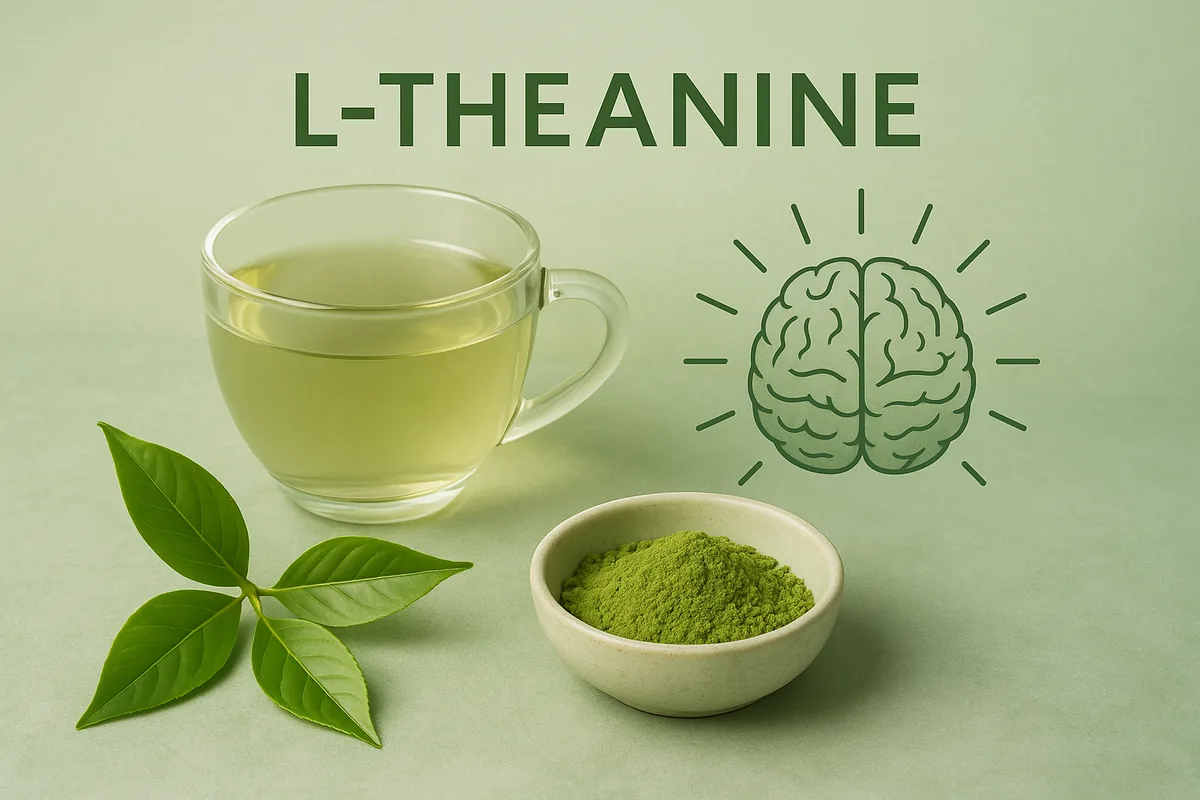
L-theanine might be the most thoroughly evidence-backed “gentle” cognitive supplement available. Derived from tea leaves (Camellia sinensis), it’s the compound responsible for the unique calm-alertness that distinguishes tea from coffee — despite tea having substantial caffeine content. This signature combination of relaxation without drowsiness has made L-theanine one of the most popular supplements in both productivity and anxiety communities.
The research base is impressively solid for a single amino acid — multiple RCTs, clear neurological mechanisms, and safety data going back decades as a tea component.
What Is L-Theanine?
L-theanine (gamma-glutamylethylamide) is an amino acid found almost exclusively in tea (Camellia sinensis) and some mushrooms. It’s not an essential amino acid — you don’t need it for survival — but it has notable central nervous system effects at typical dietary and supplement doses.
Green tea contains approximately 6-37 mg of L-theanine per cup. Ceremonial matcha (concentrated green tea) may contain 40-60 mg per serving. Most clinical trials use 100-400 mg doses — significantly higher than typical tea consumption, which is why supplementation makes sense for therapeutic intent.
How L-Theanine Works
L-theanine crosses the blood-brain barrier (confirmed by animal studies showing rapid distribution to brain tissue within 30-60 minutes of oral administration) and has several neurochemical effects:
Glutamate receptor modulation: L-theanine is structurally similar to glutamate (the brain’s main excitatory neurotransmitter). It antagonizes NMDA (N-methyl-D-aspartate) glutamate receptors and AMPA receptors, reducing excitatory neurotransmission — a key mechanism for anxiety reduction.
GABA activity: L-theanine increases GABA (gamma-aminobutyric acid) levels in the brain, the primary inhibitory neurotransmitter responsible for calming neural activity.
Alpha wave induction: EEG studies consistently show L-theanine increases alpha brain wave activity (8-12 Hz), associated with a relaxed yet alert mental state. This is the neurophysiological signature of “calm focus.”
Neurotransmitter modulation: L-theanine modestly increases brain dopamine and serotonin in some studies — potentially contributing to mood benefits.
Does not cause sedation: Unlike benzodiazepines or antihistamines, L-theanine does not produce significant sedation at typical doses. GABA enhancement and glutamate modulation produce relaxation without the drowsy, impaired-cognition profile of sedatives.
L-Theanine for Anxiety
Multiple RCTs support L-theanine for anxiety reduction:
A 2019 RCT in Nutrients (Hidese et al.) found 200 mg/day L-theanine for 4 weeks significantly reduced anxiety, sleep disturbances, and depression scores in adults with self-reported stress and anxious symptoms
A 2011 study in Nutritional Neuroscience found 200 mg L-theanine significantly reduced anxiety scores and heart rate response to a stressful mental task vs. placebo
Multiple studies show L-theanine reduces physiological stress markers (salivary cortisol, heart rate) during acute stressors
Compared to pharmaceutical anxiolytics: L-theanine is significantly less potent than benzodiazepines or SSRIs for clinical anxiety disorders. For subclinical anxiety, situational stress, and anxiety that doesn’t meet diagnostic criteria, L-theanine is a reasonable natural first-line option with excellent safety.
With ashwagandha: This combination is popular — ashwagandha (KSM-66/Sensoril) acts primarily through cortisol reduction and HPA axis modulation; L-theanine acts through more immediate glutamate/GABA mechanisms. They complement each other. See Best Ashwagandha Supplements for Cortisol in 2026.
L-Theanine + Caffeine: The Gold Standard Combination
This is arguably the best-evidenced cognitive supplement stack in existence. The synergy is well-documented across multiple RCTs:
The mechanism: Caffeine blocks adenosine receptors (creating alertness) but also increases cortisol and activates the sympathetic nervous system (contributing to jitteriness, heart pounding, anxiety). L-theanine counteracts these stimulatory side effects via glutamate antagonism and GABA enhancement, while preserving — and in some studies enhancing — the alertness and attention benefits of caffeine.
What the research shows:
Multiple studies by Einöther, Riedel, and Owen show the combination improves attention, reaction time, and accuracy better than either alone
Reduced jitteriness, anxiety, and blood pressure response to caffeine
Enhanced word recognition, information processing speed, and sustained attention
The “focused calm” effect — alert without the “wired” feeling that prevents deep work
Optimal ratio: Most studies use 100 mg caffeine + 200 mg L-theanine (2:1 theanine:caffeine). Some studies use 1:1. The 2:1 ratio is most commonly recommended and supported.
Practical applications:
Add L-theanine to your morning coffee or pre-workout
Stack with afternoon caffeine to avoid late-day anxiety and sleep interference
Use L-theanine alone (without caffeine) on high-stress days when you don’t want caffeine
L-Theanine for Sleep
At higher doses or in the evening, L-theanine can improve sleep quality:
A 2019 RCT found 200 mg/day L-theanine improved sleep latency, quality, and morning alertness in children with ADHD — notably without causing sedation
A 2011 study found L-theanine improved sleep efficiency and reduced awakenings in boys with ADHD
Mechanism: L-theanine’s GABA and glutamate effects allow natural sleep onset without forcing sedation. It reduces pre-sleep rumination and anxious thinking — the “monkey brain” that prevents falling asleep.
Dosing for sleep: 200-400 mg 30-60 minutes before bed. Can combine with magnesium glycinate (classic pairing) — see L-Theanine and Magnesium Sleep Stack.
L-Theanine Standalone vs. With Caffeine: When to Use Each
Situation
Recommendation
Morning work focus with coffee/tea
L-theanine + caffeine (200 mg + 100 mg caffeine)
High-stress day, no stimulants wanted
L-theanine alone 200 mg
Pre-sleep anxiety/rumination
L-theanine 200-400 mg at bedtime
ADHD focus support (daytime)
L-theanine + caffeine or L-theanine alone
Anxiety during a presentation/exam
L-theanine 200 mg 30-60 min before
Caffeine sensitivity (still want focus)
L-theanine alone
Dosing and Forms
Standard dosing:
100-200 mg for mild anxiety/alertness/caffeine enhancement
200-400 mg for sleep or more significant anxiety reduction
Maximum studied: 600 mg/day (generally well-tolerated)
Form: Suntheanine® is the most clinically studied branded form (pure L-theanine from fermentation process). Standard L-theanine from reputable manufacturers is equivalent. Available as capsules, tablets, or powder.
Onset: Most effects (anxiety reduction, alpha waves) begin within 30-60 minutes; sleep effects appear within 30-60 minutes at typical bedtime doses.
Half-life: Approximately 1-2 hours to peak blood levels; effects last several hours. Relatively short action compared to many supplements — doesn’t linger excessively.
Safety
L-theanine has an exceptional safety profile:
Consumed for centuries as a component of tea
No reported organ toxicity even at high doses in animal studies
Well-tolerated in clinical trials even at 600 mg/day
Not habit-forming; no withdrawal
No significant sedation at normal doses (safe to drive)
Drug interactions: No clinically established drug interactions. Theoretical interaction with stimulant medications — likely beneficial (reducing stimulant side effects), but inform your physician. Potential additive CNS-depressant effect with sedatives at high doses.
Key Takeaways
L-theanine reduces anxiety without sedation through NMDA antagonism, GABA enhancement, and alpha wave promotion
The L-theanine + caffeine combination (2:1 ratio: 200 mg theanine + 100 mg caffeine) is the best-evidenced cognitive supplement stack for focused, calm productivity
Improves sleep quality through reducing pre-sleep anxiety and rumination — not by forcing sedation
Safe, well-studied, available OTC, with no significant drug interactions established
One of the few supplements where the claimed effects (focus, calm, reduced anxiety) are supported by multiple RCTs showing the exact mechanisms proposed
Suntheanine® is the most clinically studied brand; standard L-theanine from verified manufacturers is equivalent at lower cost
Frequently Asked Questions
Does L-theanine make you drowsy during the day?
No — this is one of its key advantages. L-theanine promotes alpha waves (awake relaxation) without the delta/theta wave induction associated with sedatives. At doses of 100-400 mg during the day, drowsiness is not a significant issue for most people. At higher doses (400+ mg) some people report gentle calming that could be misinterpreted as drowsiness, but it doesn’t impair alertness.
Can I take L-theanine every day?
Yes — unlike many supplements, L-theanine doesn’t cause tolerance or dependence with regular use. Daily use for anxiety management, sleep support, or as part of your caffeine routine is safe and appropriate.
Does L-theanine work without caffeine?
Yes. L-theanine has independent anxiolytic, sleep-supportive, and mood effects that don’t require caffeine. The caffeine combination amplifies certain cognitive effects and smooths caffeine’s rough edges, but L-theanine alone is a useful tool for anxiety and sleep.
What’s the difference between L-theanine and GABA supplements?
GABA oral supplements have questionable BBB penetration — most supplemental GABA may not reach the brain effectively. L-theanine crosses the BBB efficiently and then increases endogenous GABA production in the brain. For this reason, L-theanine is generally considered more effective for anxiety and relaxation than supplemental GABA, which faces the blood-brain barrier problem. See our GABA Supplements article for this comparison in depth.
Is L-theanine effective for ADHD?
Emerging evidence suggests L-theanine improves sleep quality, reduces anxiety, and modestly supports attention in ADHD populations. Combined with caffeine, it may provide meaningful focus support. It’s not a replacement for ADHD medication in those who benefit from pharmacological treatment, but it’s a well-tolerated adjunct with multiple relevant mechanisms.
[…] Standard dosing: 100–200 mg L-theanine with 100–200 mg caffeine. See our detailed article on L-theanine supplements — anxiety, focus, sleep, and caffeine. […]




Leave a Reply