5-HTP Long-Term Safety: Catecholamine Depletion Risk and What You Need to Know
Quick Answer: 5-HTP is an effective serotonin precursor with good short-term evidence for depression, anxiety, and sleep. The critical long-term concern is catecholamine depletion — taking 5-HTP without carbidopa or aromatic amino acid decarboxylase support can convert serotonin in the gut and periphery, depleting dopamine and norepinephrine over time. Safe use requires either short-term cycling, combining with L-tyrosine, or using alongside carbidopa.
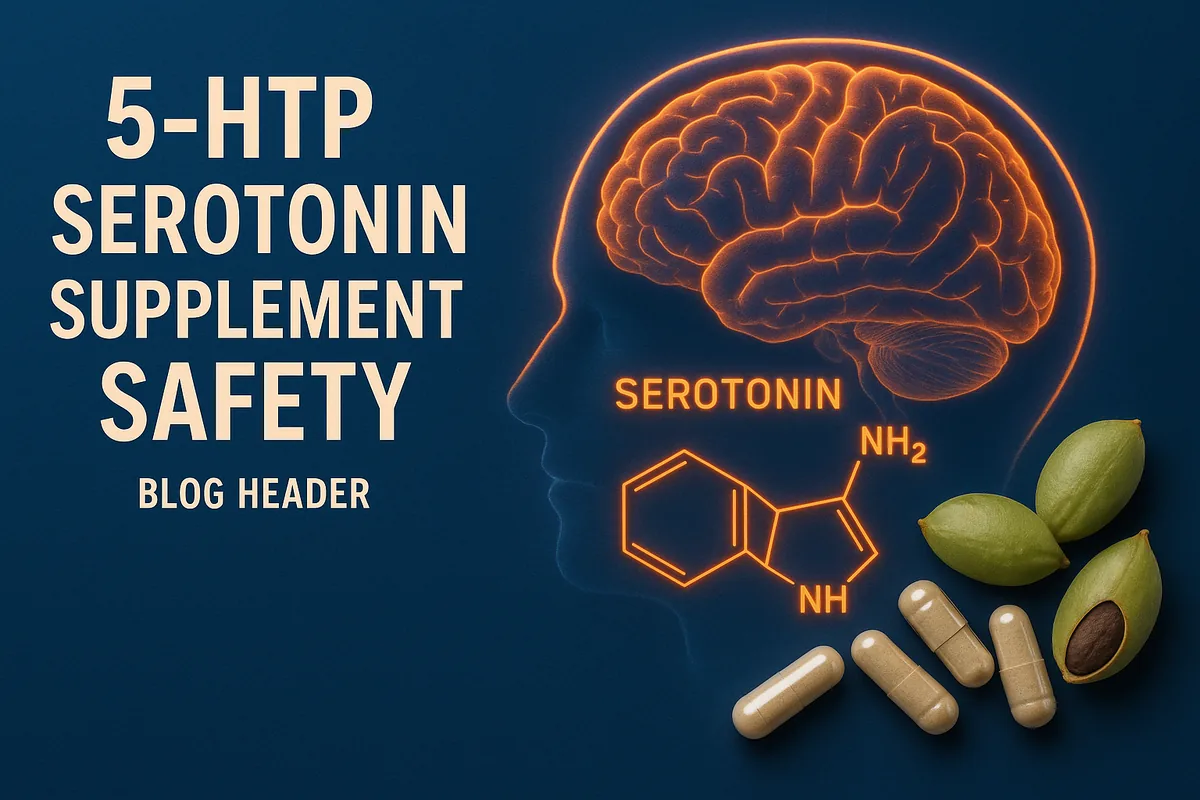
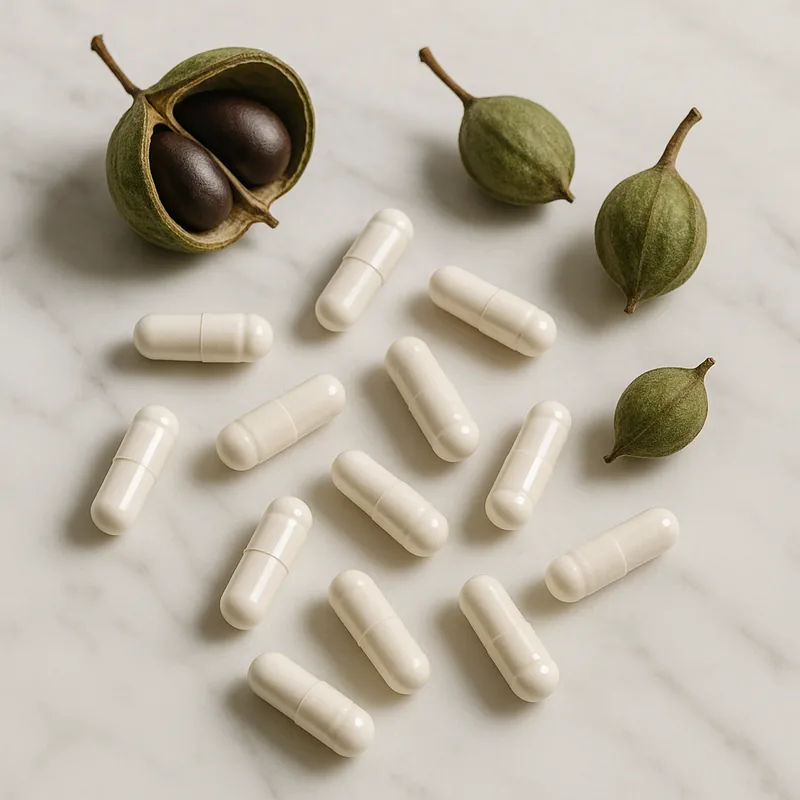
5-HTP (5-hydroxytryptophan) is one of the most effective natural serotonin precursors available. Extracted from the seeds of Griffonia simplicifolia, it converts directly to serotonin in a single enzymatic step — bypassing tryptophan hydroxylase (the rate-limiting step in serotonin synthesis). It has genuine clinical evidence for depression, anxiety, sleep, and even migraine prevention.
But 5-HTP is also a supplement with a real, underappreciated safety concern for long-term use: catecholamine depletion. This guide covers the evidence honestly — including both the benefits and the pharmacological reason why 5-HTP shouldn’t be taken indefinitely without mitigation strategies.
What Is 5-HTP and How Does It Work?
5-HTP is the intermediate metabolite between tryptophan (dietary amino acid) and serotonin (5-hydroxytryptamine, 5-HT). The conversion:
By supplementing 5-HTP directly, you bypass the rate-limiting tryptophan hydroxylase step and provide substrate that converts efficiently to serotonin. This is why 5-HTP tends to raise serotonin more effectively than tryptophan supplementation.
Where conversion happens: 5-HTP can be converted to serotonin in the gut, bloodstream, and brain — wherever AADC enzyme is present. This is central to the safety concern.
Clinical Evidence
Depression:
Multiple European RCTs from the 1980s-90s showed 5-HTP (200-300 mg/day) comparable to certain antidepressants (including imipramine) in symptom reduction
A 1987 double-blind trial found 5-HTP comparable to the SSRI fluvoxamine for depression over 6 weeks
Overall meta-analysis evidence suggests modest-to-moderate antidepressant effects, with effect sizes smaller than pharmaceutical antidepressants
Anxiety:
Several RCTs show 5-HTP reduces anxiety scores; a notable study found improvements in generalized anxiety
For panic disorder, 5-HTP modestly reduces frequency and severity
Sleep:
5-HTP increases REM sleep duration in multiple studies
Improves sleep onset and continuity, particularly in those with low serotonin
Often paired with L-tryptophan for sleep protocols
Migraine prevention:
A 2017 meta-analysis confirmed 5-HTP prophylaxis (300-600 mg/day) reduces migraine frequency, comparable to some pharmaceutical preventives
Response rate approximately 50-60% in migraine studies
Obesity/appetite:
Several Italian RCTs showed 5-HTP reduced caloric intake and promoted satiety (serotonin suppresses appetite)
The Catecholamine Depletion Problem
This is the most important and underappreciated aspect of 5-HTP safety.
AADC enzyme competition: AADC (aromatic amino acid decarboxylase) is the enzyme that converts 5-HTP to serotonin. It’s the same enzyme that converts L-DOPA to dopamine. These two pathways compete for the same enzyme.
The peripheral conversion problem: When 5-HTP is taken orally without AADC inhibition, approximately 70% is converted to serotonin in the gut and peripheral tissues before reaching the brain. This peripheral conversion:
Wastes substrate that could have been centrally active
Produces peripheral serotonin syndrome risk at high doses (heart valve effects, GI effects)
Depletes AADC enzyme capacity, reducing dopamine and norepinephrine (catecholamine) synthesis
The dopamine depletion mechanism: When AADC is overwhelmed with 5-HTP substrate, it has less capacity to convert L-DOPA to dopamine and tyrosine to other catecholamines. Over weeks to months of daily 5-HTP use, some users experience symptoms of catecholamine deficiency:
Fatigue, lethargy
Reduced motivation and drive
Depressed mood (anhedonia — the dopamine component of depression)
This can be counterintuitive — taking a serotonin precursor for depression may worsen the dopamine-component of depression over time
The evidence: This concern comes from both mechanistic pharmacology and clinical observations. A Hinz et al. series of papers (2012-2014, published in International Journal of General Medicine and Neuropsychiatric Disease and Treatment) specifically described this catecholamine depletion pattern and proposed protocols to address it. While this specific research group’s protocols involve pharmaceutical carbidopa use, the underlying mechanism is pharmacologically sound.
Mitigation Strategies for Long-Term Use
1. Short-term cycling: Use 5-HTP for 6-8 weeks, then take 4-6 weeks off. During off-periods, switch to L-tryptophan if serotonin support is still needed (tryptophan uses different enzyme pathways in lower competition with catecholamines).
2. L-Tyrosine co-administration: Taking L-tyrosine (or L-DOPA from Mucuna pruriens) alongside 5-HTP provides substrate for catecholamine synthesis, partially countering the competitive depletion. A common ratio is 2:1 tyrosine:5-HTP (e.g., 100 mg 5-HTP + 200 mg L-tyrosine).
3. Carbidopa (prescription): Carbidopa inhibits peripheral AADC, preventing gut/peripheral conversion of 5-HTP to serotonin. This redirects more 5-HTP to the brain and reduces peripheral side effects. This is used in functional medicine protocols but requires a prescription.
4. Low-dose, as-needed use: Using 5-HTP at the lowest effective dose (50 mg vs. 200+ mg) for specific applications (sleep, acute anxiety) rather than high-dose chronic use minimizes the depletion risk.
Drug Interactions: Critical Safety
SSRIs and SNRIs: Combining 5-HTP with serotonin reuptake inhibitors can cause serotonin syndrome — a potentially life-threatening condition characterized by hyperthermia, agitation, tremor, muscle rigidity, and potentially death. This combination is contraindicated. Never take 5-HTP with SSRIs, SNRIs, or SNRIs without physician supervision.
MAOIs: Absolute contraindication — serotonin syndrome risk is severe.
Tramadol: Has serotonergic properties; avoid combining with 5-HTP.
Triptans (migraine medications): Theoretical serotonin syndrome risk; use with caution.
Start low: Always begin at 50 mg to assess tolerance.
Key Takeaways
5-HTP effectively raises serotonin and has clinical evidence for depression, anxiety, sleep, and migraine prevention
The catecholamine depletion risk is real — long-term daily use without mitigation can produce dopamine/norepinephrine deficiency symptoms (fatigue, anhedonia, reduced motivation)
Mitigation: cycle 5-HTP use, co-administer L-tyrosine, use the lowest effective dose, or use carbidopa (prescription) to block peripheral conversion
Never combine with SSRIs, SNRIs, or MAOIs — serotonin syndrome risk
Short-term use (6-8 weeks at a time) is generally safe for most people; long-term daily use (months-years) without mitigation is where the risk emerges
Consider L-tryptophan as a gentler serotonin precursor option that has a lower catecholamine competition risk
Frequently Asked Questions
Is 5-HTP safe to take every day?
For short periods (6-8 weeks), yes — 5-HTP at 50-200 mg/day appears safe for most people. For extended daily use (months), the catecholamine depletion risk warrants either cycling, co-administration of L-tyrosine, or using carbidopa. Monitoring for fatigue, anhedonia, or reduced drive while on 5-HTP long-term is prudent.
Can 5-HTP cause weight gain?
No — if anything, 5-HTP tends to reduce appetite and promote weight management by increasing serotonin-mediated satiety signals. Multiple Italian RCTs showed reduced caloric intake with 5-HTP.
Why does 5-HTP sometimes cause nausea?
Peripheral serotonin (serotonin in the gut) causes nausea via 5-HT3 and 5-HT4 receptor activation. This is the same reason ondansetron (Zofran) — a serotonin antagonist — treats nausea. Taking 5-HTP with food reduces this effect; starting at lower doses (25-50 mg) and building up also helps. Enteric-coated 5-HTP may reduce GI side effects.
What’s better for sleep: 5-HTP or melatonin?
Different mechanisms. 5-HTP raises serotonin, which is a precursor to melatonin; it may improve overall sleep architecture (REM, sleep quality). Melatonin more directly signals the circadian clock for sleep onset timing. For falling asleep, melatonin (0.3-1 mg low dose) is more targeted. For sleep quality and anxiety-related sleep disturbance, 5-HTP is more relevant. See our Melatonin Guide 2026 for the full melatonin picture.
Does 5-HTP help with anxiety or make it worse?
Most clinical data shows anxiolytic effects. However, some individuals — particularly those with anxiety disorder with panic features — report initial worsening before improvement. Serotonin elevation can temporarily increase anxiety in some people before the anxiolytic effects stabilize (similar to the initial anxiety-worsening sometimes seen with SSRIs). Starting at 50 mg or less is advisable for those with anxiety.
Sources
Birdsall TC. “5-Hydroxytryptophan: a clinically-effective serotonin precursor.” Alternative Medicine Review. 1998.




Leave a Reply