
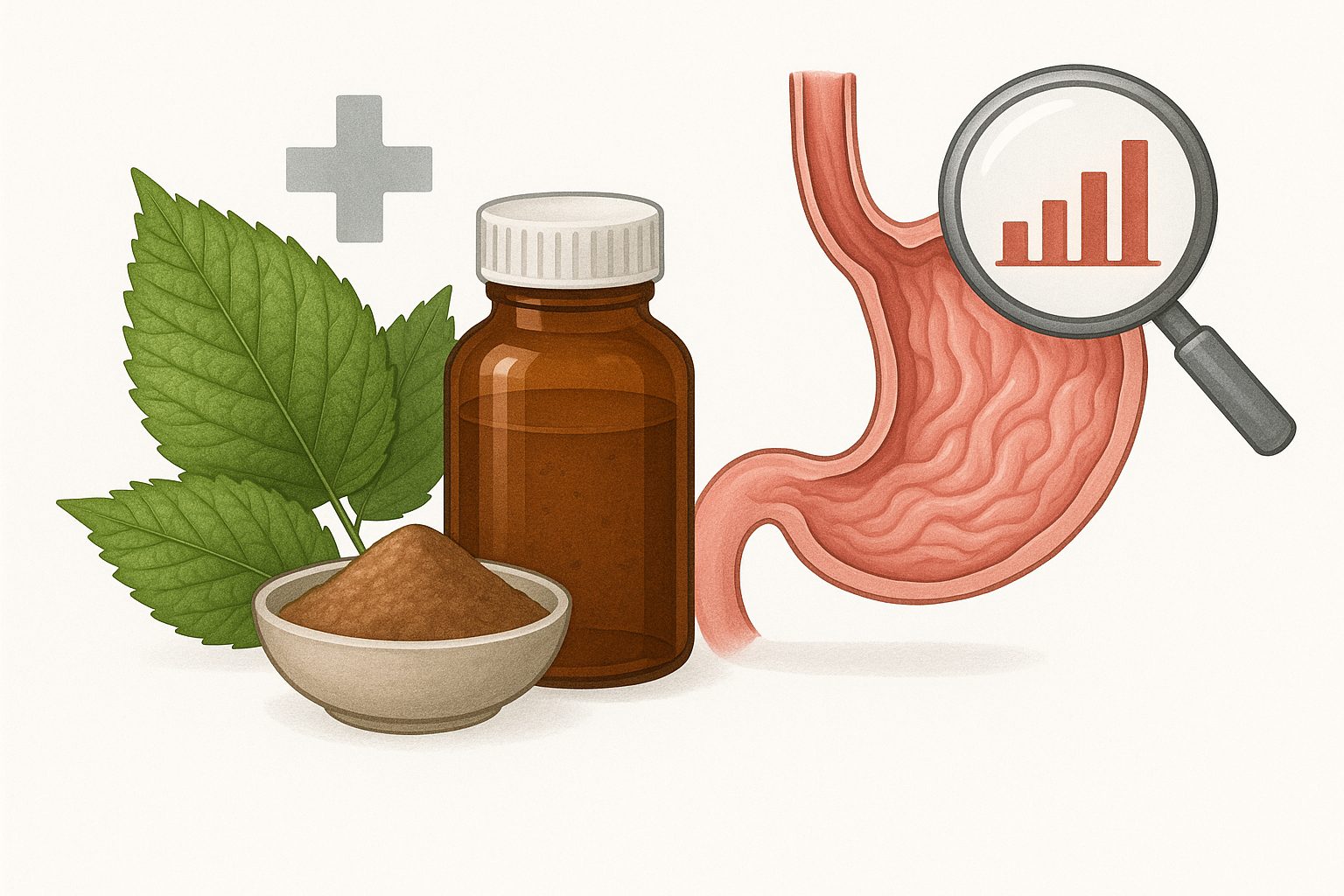
Quick Answer: Slippery elm has a plausible mechanism (mucilage coats irritated stomach tissue) and centuries of traditional use, but lacks rigorous clinical trial evidence for specific GI conditions. It may provide symptomatic relief for mild digestive discomfort and is considered safe at typical doses. It should not replace medical treatment for diagnosed conditions like ulcers or H. pylori infection.
Key Takeaways
- Slippery elm contains mucilage — a gel-forming substance that coats and soothes mucosal surfaces
- No RCTs exist specifically testing slippery elm for gastric ulcers or stomach lining repair
- The FDA has granted it “generally recognized as safe” (GRAS) status
- It may provide symptomatic comfort for mild dyspepsia and irritation; this is plausible but not proven
- Important drug interaction: slippery elm’s mucilage may slow absorption of medications — separate by at least 2 hours
- Stronger evidence exists for zinc carnosine if stomach lining support is your specific goal
- Works best as a complementary comfort measure, not a substitute for medical care
What Is Slippery Elm?
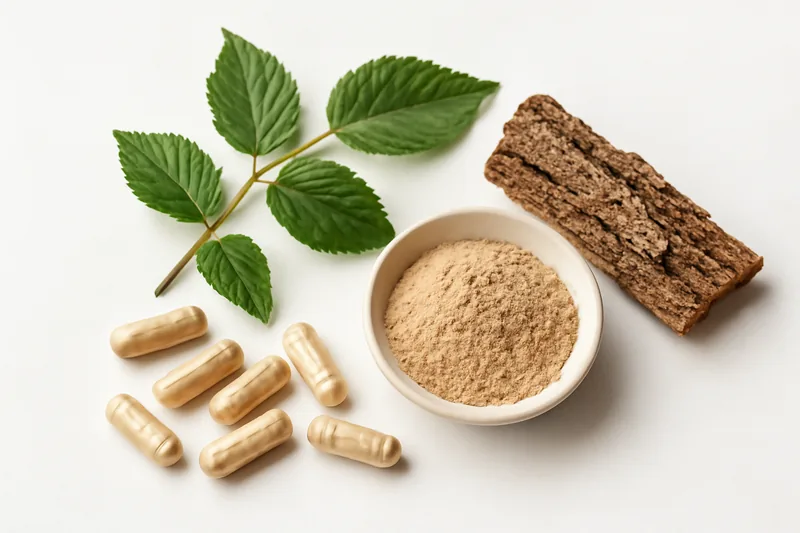
Slippery elm (Ulmus rubra) is a deciduous tree native to central and eastern North America. The healing substance in question isn’t the bark you can see — it’s the inner bark, the layer directly beneath the rough outer surface. When the inner bark is dried and powdered, it reveals an unusually high concentration of mucilage, a type of polysaccharide that becomes thick, slippery, and viscous when mixed with water.
This mucilage quality is exactly where the herb gets its name. If you’ve ever mixed slippery elm powder into warm water and drunk it, you’ll understand immediately why it’s been used as a digestive remedy for centuries — the texture is unmistakably coating. It feels like something that would soothe an irritated surface.
Native American communities, particularly the Cherokee, Iroquois, and other northeastern and eastern tribes, used slippery elm extensively for gastrointestinal complaints, wound care, and as a nutritive food during illness. European settlers adopted its use, and it remained in the United States Pharmacopeia as an official demulcent until the mid-20th century.
How It’s Supposed to Work
The proposed mechanisms for slippery elm’s GI effects are physiologically coherent even without clinical trial backing:
Mucosal coating: When consumed, the mucilage forms a physical protective layer over the mucous membranes of the esophagus, stomach, and upper GI tract. For irritated or inflamed tissue, this coating effect is analogous to applying a bandage — it doesn’t fix the underlying problem, but it reduces direct contact between irritants (stomach acid, food particles, bile) and the damaged surface while healing occurs.
Reflex mucus stimulation: Contact between the mucilage and GI tract mucosa is thought to stimulate nerve endings that trigger the body’s own mucus secretion. This reflex mucus response could enhance the natural protective lining of the stomach. This mechanism is well-established for demulcent herbs generally, though direct evidence in human GI tissue for slippery elm specifically is limited.
Mild anti-inflammatory effects: In vitro studies have identified antioxidant compounds in slippery elm bark, including tannins and proanthocyanidins. Whether these translate to meaningful anti-inflammatory effects in the human GI tract at typical doses remains unclear.
The physiological rationale is sound. The problem is that plausible mechanisms don’t automatically translate to proven clinical outcomes.
The Evidence Gap
Slippery elm occupies an uncomfortable position for science-minded supplement users: the mechanism is credible, the traditional use is extensive and culturally deep, but the clinical evidence base is thin.
What Actually Exists
Multi-ingredient IBD study: The most commonly cited human study involves a combination formula that included slippery elm alongside other herbs. This formula produced comparable symptom improvement to 5-aminosalicylic acid (a prescription IBD medication) in patients with mild to moderate ulcerative colitis. However, slippery elm was one of several active ingredients — attributing the effect specifically to slippery elm is not possible from this design.
In vitro evidence: Cell and tissue studies have shown that slippery elm mucilage demonstrates demulcent and mild anti-inflammatory properties at the molecular level. These studies support the mechanism but do not prove efficacy in humans.
Traditional pharmacopeia documentation: Multiple herbal medicine references, including historical United States Pharmacopeia entries, document slippery elm for dyspepsia, gastritis, and ulcer-related symptoms. This is documentation of use, not evidence of efficacy by modern standards.
What Does Not Exist
- No randomized controlled trial of slippery elm specifically for gastric ulcer healing
- No head-to-head comparison with established GI treatments (proton pump inhibitors, H2 blockers, zinc carnosine)
- No dose-response studies in humans establishing optimal therapeutic doses
- No pharmacokinetic data on how slippery elm mucilage interacts with the gastric environment under controlled conditions
- No long-term safety data from clinical trials (though no significant safety signals have appeared in traditional use)
The Drugs.com monograph for slippery elm explicitly states: there are “no formal clinical studies” for slippery elm in gastric ulcer treatment. This is an honest summary of the state of evidence.
The Honest Assessment
Slippery elm is almost certainly not harmful at standard doses. The mucilage is essentially a food-grade fiber substance. The FDA’s GRAS classification reflects centuries of use without serious adverse event reports. It has been consumed by millions of people without systematic safety concerns emerging.
For symptom management — mild burning after meals, the sensation of GI irritation, post-antibiotic gut discomfort, or general digestive sensitivity — many people report subjective improvement with slippery elm. This is anecdotal, but it’s widespread enough that functional medicine and naturopathic practitioners routinely include it in gut-healing protocols. Patient satisfaction with slippery elm for symptomatic relief is generally high.
The important distinction is between symptom comfort and structural healing. Slippery elm almost certainly provides some degree of symptom comfort through its coating mechanism. There is no rigorous evidence that it:
- Heals gastric ulcers
- Repairs damaged stomach lining at a histological level
- Reduces H. pylori colonization
- Addresses the underlying causes of chronic GI conditions
If your goal is symptom comfort and you have mild, non-serious digestive complaints, slippery elm is a reasonable tool. If your goal is actual healing of documented pathology — a diagnosed ulcer, confirmed H. pylori, significant gastritis — you need treatments with proven efficacy, and slippery elm should at most be a supportive adjunct.
How to Use Slippery Elm
If you decide to try slippery elm, the forms and dosing are fairly standardized across herbal medicine references:
Dosing:
- Powder mixed into warm water: The most traditional preparation. Typically 1–2 teaspoons of inner bark powder stirred into 8 oz of warm water, forming a mucilaginous drink. Take slowly. This is the form most directly coating to the GI tract.
- Capsules: 400–500 mg capsules, 2–4 per day, typically 1.5–3 g/day total. More convenient, but less coating effect than the drink form.
- Lozenges: Used primarily for throat soothing (slippery elm is also a traditional throat remedy) but will coat the upper GI tract as well.
- Tea: Less concentrated than the powder-in-water preparation, but provides the same general mechanism.
Timing:
- Take between meals or before meals — when the stomach is relatively empty, the mucilage has more surface area contact and more time in the gastric environment before being diluted by food.
- Morning on an empty stomach, or 30–60 minutes before a meal, is a common recommendation.
Duration:
- No established treatment duration exists in the clinical literature. Most practitioners suggest 4–8 weeks during symptomatic periods, then reassessing.
The Critical Drug Interaction
This is worth emphasizing because it’s clinically relevant and often overlooked on product labels:
Slippery elm can slow the absorption of medications and other supplements. The same mucilage layer that coats and soothes your stomach lining can coat the surface through which drugs are absorbed in the small intestine. This is a pharmacokinetic interaction that applies to essentially any medication taken orally.
Practical rule: Separate slippery elm from any prescription medication by at least 2 hours. Take the medication, wait 2 hours, then take slippery elm — or take slippery elm at least 2 hours before the next dose of any prescription drug.
This applies to things like levothyroxine (thyroid medication), which has known absorption sensitivity to many substances, as well as antibiotics and other time-sensitive medications.
How It Compares to Better-Studied Alternatives
If stomach lining support is your specific goal, it’s worth knowing where slippery elm sits relative to alternatives with stronger evidence:
Zinc carnosine has the strongest evidence for stomach lining support among supplements. Multiple RCTs have shown it supports gastric mucosal integrity, reduces H. pylori-related damage, and complements H. pylori eradication therapy. If you need evidence-based stomach lining support, zinc carnosine is the better-documented choice.
Deglycyrrhizinated licorice (DGL) has more human study data than slippery elm for dyspepsia and gastric discomfort, though the evidence is still limited.
Aloe vera and marshmallow root are in a similar evidence category to slippery elm — plausible mechanism, traditional use, limited clinical trials.
Slippery elm’s niche may be as the gentlest, most palatable, and most traditionally documented demulcent in this group — particularly in powder-drink form — rather than as the best-evidenced option.
Who Might Benefit
- People with mild, non-ulcer dyspepsia seeking symptomatic comfort
- Those recovering from an acute GI illness or antibiotic course who want gut-soothing support
- Individuals who prefer traditional or herbal approaches alongside (not instead of) medical treatment
- People with sensitive stomachs who want a gentle, non-pharmacological addition to a gut-healing protocol
Who Should Look Elsewhere
- Anyone with a diagnosed gastric or duodenal ulcer (zinc carnosine + medical supervision)
- People with confirmed H. pylori infection (antibiotic eradication protocol is the primary treatment)
- Anyone expecting slippery elm to replace medical treatment for serious or persistent GI symptoms
- People with new, unexplained GI symptoms — these need proper diagnosis before supplementation
Internal Cross-Links
- Best Supplements for Stomach Lining Support — Full guide to the supplement evidence for gastric mucosal health, including zinc carnosine, DGL, and glutamine.
FAQ
Q: Does slippery elm actually heal ulcers? There is no clinical trial evidence that slippery elm heals gastric ulcers. The mechanism (mucilage coating) is plausible and may provide symptom relief, but ulcer healing requires addressing the underlying cause — typically H. pylori infection or NSAID overuse — with appropriate medical treatment.
Q: Is slippery elm safe to take long-term? No serious long-term safety concerns have been identified in traditional use spanning centuries. The FDA classifies it as GRAS. However, clinical safety data beyond 8-12 weeks does not exist. The primary caution is its potential to slow medication absorption, which is relevant at any duration.
Q: Can slippery elm help with acid reflux? Many people use slippery elm for acid reflux (GERD) and report symptomatic relief, likely through the coating mechanism reducing irritation of the esophageal mucosa. There are no clinical trials for GERD specifically. It’s a plausible comfort measure but not a treatment for the underlying condition.
Q: How quickly does slippery elm work? The coating effect is essentially immediate — the mucilage coats the GI tract within minutes of ingestion. Whether this immediate coating translates to meaningful symptom relief varies by individual. For any structural or healing effects, more time would be needed, but these are not clinically demonstrated anyway.
Q: Is slippery elm safe during pregnancy? Insufficient data exists for pregnancy. Most herbalists and practitioners advise caution or avoidance during pregnancy due to lack of safety data. Consult your OB or midwife before using any herbal supplement during pregnancy.
Related Articles
Sources
- Langmead L, Dawson C, Hawkins C, et al. Antioxidant effects of herbal therapies used by patients with inflammatory bowel disease. Aliment Pharmacol Ther. 2002;16(2):197-205.
- Peterson CT, Sharma V, Uchitel S, et al. Prebiotic potential of herbal medicines used in digestive health and disease. J Altern Complement Med. 2018;24(7):656-665.
- Watts CR, Rousseau B. Slippery elm, its biochemistry, and use as a complementary and alternative treatment for laryngeal irritation. J Investig Med. 2012;60(4):613-617.
- Natural Products and Complementary Therapies for Inflammatory Bowel Disease. PMC. PMC4204705.
- Drugs.com Slippery Elm Monograph — clinical overview and safety profile.

Leave a Reply