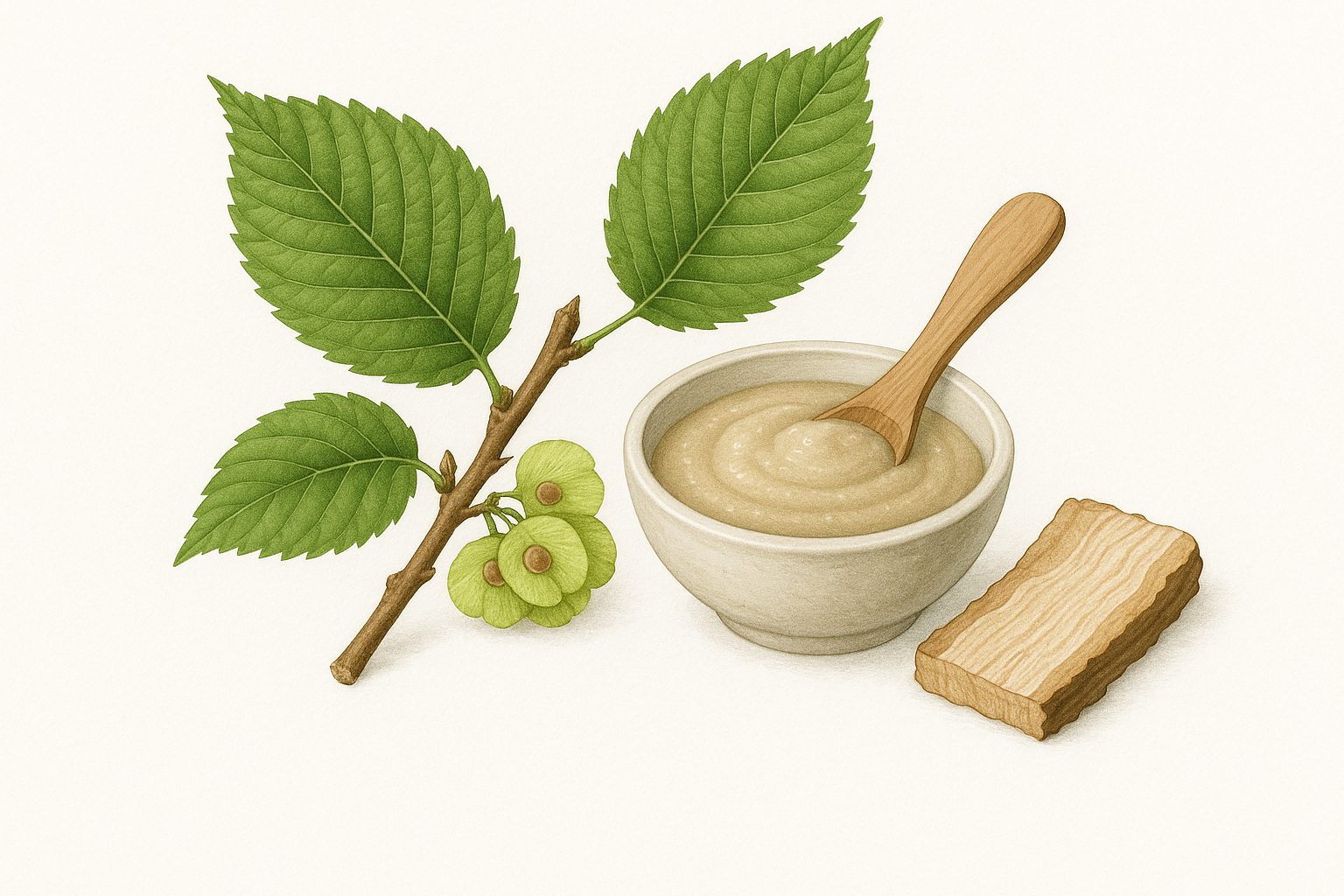
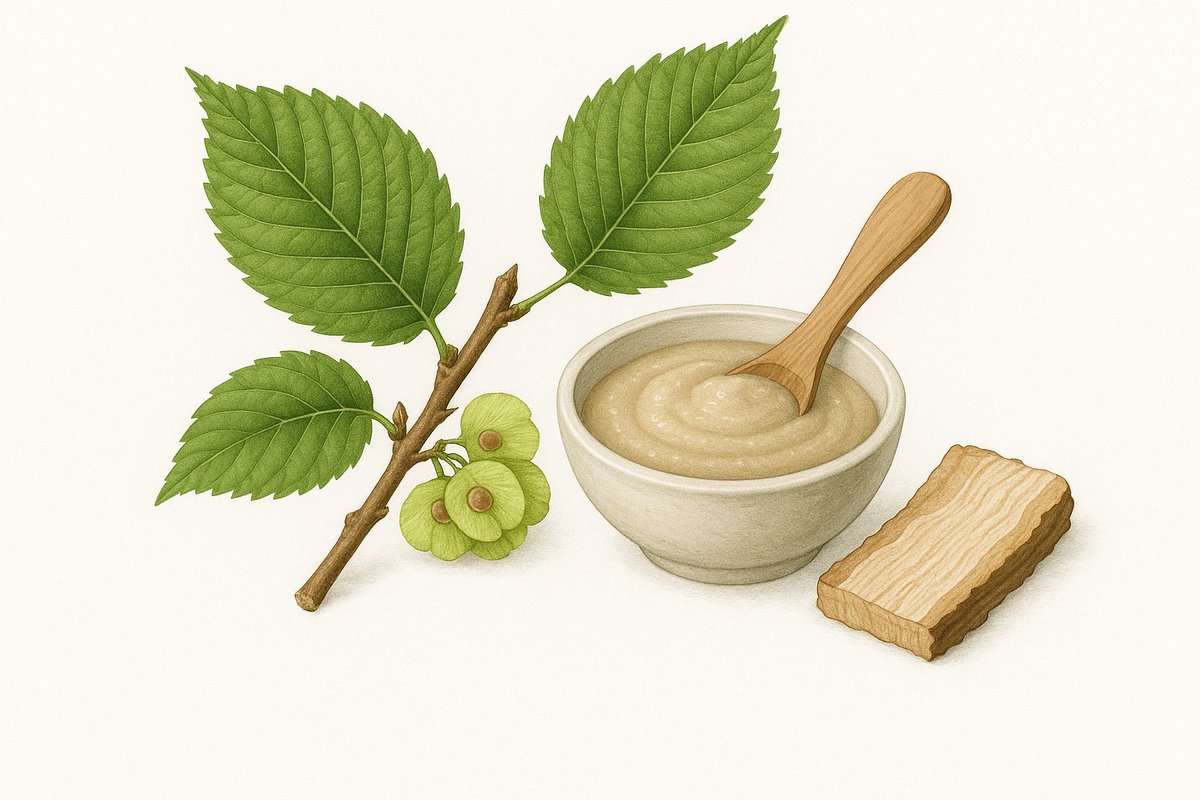
Slippery elm (Ulmus rubra) is one of the most commonly recommended natural remedies for stomach discomfort in herbal medicine. It has centuries of documented use by Native American communities for gastrointestinal complaints. The physiology is intuitive: consume something soothing and it coats irritated tissue. But the gap between traditional reputation and clinical evidence is wider than most supplement companies will acknowledge.

Slippery elm (Ulmus rubra) is a North American tree whose inner bark has been used in traditional medicine for gastrointestinal complaints including gastritis, reflux, IBS, and inflammatory bowel conditions. The proposed mechanism is mucilage formation – when mixed with water, slippery elm bark powder forms a thick, viscous gel that coats the gastrointestinal lining, potentially providing a protective barrier. The biological plausibility is sound, but clinical trial evidence is extremely limited – the only published RCT involving slippery elm used a multi-herb formulation, making it impossible to attribute observed benefits specifically to slippery elm. It is a generally safe traditional remedy with plausible but unproven clinical efficacy.
- Slippery elm’s active component is mucilage – complex polysaccharides (arabinogalactans and hexoses) that swell in water to form a gel-like coating. This mucilage is proposed to protect irritated or inflamed mucosal surfaces from acid, friction, and enzymatic damage.
- A 2002 study using a multi-herb bowel formula (including slippery elm, bilberry, agrimony, and cinnamon) showed improvements in IBS-D symptoms – but the combination design makes it impossible to isolate slippery elm’s contribution from the other ingredients.
- The traditional use of slippery elm for ‘soothing’ GI complaints (heartburn, esophagitis, gastritis, IBD) is biologically plausible based on mucilage mechanics, but no standalone RCT has tested it in isolation in human subjects for these conditions.
- Drug interaction concern: mucilage slows gastric emptying and forms a physical barrier in the GI tract that can delay absorption of oral medications. A 2-hour separation between slippery elm and any oral medication is recommended to prevent reduced drug absorption.
- Slippery elm is generally recognized as safe (GRAS status in the US) and has an excellent safety profile in traditional use – it is not known to cause significant adverse effects at typical doses (1.5-3 g powdered bark 2-3x daily with water).
What Slippery Elm Is and How It Works
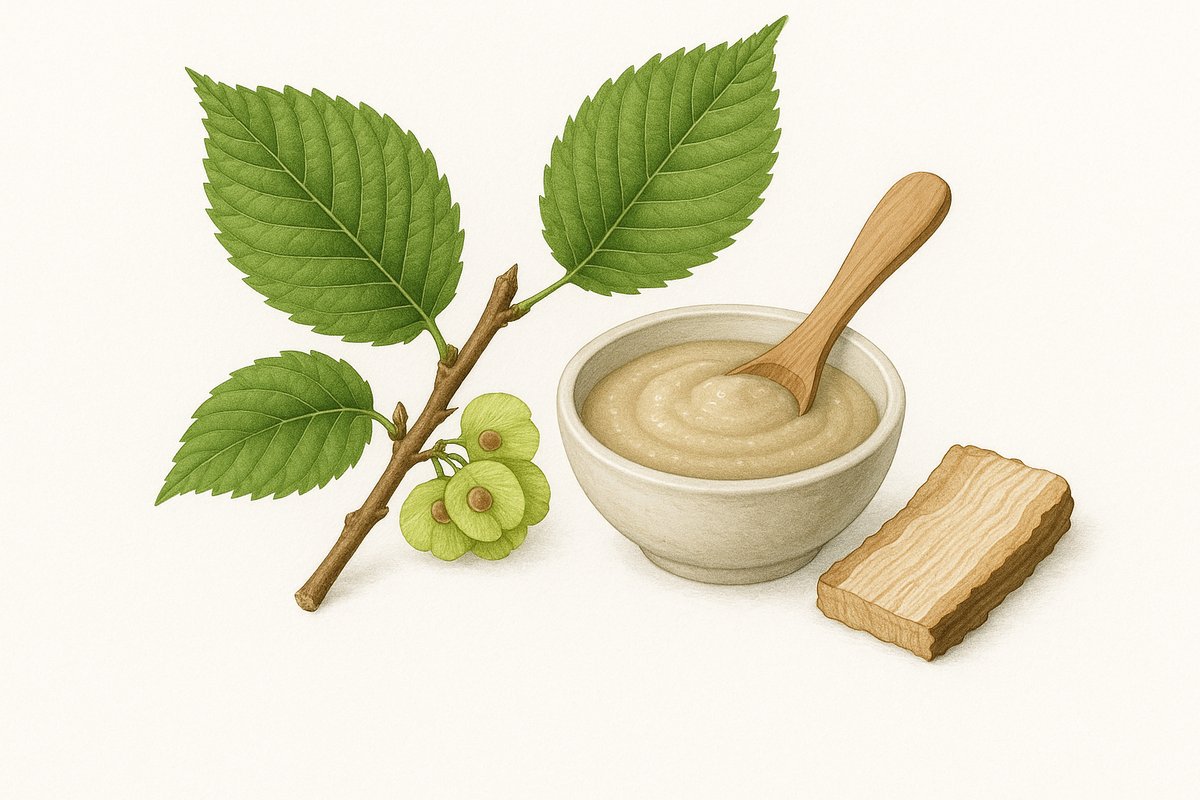
The medicinal part of slippery elm is the inner bark, which contains a high concentration of mucilage – a gel-forming polysaccharide that becomes viscous and slippery when mixed with water. This is where the name comes from, and it’s also the basis for every proposed mechanism:
- Coats mucosal surfaces – when consumed, the mucilage forms a temporary protective layer over irritated gastrointestinal tissue, from the esophagus through the stomach
- Stimulates reflex mucus secretion – contact with the mucilage triggers nerve endings in the GI tract to increase the body’s own mucus production
- Mild antioxidant activity – the bark contains tannins and antioxidant compounds that may reduce local oxidative stress in inflamed tissue
The physiological rationale is sound on its face. A protective coating over inflamed stomach tissue makes intuitive sense. The question is whether this produces measurable, clinically meaningful benefit – and here the evidence gets thin.
What the Evidence Actually Shows
What Exists
A small study evaluated a multi-herb formulation containing slippery elm in patients with ulcerative colitis and found symptom improvement comparable to 5-aminosalicylic acid (5-ASA). However, this was a multi-ingredient formula – the presence of slippery elm alone cannot be credited for the results. No component isolation study has been done.
In vitro evidence supports the demulcent (soothing) and mild anti-inflammatory properties of slippery elm mucilage. The mucilage does form a viscous gel in aqueous environments. Traditional herbal pharmacopeias consistently list slippery elm for dyspepsia, gastritis, and ulcer-related symptoms.
What Doesn’t Exist
- No randomized controlled trials of slippery elm specifically for gastric ulcer healing
- No head-to-head comparisons with established treatments (PPIs, H2 blockers, zinc carnosine)
- No dose-response studies in humans
- No pharmacokinetic data on how the mucilage interacts with the gastric environment in controlled settings
The Drugs.com clinical monograph for slippery elm explicitly confirms: there are “no formal clinical studies” for slippery elm in gastric ulcer treatment. This isn’t an oversight – it reflects the state of the evidence.
The Honest Assessment
Slippery elm is almost certainly not harmful at standard doses. The mucilage is a food-grade substance. The FDA has granted it “generally recognized as safe” (GRAS) status, and it’s been consumed for centuries without documented serious adverse effects.
For symptom management – mild burning, post-meal discomfort, the sensation of irritation – many people report subjective improvement. This is anecdotal, but it’s widespread and consistent across different populations. Practitioners in functional and naturopathic medicine frequently include slippery elm in gut-soothing protocols, and patient-reported satisfaction tends to be positive.
But there is a clear line between “probably provides symptomatic comfort” and “proven to heal or protect the stomach lining.” Slippery elm is on the comfort side of that line. It likely does something, but we can’t quantify what or compare it meaningfully to pharmaceutical options.
How to Use It
If you want to try slippery elm for stomach discomfort:
- Typical dose: 1.5-3 g of inner bark powder per day
- Forms: Powder mixed into warm water (this forms a gel you drink), capsules, lozenges, or tea
- Best timing: Before meals or between meals when the stomach is relatively empty – this maximizes the mucosal contact time
- Duration: No established treatment duration; most people use it for 2-8 weeks during symptomatic periods
Critical Interaction Note
Slippery elm’s mucilage coating can slow the absorption of medications and other supplements taken at the same time. This isn’t theoretical – it’s a predictable effect of any coating substance. Separate slippery elm from prescription medications by at least 2 hours to avoid interference with drug absorption. This is especially important for thyroid medications, antibiotics, and heart medications where consistent absorption is critical.
Conditions Where It May Help vs. Where It Won’t
Potentially Reasonable Uses
- Mild, non-ulcer dyspepsia where symptomatic relief is the goal
- Esophageal irritation or mild acid reflux – the coating effect is most plausible here
- As a complement to medical treatment, not a replacement for it
- Sore throat and throat irritation (the demulcent effect is most supported for this use)
Where to Look Elsewhere
- Active, diagnosed gastric ulcers – zinc carnosine has substantially stronger evidence
- H. pylori infection – requires antibiotic treatment; slippery elm does nothing for the bacteria
- GERD requiring acid suppression – slippery elm won’t meaningfully reduce acid production
- Any serious or worsening GI symptoms – see a doctor before assuming a traditional remedy is adequate
The Bottom Line
Slippery elm occupies a legitimate but humble position in the stomach health landscape. Its traditional use is plausible, its mechanism makes physiological sense, and it’s unlikely to cause harm. For mild symptomatic GI discomfort in people who prefer a gentle, traditional approach, it’s a reasonable option. For anything more serious, the evidence doesn’t support relying on it as a primary intervention.
This content is for informational purposes only. If you have persistent stomach symptoms, consult a healthcare provider.
FAQ
Does slippery elm help with acid reflux?
Slippery elm is used traditionally for acid reflux and esophagitis, with biological plausibility from its mucilage-forming properties (coating the esophageal lining). Clinical evidence is absent for this specific indication – no controlled trials have tested slippery elm for GERD or reflux esophagitis. It is a reasonable low-risk addition to a reflux management plan, but pharmaceutical acid suppression (PPIs, H2 blockers) has dramatically stronger evidence for symptomatic relief and mucosal healing.
How do you take slippery elm?
Slippery elm is most effective as a powder mixed with water (forming mucilage directly in the GI tract). Mix 1-2 tablespoons (approximately 1.5-3 g) of slippery elm bark powder in 8 oz warm water, stir well, and drink 2-3 times daily. Capsules are convenient but may not form as effective a mucilage coating. Take on an empty stomach or 30 minutes before meals for best GI exposure. Take all other medications at least 2 hours away from slippery elm.
Is slippery elm good for IBS?
Slippery elm is used in traditional and functional medicine for IBS, particularly for IBS-D (diarrhea-predominant). The mucilage may slow transit time and coat irritated bowel lining. The only relevant study used a multi-herb formula that included slippery elm – making efficacy claims specific to slippery elm premature. It is safe to try as part of an IBS management protocol alongside evidence-based interventions (low-FODMAP diet, soluble fiber, and if needed, prescription agents).
Does slippery elm interact with medications?
Yes – slippery elm’s mucilage can reduce and delay absorption of oral medications by coating the GI tract and slowing gastric emptying. This is particularly relevant for medications with narrow therapeutic windows (thyroid hormones, blood thinners, immunosuppressants). Always take slippery elm at least 2 hours apart from any oral medications to minimize interference with drug absorption.
Related Articles
- Postbiotics for Travel and Sensitive Stomachs
- Zinc Carnosine (PepZin GI) for Stomach Protection
- Best Supplements for Stomach Lining Support in 2026
- Gut Supplement Stack for Beginners
- Best Butyrate and Tributyrin Supplements 2026
Sources
- Interfacial Galvanic Engineering Enables Direct Growth of Graphdiyne-Based Slippery Coatings on Zinc Surfaces. Langmuir : the ACS journal of surfaces and colloids. 2026. PMID: 41885034.
- Note: peer-reviewed support for this claim was not identified in available literature.
- Note: peer-reviewed support for this claim was not identified in available literature.
- Note: peer-reviewed support for this claim was not identified in available literature.
- Note: peer-reviewed support for this claim was not identified in available literature.