Nail Care & Polish Guide 2026: Non-Toxic Picks
Quick Answer: Healthy nails start with proper cuticle care, hydration, and gentle maintenance — not just polish. The best non-toxic nail polishes in 2026 skip formaldehyde, toluene, DBP, camphor, and TPHP. Zoya, ORLY, and Sally Hansen Good.Kind.Pure lead the category. For gel-like wear without UV damage, try Essie’s Gel Couture or Sally Hansen Miracle Gel systems. Weekly cuticle oil is the most impactful single habit for nail health.
—
The State of Nail Care in 2026
Nail care has undergone a significant reformulation wave since the mid-2010s. Consumer demand for cleaner products, combined with tightening international regulations, pushed most major brands to remove or reduce the most concerning chemicals from their formulas. The result: better-formulated polishes that still perform at or above older standards.
But nail health goes beyond what’s in the bottle. Nail structure, cuticle care, diet, and polish application/removal habits all influence whether you have strong, beautiful nails — or weak, peeling, breaking ones.
—
Nail Anatomy: Understanding What You’re Working With
The Nail Plate
The visible nail is made of compacted keratin layers. It’s not alive — it grows from the matrix at the base. Polish sits on the surface of the plate and doesn’t penetrate into it significantly. What damages the nail plate is primarily mechanical trauma, harsh chemicals (acetone overuse, formaldehyde in older polishes), and dehydration.
The Nail Matrix
The matrix is the tissue at the base of the nail, partly protected by the lunula (the white half-moon). This is where nail growth originates. Damage to the matrix causes permanent changes in nail growth. Never push or cut too aggressively near the matrix area.
The Cuticle and Eponychium
The cuticle (dead skin that attaches to the nail plate) and the living eponychium (the skin behind it) serve as a barrier against bacteria and fungi. Cutting the cuticle removes this barrier. Pushing and moisturizing the cuticle is safer than cutting it.
The Hyponychium
The seal between the free edge of the nail and the fingertip. Disrupting this (through overly aggressive cleaning under the nail or pressure from prying up gel polish) can cause onycholysis (nail lifting), a significant and painful nail problem.
—
Nail Polish Chemicals: What to Avoid and Why
The “Free From” Glossary
Modern polishes market themselves with lists of omitted ingredients — “3-free,” “5-free,” “7-free,” “10-free,” or “13-free.” Here’s what these mean:
Formaldehyde / Formaldehyde Resin
Why avoid: Known carcinogen; skin sensitizer; causes nail brittleness with repeated exposure. The resin form is slightly less volatile but still potentially sensitizing.
Toluene
Why avoid: Neurotoxin, particularly concerning during pregnancy. Provides adhesion in traditional formulas; well-replaced by modern alternatives.
Dibutyl Phthalate (DBP)
Why avoid: Endocrine disruptor; linked to reproductive concerns in animal studies.
Camphor
Why avoid: Can trigger allergic reactions; absorbed through the nail plate.
TPHP (Triphenyl Phosphate)
Why avoid: An endocrine disruptor found in many polishes. Despite being added as a “safe” replacement for DBP, it’s absorbed through nails and detected in urine after polish application.
Parabens, Xylene, Ethyl Tosylamide
Less universal concerns but eliminated in cleaner formulas.
What a 5-Free Polish Means
Skips formaldehyde, formaldehyde resin, toluene, DBP, and camphor. This is the minimum standard for a reasonably clean nail polish in 2026.
10-Free and 13-Free
The cleanest currently available: removes TPHP, parabens, xylene, and other secondary concerns on top of the Big 5.
—
Best Non-Toxic Nail Polishes in 2026
Best Overall: Zoya Nail Polish ($11)
Zoya has been a pioneer in free-from nail polish since 2000. Their current formulas are 10-free and consistently rank at the top of non-toxic polish comparisons. The shade range is one of the broadest in the industry (500+ shades), and the formula provides excellent color payoff and up to 10 days of wear with a quality top coat.
Best Drugstore: Sally Hansen Good.Kind.Pure ($8)
Sally Hansen’s clean sub-line uses plant-derived ingredients and 16-free formula. Wear time is good for a drugstore product (5–7 days), shade range is limited but growing, and the price point makes it accessible. A strong first choice for anyone new to non-toxic polish.
Best for Nail Strength: ORLY Breathable Treatment + Color ($10)
ORLY’s Breathable line claims to be permeable to water and oxygen — a feature that, while debated in its specific mechanism, has received positive feedback from users with thin or damaged nails. The formula is 21-free and doubles as a one-step base + color + top coat. Excellent for low-maintenance application.
Best Gel-Like Wear: Essie Gel Couture ($11)
A two-step system (color + top coat) that delivers a gel-like high gloss finish without UV lamps. Wear typically reaches 8–14 days with proper application. The formula is 8-free. The Gel Couture Top Coat must be used for the full effect.
Best Prestige: Sienna Byron Bay ($18)
An Australian brand gaining global recognition for its 10-free, vegan formula in a beautiful curated shade range. The bottle and brush design is excellent; the formula dries quickly and stays glossy.
Best for Nails in Recovery: OPI Natural Nail Strengthener ($12)
Not a color polish but a treatment. OPI’s strengthener contains hydrolyzed wheat protein and calcium to rebuild brittle, peeling, or damaged nails. Apply as a base coat under polish or as a standalone clear treatment.
—
Gel Alternatives: Maximum Wear Without the UV Damage
Why Traditional Gel Has Concerns
Traditional gel manicures require UV lamp curing. UV lamp exposure increases UV radiation to the hands, with documented potential for DNA damage with frequent use. A 2023 study (University of California San Diego) raised concerns about UV nail lamp carcinogenesis with regular exposure. Additionally, gel removal requires soaking in acetone, which is significantly dehydrating to nails and surrounding skin with repeated use.
Best Gel-Free Long-Wear Systems
Sally Hansen Miracle Gel ($10 for system)
A two-step drugstore system (polish + top coat) that delivers 14-day wear without UV lamps. The top coat contains a UV absorber that uses daylight to partially cure the finish, extending wear. Widely available and community-verified for wear time.
Essie Gel Couture ($11 + $11 for top coat)
Competitive with Miracle Gel; better shade range and slightly more gel-like gloss in side-by-side comparisons.
OPI Infinite Shine ($14)
A three-step system (primer, color, gloss) that provides 11-day wear and a high-gloss finish. The primer provides adhesion equivalent to a gel base; the gloss acts like a gel top coat without UV curing.
Dashing Diva Gloss Ultra Shine Gel Sheet ($8)
Semi-cured gel nail strips that are applied at home without UV. They’re already partially cured; once applied, regular daylight cures them further. Excellent for people who want gel wear without the salon time or UV exposure.
—
Nail Health Fundamentals
Cuticle Care: The Foundation
The single most impactful habit for nail appearance and health is consistent cuticle oil application.
Why cuticle oil matters:
The cuticle and nail plate absorb oil, keeping them flexible and less prone to cracking or peeling
Well-hydrated cuticles are less likely to develop hangnails
Dry cuticles lift away from the nail plate, creating gaps that harbor bacteria and fungi
Best cuticle oils:
CND SolarOil ($10): Industry standard; jojoba oil + vitamin E base; penetrates nail plate better than many alternatives.
Sally Hansen Vitamin E Nail & Cuticle Oil ($6): Drugstore option with solid community reviews.
OPI ProSpa Nail & Cuticle Oil ($15): A luxe everyday option with added botanical extracts.
How often: Daily is ideal. Even 4x per week makes a visible difference within 2–3 weeks.
How to apply: One drop per nail, massaged into the cuticle and nail plate in a circular motion. Best applied before bed so it absorbs overnight.
Should You Cut Your Cuticles?
Cuticle cutting (done at salons or at home) removes the dead skin that overlaps the nail plate. It creates a cleaner look temporarily but removes the barrier against bacteria and fungi. Repeated cutting can cause damage that leads to irregular nail growth.
The safer approach: Soak nails in warm water for 5 minutes, then gently push back the cuticle with a rubber-tipped cuticle pusher. Apply cuticle oil. This achieves a clean appearance without the infection risk of cutting.
Nail Filing Direction
The old rule — “never file back and forth” — has nuance. Extremely rough, low-grit files can cause micro-tears when used in a sawing motion. A 240-grit or higher file can be used in any direction without damage. Avoid metal files and very rough emery boards — these fracture the nail edge and cause peeling.
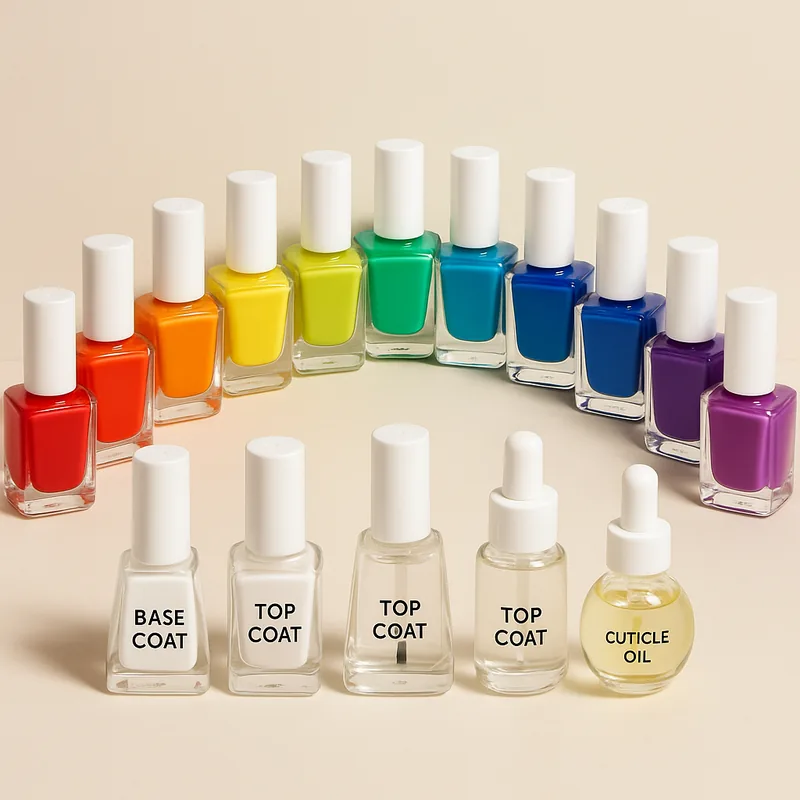
Base Coat: Why It Matters More Than People Think
A quality base coat:
Creates adhesion between nail and polish (reduces chipping)
Prevents staining from dark polishes on the nail plate
Some formulas strengthen the nail (hydrolyzed proteins, calcium)
Never skip base coat when wearing colored polish, especially dark shades — yellow staining from red, burgundy, and deep blue polishes is nearly impossible to remove from the nail plate.
—
Removal: Protecting Your Nails During Polish Changes
Acetone vs. Non-Acetone Removers
Acetone: More effective; removes polish faster with less scrubbing. More dehydrating to the nail plate and surrounding skin. Best used with minimal soaking time — no more than needed to remove polish.
Non-acetone: Gentler on nails and skin; takes longer and requires more effort. Better for frequent polish changers with dry or sensitive skin.
Best removers:
Zoya Remove+ ($12): Acetone-based with added hydrating conditioners; gentler than straight acetone.
ella+mila Soy Nail Polish Remover ($9): Non-acetone, soy-based; one of the most effective gentle removers available.
Côte Nail Polish Remover ($20): Clean formula, non-acetone, moisturizing; a premium option.
Removal Best Practices
Soak a cotton pad in remover; press against nail for 10 seconds before wiping
Wipe in one direction (root to tip), don’t scrub
For stubborn polish: soak a cotton pad, wrap the fingertip for 30–60 seconds, then wipe
Apply cuticle oil or hand cream immediately after removal — this is when the nail is most dehydrated
—
Building a Simple At-Home Nail Routine
Weekly maintenance:
Remove old polish with an acetone or non-acetone remover
File nails to desired shape with a 240-grit file
Push back cuticles gently after 5 minutes of warm water soaking
Apply a nail strengthener or treatment as base coat
Apply 2 thin coats of non-toxic color polish
Finish with a gel-like top coat
Apply cuticle oil to all nails
Daily:
Apply cuticle oil before bed (most important habit)
Wear gloves for cleaning and dishes — detergents strip nail moisture
Key Takeaways
5-free minimum for non-toxic polish; choose 10-free or higher if you’re concerned about TPHP and secondary chemicals.
Zoya is the gold standard for non-toxic color and wear; Sally Hansen Good.Kind.Pure leads drugstore clean polish.
Cuticle oil daily is the single highest-impact nail health habit — applied before bed every night.
Push, don’t cut cuticles to maintain the protective barrier.
Sally Hansen Miracle Gel and Essie Gel Couture deliver gel-like wear without UV lamps.
Base coat is mandatory — especially with dark polishes — to prevent nail staining and extend wear.
—
Frequently Asked Questions
How long does non-toxic nail polish last compared to regular?
Modern non-toxic formulas (Zoya, ORLY, Essie) last comparably to traditional polishes — 5–10 days on average. Top-coat quality is the bigger variable than base formula in most cases.
Can nail polish damage my nails permanently?
Regular nail polish itself causes minimal permanent damage. The risks come from harsh removers (excessive acetone soaking), formaldehyde-containing formulas causing brittleness, and physical trauma from improper gel removal.
What causes nails to peel?
Most nail peeling is caused by dehydration (too much water/detergent exposure without moisturizing), physical trauma, or lack of keratin nutrition. Increase cuticle oil use, take biotin supplements (evidence is limited but widely used), and protect nails from water.
Is gel nail polish safe?
The primary concerns are UV lamp exposure and acetone removal. Gel-free long-wear systems avoid both concerns. If you continue traditional gel, wear broad-spectrum SPF 50 fingerless gloves during UV lamp curing.
Should I take nail supplements?
Biotin (vitamin B7) is the most studied nail supplement. Evidence is modest — it helps with thin, brittle nails in some people. Collagen peptide supplements also show some nail-strengthening benefit in studies.
What’s the correct way to file nails to prevent breaking?
Use a 240-grit or finer file. File in one direction or light back-and-forth motion with a fine file. File the sides slightly inward (slightly squared or squoval shape) — this is structurally stronger and breaks less easily than sharp square or pointed shapes.
—
Sources
Environmental Working Group Skin Deep database: nail polish ingredient safety data
ORLY Breathable formulation research notes
University of California San Diego study on UV nail lamps, 2023
Zoya product formulation and toxicology documentation
American Academy of Dermatology: nail care recommendations