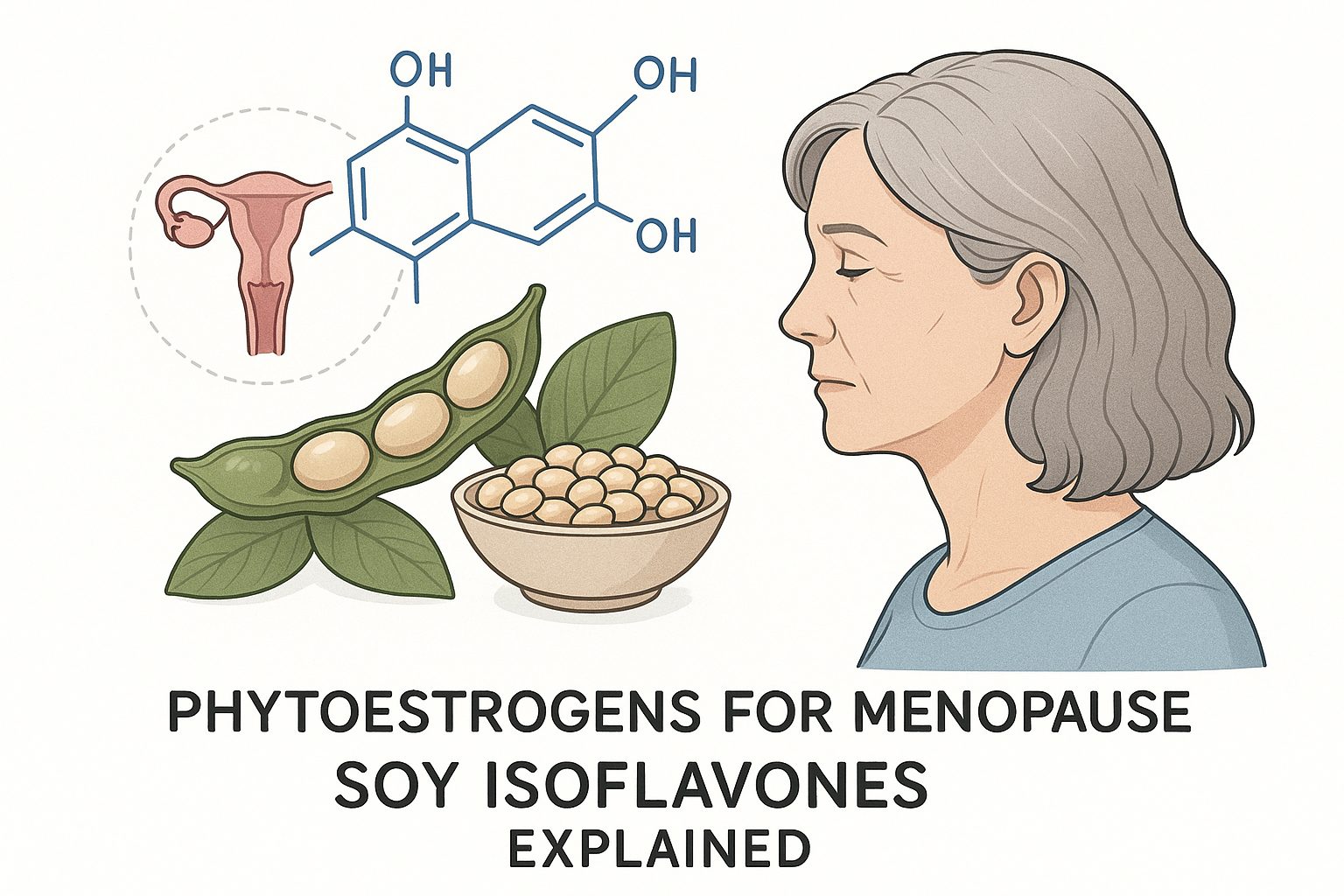
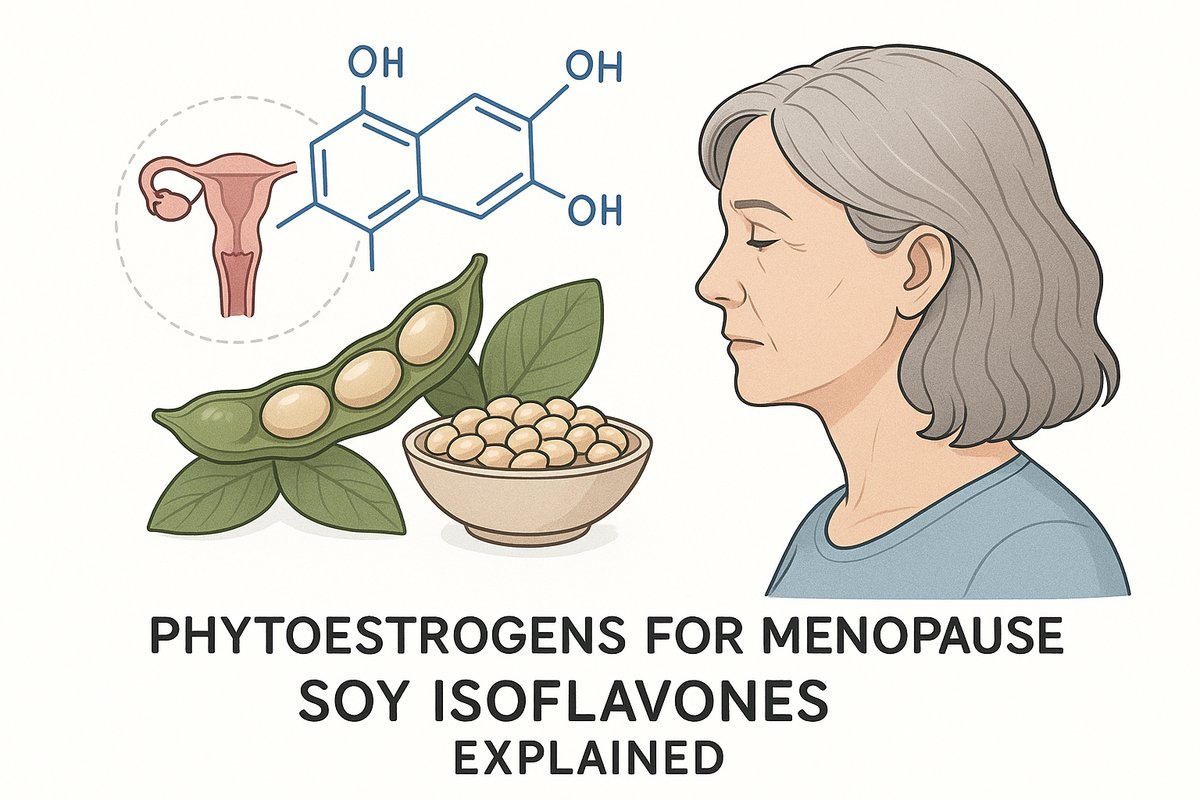
Phytoestrogens – plant compounds that weakly bind estrogen receptors – are among the most commonly used natural approaches to menopause symptoms. Soy isoflavones and red clover dominate the market. The evidence is real but modest, and the safety picture is more complex than “it’s natural, so it’s safe.”
Phytoestrogens are plant compounds that bind and activate estrogen receptors (ER? and ER?) at affinity 100-10,000 times lower than endogenous estradiol. The three major categories: isoflavones (genistein, daidzein – from soy and red clover), lignans (secoisolariciresinol – from flaxseed, sesame), and coumestans (coumestrol – from alfalfa). RCT evidence for menopausal symptom relief: soy isoflavones (40-80 mg/day) modestly reduce hot flash frequency (~20-25% reduction vs. placebo) and improve vaginal dryness; flaxseed lignans show modest vasomotor benefit; red clover isoflavones have inconsistent results. Effects are significantly smaller than HRT but real, making phytoestrogens a reasonable option for women with mild-moderate vasomotor symptoms who prefer non-hormonal approaches.
- Phytoestrogens preferentially bind ER? over ER? – this receptor selectivity may explain their tissue-specific effects: cardiovascular and bone protective (ER?-mediated) without significant uterine stimulation (ER?-driven). This selective binding profile may explain their different safety profile vs. pharmaceutical estrogen.
- Equol – a more potent isoflavone metabolite produced by gut bacteria from daidzein – may account for much of soy’s menopausal benefit. Approximately 25-35% of Western women and 50-60% of Asian women are ‘equol producers.’ Non-producers may experience less benefit from soy isoflavone supplementation.
- A 2021 meta-analysis of 62 RCTs found soy isoflavone supplementation significantly reduced hot flash frequency by 11% and daily hot flash frequency by 1.31 per day vs. placebo – modest but statistically consistent across trials with >40 mg isoflavone/day.
- Flaxseed (2 tablespoons ground/day) provides 40-50 mg lignans (as SDG – secoisolariciresinol diglucoside) and has evidence for modest hot flash reduction and potential lipid-lowering benefits in menopausal women via combined phytoestrogenic and fiber mechanisms.
- The safety of phytoestrogens in women with hormone-sensitive breast cancer is the most debated question in this field – observational data suggests high dietary soy intake in Asian women does not increase breast cancer risk and may reduce it, but clinical guidance for breast cancer survivors remains cautious about high-dose isoflavone supplementation.
What Phytoestrogens Actually Are
Phytoestrogens are plant-derived compounds with structural similarity to 17?-estradiol (the primary human estrogen). They bind estrogen receptors but with ~100-1,000x lower affinity than endogenous estrogen.
Key classes:
- Isoflavones (genistein, daidzein) – found in soy and red clover
- Lignans – found in flaxseed, sesame seeds, whole grains
- Coumestans – found in alfalfa and clover sprouts
The selective action: Phytoestrogens preferentially bind estrogen receptor beta (ER?) over alpha (ER?). ER? is concentrated in bone, brain, and vascular tissue. ER? is dominant in breast and uterine tissue. This selective binding is why phytoestrogens may provide some estrogenic benefits without the breast/uterine cancer risks of full estrogen – in theory.
Soy Isoflavones: The Evidence
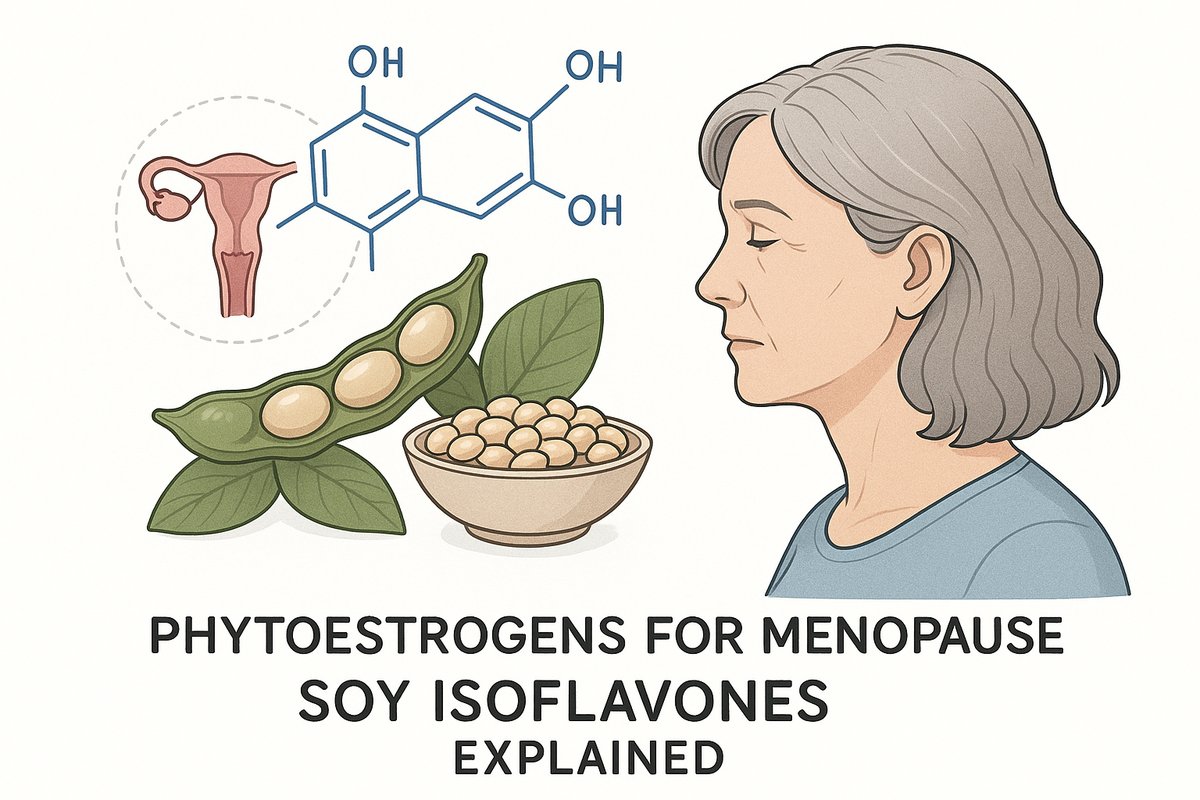
For Hot Flashes
The most-studied application:
- 2012 meta-analysis (Taku et al., Menopause): 19 RCTs, 1,422 women. Soy isoflavones reduced hot flash frequency by 20.6% and severity by 26.2% vs. placebo. Statistically significant but clinically modest
- 2015 Cochrane review: Found overall inconsistent results, but trials using ?54mg/day of genistein for ?12 weeks showed more consistent benefit
- The SPARE trial (2021): Whole-soy diet (not supplements) combined with reduced fat intake virtually eliminated hot flashes in many participants. However, this study lacked a true control group
The equol factor: About 30-50% of people convert daidzein to equol (a more potent phytoestrogen) via gut bacteria. Equol producers tend to get more benefit from soy. This individual variation may explain why studies show inconsistent results – it depends on your microbiome.
For Bone Health
- Multiple studies show soy isoflavones slow bone loss in postmenopausal women, though the effect is small (~1-2% preservation vs. placebo over 1-2 years)
- Most relevant for early postmenopausal women (first 5 years)
- Genistein at 54mg/day has the most consistent bone data
- Not a replacement for calcium, vitamin D, or resistance training
For Cardiovascular Health
- Soy protein intake (not just isoflavones) is associated with modest reductions in LDL cholesterol (~3-5%)
- The FDA allowed a soy heart health claim in 1999 (25g soy protein/day) but proposed revoking it in 2017 due to inconsistent evidence
- Isoflavone supplements alone show weaker cardiovascular effects than whole soy foods
Red Clover (Trifolium pratense): The Evidence
Red clover contains four main isoflavones: biochanin A, formononetin, genistein, and daidzein. Biochanin A and formononetin are converted to genistein and daidzein in the body, meaning red clover is essentially a different delivery system for similar compounds.
For Hot Flashes
- A 2007 meta-analysis of 5 RCTs found no significant benefit of red clover for hot flashes
- However, individual trials show mixed results – Promensil (a standardized red clover extract at 80mg isoflavones) showed benefit in some studies
- Overall evidence is weaker than for soy isoflavones
For Other Menopause Symptoms
- Some evidence for improved skin quality and thickness (one trial)
- Limited evidence for anxiety and sleep improvement
- Insufficient evidence for bone health (smaller study base than soy)
Safety: The Breast Cancer Question
This is the most important safety consideration:
Soy foods:
- Large observational studies (particularly from Asian populations where soy intake is high) consistently show soy food consumption is associated with LOWER breast cancer risk
- The Shanghai Breast Cancer Survival Study (5,000+ survivors) found soy food intake was associated with reduced recurrence and mortality
- Current consensus: soy foods (tofu, edamame, miso) are safe and potentially protective, even for breast cancer survivors
Soy/isoflavone supplements:
- The picture is less clear for concentrated isoflavone supplements
- Some cell studies show genistein can stimulate estrogen-receptor-positive breast cancer cell growth at certain concentrations
- Clinical studies in breast cancer survivors have been small and short-term
- Most oncologists currently advise caution with high-dose isoflavone supplements (but not with soy foods) in women with ER+ breast cancer history
Red clover:
- Similar theoretical concerns as soy isoflavones
- Less safety data available than for soy
Bottom line: Soy foods appear safe. Concentrated isoflavone supplements in women with breast cancer history should be discussed with an oncologist.
Practical Guidance
Who Might Benefit
- Women with mild-moderate hot flashes who prefer not to use HRT
- Women for whom HRT is contraindicated (certain blood clotting disorders, some cardiovascular conditions)
- Women already consuming soy foods who want to increase their intake intentionally
Dosing
| Supplement | Effective Dose | Duration to Assess |
|—|—|—|
| Soy isoflavones (genistein focus) | 40-80mg/day | 12+ weeks |
| Red clover (Promensil) | 80mg/day | 12+ weeks |
| Whole soy foods | 2-3 servings/day | 8+ weeks |
What to Expect
- 20-30% reduction in hot flash frequency (on average)
- Not as effective as HRT for severe symptoms
- Effects may take 8-12 weeks to appear
- Individual response varies enormously (equol producer status matters)
Consider S-equol Supplements
For non-equol producers (50-70% of Western populations), S-equol supplements provide the active metabolite directly, bypassing the need for gut bacterial conversion. Early studies are promising but limited.
Related reading:
- Best Menopause Supplements
- Black Cohosh for Hot Flashes
- Calcium and Vitamin D for Menopause Bone Health
FAQ
Do phytoestrogens help with hot flashes?
Yes – soy isoflavones (40-80 mg/day) significantly reduce hot flash frequency in RCTs, though the effect size (~20-25% reduction vs. placebo, ~1-2 fewer hot flashes per day) is smaller than HRT. Women who are ‘equol producers’ (convert daidzein to equol via gut bacteria) experience stronger benefits. Consistent supplementation for 8-12 weeks is needed to evaluate efficacy.
Are phytoestrogens safe for breast cancer survivors?
This is an area of clinical debate. High dietary soy intake in observational studies is not associated with increased breast cancer recurrence – in fact, some studies suggest modest protective effects in Asian populations. However, high-dose isoflavone supplements (>80 mg/day) have not been adequately studied in breast cancer survivors, and major oncology organizations currently recommend caution. Food-level soy is generally considered acceptable; high-dose supplements require oncologist consultation.
What is the best source of phytoestrogens?
Whole food sources: fermented soy products (tempeh, miso, natto – fermentation increases isoflavone bioavailability and equol production), edamame and tofu (2-3 servings/day provides ~40-80 mg isoflavones), ground flaxseed (2 tablespoons/day for lignan phytoestrogens), and sesame seeds. For targeted supplementation: standardized red clover isoflavone extract (40-80 mg/day, e.g., Promensil) or soy isoflavone extract (40-80 mg/day).
Is soy bad for menopause?
No – soy is beneficial for menopausal symptom management in most women, particularly those who are equol producers. Moderate dietary soy (1-3 servings/day of whole soy foods) provides 40-80 mg isoflavones and shows consistent modest benefit for hot flashes without significant safety concerns in healthy women. The ‘soy is bad for hormones’ narrative largely reflects misapplication of high-dose animal studies to normal dietary intake.
Related Articles
- Black Cohosh for Hot Flashes: What the Research Shows
- Calcium and Vitamin D for Bone Density in Menopause
- Collagen and Bone Support After Menopause
- Best Menopause Supplements in 2026
- Complete Guide to Menopause Supplements in 2026
Sources
- Systematic reviews on soy isoflavones and menopausal symptoms.
- Patisaul HB, Jefferson W. The pros and cons of phytoestrogens.
- Messina M. Soy and health update: evaluation of the clinical and epidemiologic literature.
- Meta-analyses on soy isoflavones for hot flashes and menopausal complaints.
- Reviews on soy isoflavone safety, including breast and endometrial outcomes.
📚 Part of our Complete Guide to Menopause Supplements hub. Explore all our menopause supplement evidence reviews.