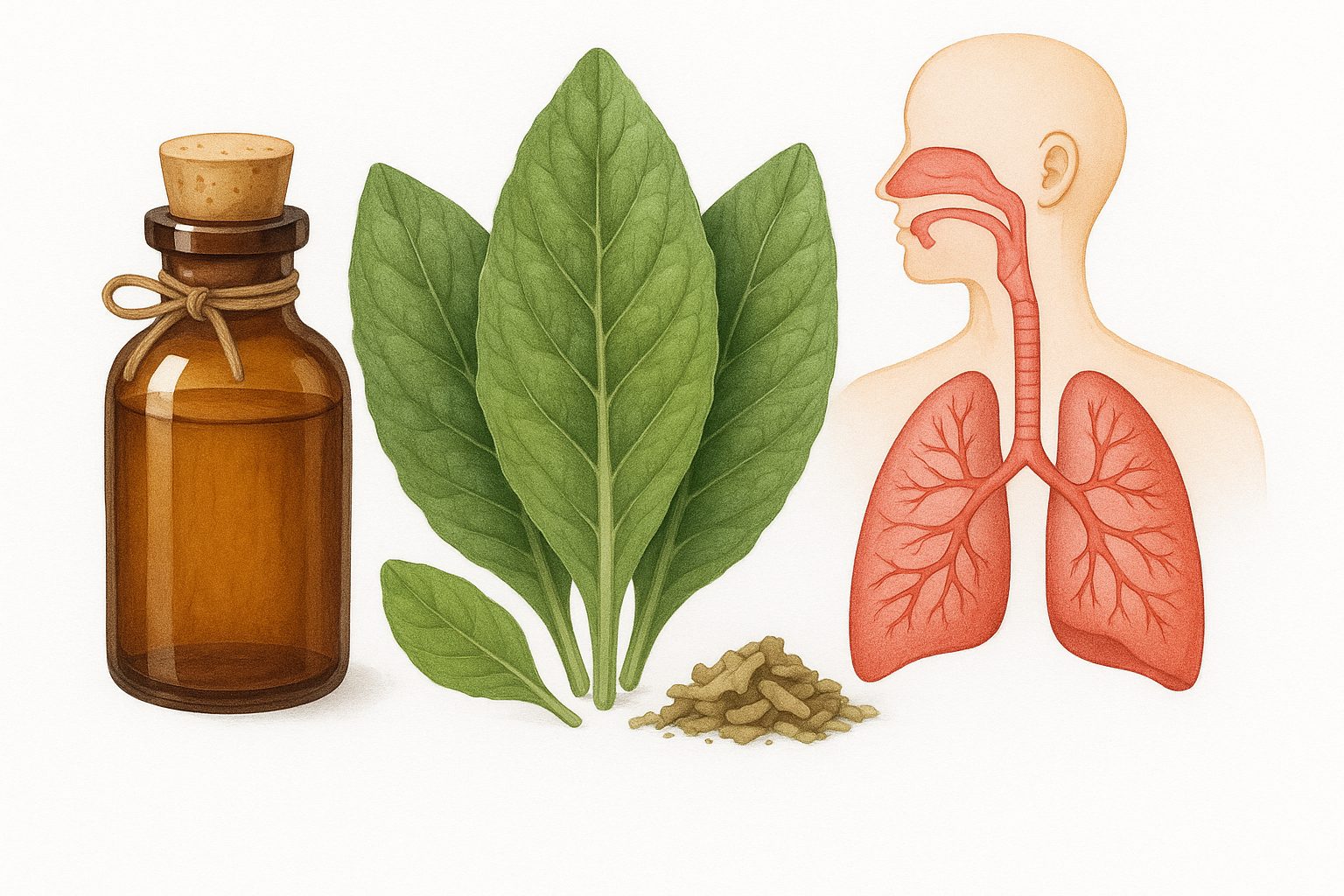
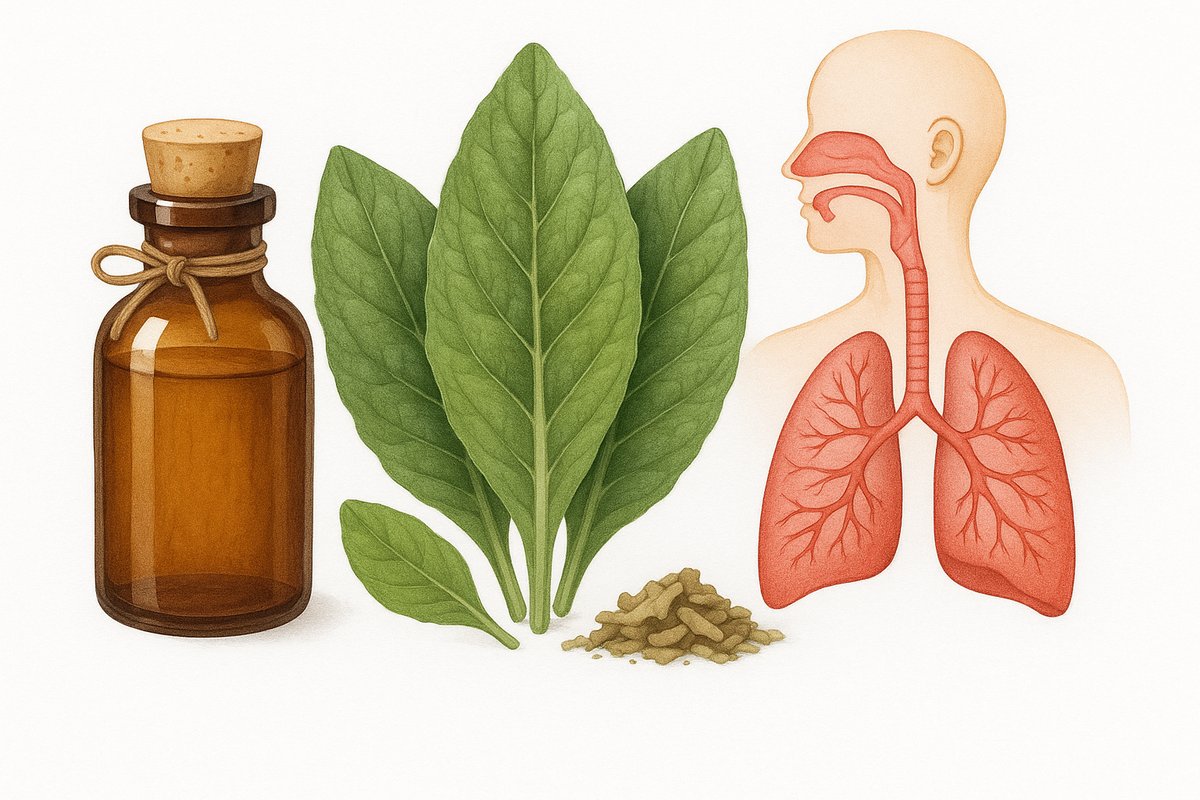
Mullein leaf (Verbascum thapsus) is having a moment. It’s trending on TikTok, showing up in wellness supplements, and being marketed as a natural lung cleanser. But mullein isn’t new — it’s been used for respiratory ailments across European, Turkish, Appalachian, and Native American traditions for centuries.
Mullein leaf (Verbascum thapsus) is one of the most traditional herbal respiratory remedies, used for centuries for coughs, bronchitis, and congestion. The scientific evidence is largely preclinical and historically based: in vitro studies show antiviral activity against influenza and pseudorabies viruses; saponin and mucilage content provides theoretical expectorant and demulcent mechanisms; and a 2003 study showed mullein ear drops were comparable to anesthetic drops for ear pain in children. For direct respiratory clinical evidence in humans, the database is thin — no well-powered RCTs exist for mullein’s most popular claim (improving lung clearance or reducing respiratory infection severity). It is likely safe, plausibly helpful for symptomatic relief of mild coughs, and overhyped for anything more serious.
- Mullein’s mucilage content (polysaccharides that form a soothing gel when wet) provides a plausible mechanism for its demulcent (throat-soothing) reputation — this is consistent with the ingredient’s traditional use for irritated airways and dry cough.
- Saponins in mullein have theoretical expectorant properties (increasing bronchial secretions to loosen mucus) — this mechanism is well-established for other saponin-rich plants (like ivy leaf in European phytotherapy), making mullein’s expectorant reputation plausible but unstudied in clinical trials.
- In vitro antiviral data (mullein extracts against influenza A, pseudorabies, HSV-1) are intriguing but extremely preliminary — in vitro antiviral activity translates to clinical benefit only rarely, and no human antiviral trials for mullein exist.
- Mullein’s safety profile is generally favorable: few adverse events reported at typical doses; mullein leaf tea is the traditional preparation at 1-2 tsp dried leaf steeped 10-15 minutes, strained well to remove plant hairs that can irritate mucous membranes.
- The post-COVID social media surge in mullein popularity (claiming it ‘cleans’ lungs after COVID-19 or smoking) significantly exceeds the evidence — no clinical data support mullein as a therapeutic agent for COPD, post-COVID lung damage, or smoking recovery.
The question isn’t whether people have used mullein for their lungs. They clearly have, for a very long time. The question is whether modern science supports those uses — and the honest answer is: partially, but with major gaps.
A Deep History of Respiratory Use
Mullein’s respiratory reputation spans continents and centuries:
- European folk medicine: Mullein leaf and flower infusions for bronchitis, coughs, and sore throats have been documented across Spain, Turkey, Italy, and the British Isles [1]
- Appalachian herbalism: Mullein tea was a staple remedy for chest congestion and “lung troubles” in the rural American South
- Native American traditions: Multiple tribes used mullein (after its introduction to North America) for respiratory complaints
- Traditional Chinese and Ayurvedic medicine: Related Verbascum species appear in Asian medical traditions
The European Medicines Agency (EMA) classifies mullein flower as a “traditional herbal medicine” for soothing sore throats and dry coughs, based on long-standing use rather than clinical evidence [2].
The Pharmacology: Why It Should Work
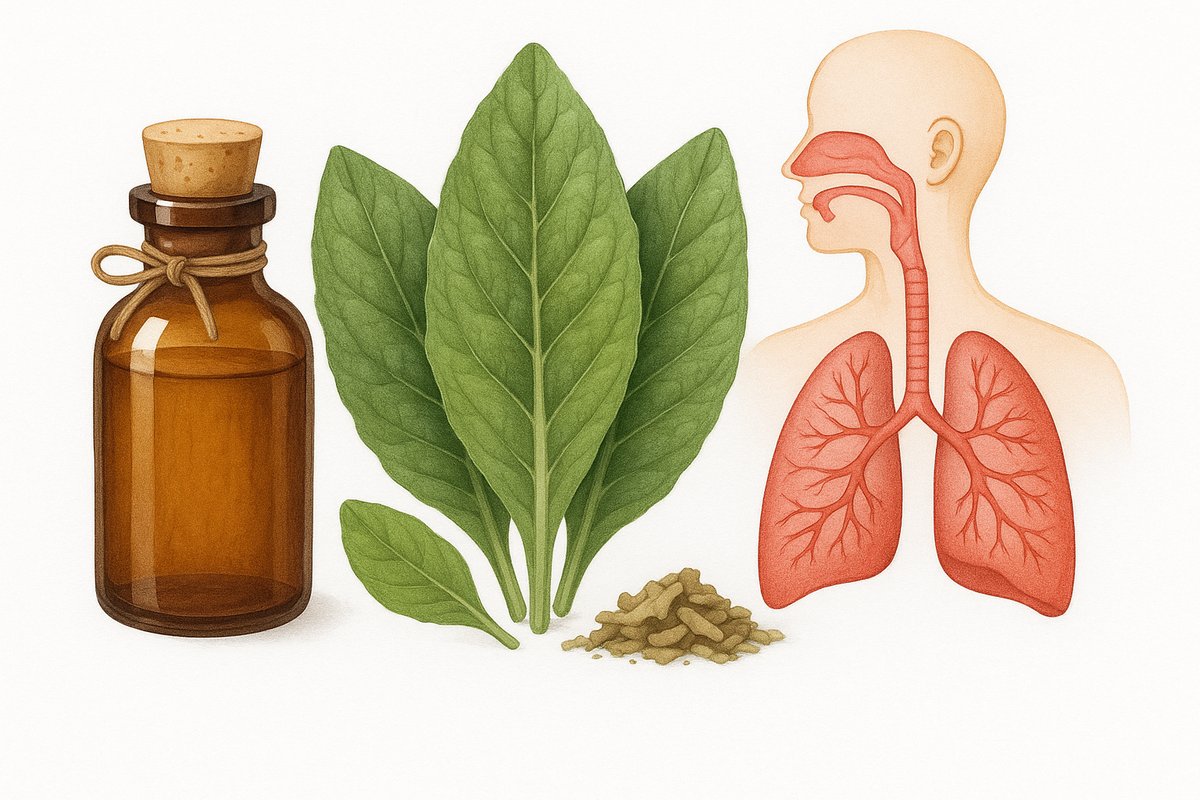
Mullein contains several compound classes with documented biological activity relevant to respiratory health:
Saponins — the expectorant connection
Saponins are amphiphilic (soap-like) compounds that reduce surface tension. In the airways, this action is believed to stimulate the secretion of thinner, more watery mucus that’s easier to cough up — the definition of an expectorant. Mullein leaves contain significant saponin content [3].
This mechanism is pharmacologically plausible. Many traditional expectorant herbs (ivy leaf, licorice root) work through saponin-mediated mechanisms, and ivy leaf saponins have been validated in human clinical trials. Mullein saponins haven’t received the same clinical attention.
Mucilage — soothing the lining
Mullein leaves are rich in mucilage, a polysaccharide that forms a gel-like film over mucous membranes when dissolved in water. This demulcent action physically coats and soothes irritated throat and airway tissue, reducing the tickle sensation that triggers coughing [4].
This isn’t speculative — mucilage-based demulcent action is well-understood and is why marshmallow root, slippery elm, and similar herbs soothe sore throats. Mullein’s mucilage content is real and documented.
Flavonoids — anti-inflammatory potential
Mullein contains apigenin, luteolin, kaempferol, and other flavonoids with demonstrated anti-inflammatory activity in laboratory studies. These compounds inhibit pro-inflammatory enzymes (COX-2, LOX) and cytokines in cell culture models [5].
The caveat: anti-inflammatory activity in a petri dish doesn’t automatically translate to anti-inflammatory effects in human lungs after oral consumption. Bioavailability, metabolism, and tissue distribution all matter.
Verbascoside (acteoside)
This phenylpropanoid glycoside found in mullein has shown antioxidant, anti-inflammatory, and even antimicrobial activity in preclinical studies [5]. It’s one of the more pharmacologically interesting compounds in mullein, but — again — human respiratory studies are absent.
What the Research Actually Shows
Preclinical studies (cell and animal models)
- Bronchodilatory effects: A study published in BMC Complementary and Alternative Medicine demonstrated that mullein extract produced relaxation of tracheal smooth muscle in animal models, supporting the traditional use for bronchospastic conditions [6]
- Antibacterial activity: Mullein extracts have shown activity against several respiratory-relevant bacteria in vitro, including Staphylococcus aureus and Klebsiella pneumoniae [5]
- Antiviral activity: Some Verbascum species extracts have demonstrated antiviral effects against influenza and herpes viruses in cell culture [3]
- Anti-inflammatory effects: Multiple studies confirm that mullein extracts reduce inflammatory markers in cell and animal models [5]
Human clinical trials
There are essentially none specifically testing mullein leaf for respiratory endpoints.
There is one notable exception: a 2003 study in the Archives of Pediatrics and Adolescent Medicine tested a multi-herb ear drop formula containing mullein flower for ear infections in children. It found the herbal drops were as effective as conventional anesthetic drops for pain relief [7]. But this was a topical ear preparation, not an oral supplement for respiratory health, and mullein was one of several ingredients.
That’s it. No randomized controlled trials testing oral mullein supplements for coughs, bronchitis, COPD, asthma, or any respiratory condition.
The evidence gap explained
Why is there so little clinical research on such a widely used herb? Several factors:
- Funding: Mullein is an unpatentable wild plant. There’s little commercial incentive to fund expensive clinical trials.
- Regulatory path: In Europe and the US, herbs can be sold as supplements or traditional medicines without clinical trials.
- Complexity: Mullein is often used in combination with other herbs, making it difficult to isolate its individual contribution.
- Research priorities: Limited research funding goes to more commercially viable ingredients.
What We Can and Can’t Claim
Reasonable to say:
- Mullein has a long, multicultural history of use for respiratory comfort
- It contains compounds with demonstrated expectorant, demulcent, and anti-inflammatory activity in preclinical models
- Mullein tea is generally considered safe for most adults
- The demulcent (soothing) action from mucilage is pharmacologically straightforward and likely genuine
Not reasonable to say:
- “Mullein cleans your lungs” — No evidence supports this
- “Mullein treats asthma/COPD/bronchitis” — No clinical data for any of these
- “Clinically proven respiratory support” — There are no relevant clinical trials
- “Mullein detoxifies the lungs” — “Lung detox” isn’t a real medical concept
How to Use Mullein Leaf
If you want to try mullein for mild respiratory comfort:
Mullein tea (the most traditional form)
- 1–2 teaspoons dried mullein leaf per cup of hot water
- Steep 10–15 minutes, covered
- Always strain through a fine cloth or coffee filter — the tiny leaf hairs can irritate your throat
- Drink 2–3 cups daily during periods of respiratory discomfort
- Taste: mild, slightly sweet, hay-like
Tincture/extract
- Typical dose: 1–2 mL (about 30–60 drops) 2–3 times daily
- Alcohol-based tinctures extract a broader range of compounds than water infusions
Capsules
- Common doses: 500–1,000 mg dried leaf, 1–2 times daily
- Less traditional, but more convenient
- You miss the demulcent throat-coating effect that’s a key benefit of tea
Mullein smoking
- Some herbalists recommend smoking mullein leaf for acute respiratory issues
- The irony of inhaling combustion products for lung health should be obvious
- No safety or efficacy data exists for this practice
- We don’t recommend it
Safety Considerations
Mullein is generally regarded as safe, but formal safety data is limited:
- No known serious adverse effects in traditional use or limited modern studies
- Potential allergen: People allergic to plants in the Scrophulariaceae family should use caution
- Leaf hair irritation: Unfiltered mullein tea can irritate the throat and GI tract
- Pregnancy/lactation: Insufficient safety data; best avoided or used only under practitioner guidance
- Drug interactions: None well-documented, but the lack of interaction studies doesn’t mean interactions don’t exist
- Contamination risk: Wildcrafted mullein may contain heavy metals or pesticide residues depending on where it grew
The Bottom Line
Mullein leaf is one of those herbs where centuries of traditional use have created a reputation that modern research hasn’t yet confirmed or denied. The pharmacological profile is promising — the right kinds of compounds are present, and they do the right kinds of things in lab settings.
But “promising preclinical data” is not the same as “proven clinical benefit.” If you enjoy mullein tea and find it soothing during colds, there’s little reason to stop. If you’re buying mullein capsules expecting it to treat a lung condition, you’re investing in tradition and hope, not established science.
That’s not necessarily wrong. It’s just important to know which you’re buying.
FAQ
What does mullein leaf do for lungs?
Mullein leaf has traditional use as a demulcent (soothing to irritated mucous membranes) and theoretical expectorant (loosening mucus via saponins). For minor, acute dry cough or throat irritation, it may provide symptomatic relief. The evidence for more serious lung conditions (COPD, asthma, post-infection recovery) is essentially absent in rigorous clinical trials. It should not be used as a primary treatment for respiratory illness.
Is mullein safe to smoke?
Smoking mullein is popular among those seeking a tobacco substitute or herbal smoking blend. While mullein itself may be less toxic than tobacco (no nicotine, fewer carcinogenic compounds), any combusted plant material produces polycyclic aromatic hydrocarbons and particulates that damage lung tissue. There is no clinical evidence that smoking mullein is safe for the lungs, and it is not recommended.
How long does it take for mullein to work?
Anecdotally, mullein tea for soothing a dry cough or irritated throat may provide relief within 15-30 minutes (mucosal contact time). For any systemic or deeper respiratory benefit claimed in supplements, no clinical data establish a meaningful timeline. If respiratory symptoms do not improve within a few days, medical evaluation is warranted.
Is mullein better than NAC for respiratory health?
NAC (N-acetylcysteine) has substantially more clinical evidence for respiratory conditions than mullein: NAC has documented mucolytic activity (breaking down mucus disulfide bonds), antioxidant benefits (as a glutathione precursor), and clinical evidence in COPD, chronic bronchitis, and cystic fibrosis. Mullein has traditional use and plausible mechanisms but lacks comparable clinical trial evidence. For anyone with a diagnosed respiratory condition, NAC is the more evidence-supported option.
References
- Sánchez-Mata MC, et al. Review on the case of mullein in traditional medicine. J Ethnopharmacol. 2021.
- Turker AU, Camper ND. Biological activity of common mullein. J Ethnopharmacol. 2002.
- Hussain H, et al. Health-promoting and disease-mitigating potential of Verbascum thapsus. J Ethnopharmacol. 2022.
- European Medicines Agency. Verbasci flos monograph and assessment materials.
- Cleveland Clinic. Mullein overview and practical use notes.
Related Articles
- Best Mullein Leaf and NAC Supplements for Lung Support in 2026
- Mullein vs. NAC for Lung Support: Which Has Evidence?
- NAC for Lung Health: Clinical Evidence and Dosing
- NAC and Glutathione: How the Pathway Works
- Pineapple Juice for Cough in 2026
Sources
- Health-Promoting and Disease-Mitigating Potential of Verbascum thapsus L. (Common Mullein): A Review (2022)
- Common Mullein (Verbascum thapsus L.): Recent Advances in Research (2005)
- Biological Activity of Common Mullein, a Medicinal Plant (2002)
- Searching for Scientific Explanations for the Uses of Mullein in Spanish Folk Medicine: A Review (2021)
- N-Acetylcysteine Treatment in COPD and Chronic Bronchitis: Distinct Meta-Analyses (2024)