

Ergothioneine is increasingly recognized as a ‘longevity vitamin’ – a dietary compound the body has a dedicated transport system for, that declines with age, and whose deficiency may contribute to age-related decline. Human research shows lower blood ergothioneine levels in people with cognitive impairment, cardiovascular disease, and frailty. Supplementation is emerging (5-25 mg/day), but the simplest practical approach is increasing mushroom consumption – regular mushroom eaters have meaningfully higher blood ET levels and demonstrate better aging outcomes in epidemiological data.
- Ergothioneine blood levels decline with age – healthy older adults have lower ET than younger adults, paralleling other ‘longevity nutrients’ like NAD+ and CoQ10.
- ET is concentrated in mitochondria, where it may protect against oxidative damage to the electron transport chain – damage that accumulates in aging and underlies many age-related diseases.
- Epidemiological data links higher dietary ET intake (primarily from mushrooms) to reduced risk of mild cognitive impairment in Singaporean elderly populations (L-ergothioneine levels significantly lower in MCI patients vs. controls).
- Unlike many antioxidants, ergothioneine is not broadly reducing (it does not non-selectively reduce oxidants) – it appears to have selective, enzymatic-like protective activity, potentially explaining why it is preserved by a dedicated transporter.
- Practical healthy-aging approach: 100-150g of cooked mushrooms 3-5x per week provides approximately 3-8 mg ergothioneine; supplementation at 5-25 mg/day can provide this consistently regardless of dietary patterns.
Healthy aging is not just about living longer. It is about protecting the systems that usually wear down first: the brain, mitochondria, blood vessels, eyes, and tissues under constant oxidative stress. That is why ergothioneine has become so interesting. It is a diet-derived sulfur-containing compound with unusually strong stability and a dedicated human transporter, which suggests our biology treats it as important.
Researchers have even proposed ergothioneine as a “longevity vitamin” because it may support long-term resilience rather than merely preventing a short-term deficiency disease.
Why Ergothioneine Is Linked to Healthy Aging
It concentrates where stress is highest
Unlike generic antioxidants that circulate briefly, ergothioneine is actively transported into tissues through OCTN1 and tends to accumulate in areas exposed to more oxidative and inflammatory burden. That includes the brain, liver, kidneys, bone marrow, and eyes.
That pattern matters because aging is strongly tied to cumulative oxidative damage, chronic low-grade inflammation, and mitochondrial wear.
It is unusually stable
Ergothioneine exists mainly in the thione form at physiological pH, which helps explain why it is more stable than many antioxidants. In plain language, it appears less likely to burn out quickly or become pro-oxidant under the wrong conditions.
What the Research Says
Aging and lower ergothioneine levels
A 2016 study by Cheah and colleagues reported that ergothioneine levels in older adults declined significantly beyond age 60, and lower levels were associated with mild cognitive impairment. That does not prove cause and effect, but it is one reason ergothioneine is being studied in the aging field.
Longevity-vitamin theory
Bruce Ames argued in a 2018 PNAS paper that some compounds may be essential for optimal long-term health even if their absence does not create a classic deficiency disease. Ergothioneine was included in that discussion because of its dietary dependence and biologic specificity.
Emerging cognition and aging interest
Recent reviews have focused on ergothioneine in relation to cognitive health, healthy aging, and neuroprotection. The research is still developing, but it has moved beyond pure speculation.
Potential Healthy-Aging Benefits
Cognitive resilience
The brain is highly vulnerable to oxidative stress, inflammation, and mitochondrial dysfunction. Since ergothioneine can accumulate in tissues expressing its transporter and may cross into brain-related compartments, it is often discussed as a nutrient of interest for aging adults concerned about memory and cognitive resilience.
Cellular defense against oxidative stress
Ergothioneine reacts with several damaging oxidants and helps support redox balance without behaving like a flashy megadose antioxidant. That makes it more of a foundation nutrient than a stimulant-type supplement.
Support for dietary gaps
Mushrooms are the best food source of ergothioneine, yet many adults do not eat them regularly. If someone is low on mushroom intake for years, supplementation becomes more appealing.
Food First vs Supplementation
Best food sources
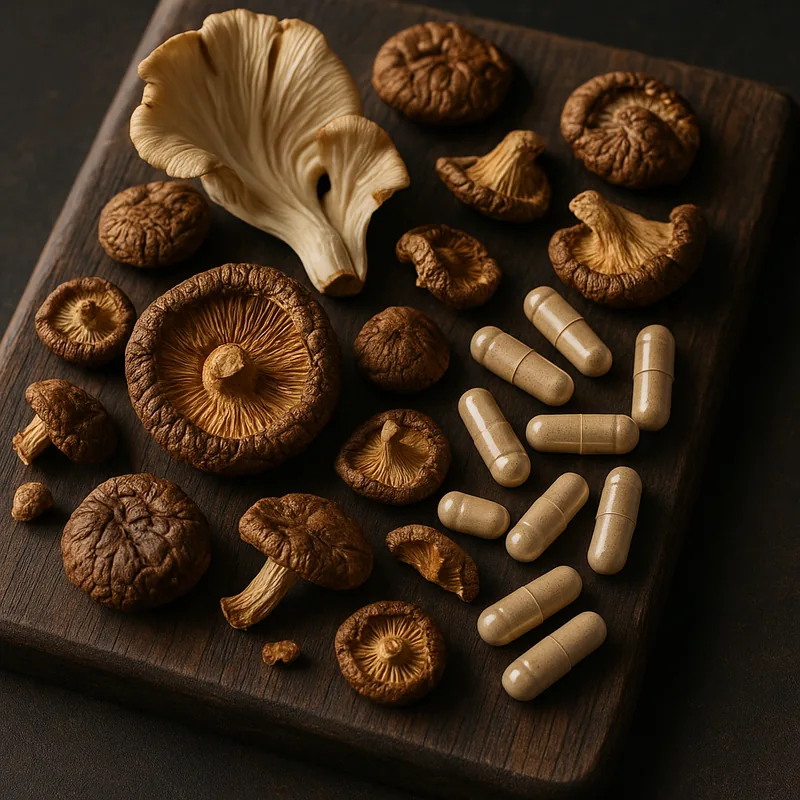
Ergothioneine is found most richly in mushrooms such as:
- oyster mushrooms
- shiitake
- porcini
- king trumpet mushrooms
Smaller amounts occur in some other foods, but mushrooms dominate.
When a supplement makes sense
A supplement may be reasonable if you:
- rarely eat mushrooms
- want a consistent daily intake
- are building a healthy-aging supplement stack
- prefer a measurable dose instead of variable food intake
How Much Ergothioneine for Healthy Aging?
A practical range is often 5 to 25 mg per day. Some people may start at the lower end and increase only if they want a more intentional longevity protocol. There is no universal ideal dose yet, because the evidence base is still early.
What Ergothioneine Will Not Do
It is not a cure for aging. It will not reverse dementia, replace sleep, fix a poor diet, or make lifestyle habits optional. If a brand suggests that, keep your wallet closed.
Healthy aging still depends heavily on basics like resistance training, protein intake, blood sugar control, sleep, sunlight, and social connection. Ergothioneine is better viewed as a supportive nutrient within that bigger picture.
FAQ
Is ergothioneine good for anti-aging?
It is more accurate to say ergothioneine may support healthy aging rather than “anti-aging.” Research points to antioxidant, cytoprotective, and possible neuroprotective roles, but it is not a proven anti-aging cure.
Should older adults consider ergothioneine?
Potentially yes, especially if they eat few mushrooms or want broader antioxidant support. Lower circulating levels have been observed in older populations.
Can you get enough ergothioneine from food?
Possibly, if you eat ergothioneine-rich mushrooms regularly. Many people do not, which is why supplements are gaining interest.
How long does ergothioneine take to work?
It is not the kind of supplement most people “feel” quickly. The rationale is long-term cellular support, not an immediate energy boost.
Sources
- Cheah IK, Halliwell B. Ergothioneine; antioxidant potential, physiological function and role in disease. Biochim Biophys Acta. 2012.
- Cheah IK et al. Ergothioneine levels in an elderly population decrease with age and incidence of cognitive decline; a risk factor for neurodegeneration? Biochem Biophys Res Commun. 2016.
- Ames BN. Prolonging healthy aging: Longevity vitamins and proteins. Proc Natl Acad Sci U S A. 2018.
This article is for informational purposes only and does not constitute medical advice. Consult your healthcare provider before starting any new supplement regimen.
Related Articles
- Best Longevity Supplements in 2026: Evidence-Based Picks for Healthy Aging, Energy, and Resilience
- Urolithin A for Healthy Aging: What It Is, What It Does, and What the Evidence Shows
- Best Ergothioneine Supplements for Healthy Aging and Antioxidant Support
- What Is Ergothioneine and Why Does It Matter for Healthy Aging?
Sources
- Rosenfeldt FL, Haas SJ, Krum H, et al. Coenzyme Q10 in the treatment of hypertension: a meta-analysis of the clinical trials. J Hum Hypertens. 2007;21(4):297-306.
- Mortensen SA, Rosenfeldt F, Kumar A, et al. The effect of coenzyme Q10 on morbidity and mortality in chronic heart failure. JACC Heart Fail. 2014;2(6):641-649.
- Littarru GP, Tiano L. Clinical aspects of coenzyme Q10: an update. Nutrition. 2010;26(3):250-254.
- Flowers N, Hartley L, Todkill D, et al. Co-enzyme Q10 supplementation for the primary prevention of cardiovascular disease. Cochrane Database Syst Rev. 2014;(12):CD010405.
📚 Part of our Longevity Supplements Guide hub. Explore all our longevity supplement evidence reviews.
📚 Part of our Ergothioneine: The Longevity Vitamin hub. Explore all our ergothioneine guides.