
Creatine is best known as a gym supplement, but researchers are increasingly studying whether it can support memory, focus, attention, and mental performance too.
Creatine supplementation shows modest but real effects on memory and cognitive tasks in certain populations — particularly vegetarians, older adults, and people who are sleep-deprived. The mechanism is creatine’s role as an energy buffer in the brain, where it replenishes phosphocreatine during high-demand cognitive tasks. Effects in healthy, well-nourished, non-sleep-deprived omnivores are smaller and more inconsistent.
- Systematic reviews and meta-analyses confirm cognitive benefits from creatine supplementation, with the strongest effects in memory tasks.
- Vegetarians and vegans show larger cognitive responses to supplementation because their baseline brain creatine stores are lower from dietary absence of creatine.
- Sleep deprivation studies show creatine helps maintain working memory and reasoning under sleep-deficient conditions, where brain energy metabolism is stressed.
- Older adults benefit more than younger people, consistent with age-related decline in creatine synthesis and store maintenance.
- The dose for cognitive benefit likely needs to be higher than for muscle (10-20 g/day, or standard doses with longer supplementation periods) to meaningfully increase brain creatine.
So, does creatine help memory and focus?
Beyond creatine, several other supplements show promise for attention and focus challenges. Our roundup of the best supplements for ADHD support covers L-tyrosine, omega-3, magnesium, and zinc.
The cautious answer is yes, possibly — but modestly and not in every situation. The evidence is encouraging, especially for memory and for people under metabolic stress, but it is not strong enough to treat creatine like a guaranteed nootropic.
Why Creatine Might Affect the Brain
Creatine helps maintain phosphocreatine stores, which support rapid ATP regeneration. The brain is one of the most energy-demanding organs in the body, so even small improvements in energy buffering may matter when the brain is stressed or underperforming.
Potential mechanisms
Researchers think creatine may help by:
- supporting cellular energy metabolism
- buffering ATP during cognitively demanding tasks
- improving resilience during sleep deprivation
- helping in people with lower baseline creatine stores
What the Best Evidence Says
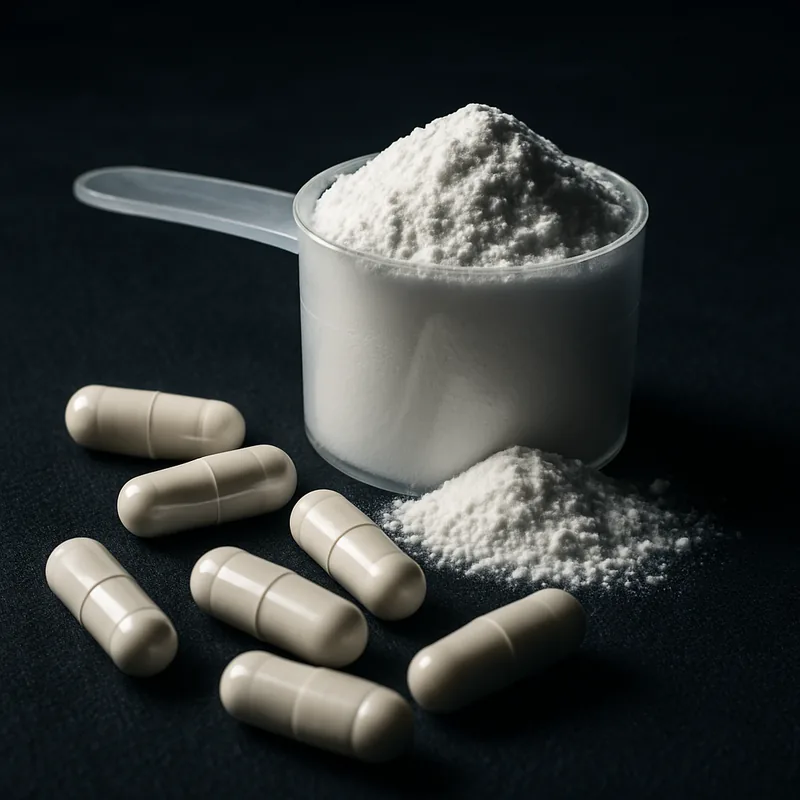
2024 meta-analysis: memory improved most clearly
A 2024 systematic review and meta-analysis of 16 randomized controlled trials found that creatine supplementation significantly improved:
- memory
- attention time
- processing speed time
However, it did not show significant improvements in every overall cognitive measure or in executive function. The evidence for memory was rated more confidently than the evidence for some other outcomes.
Older adults may be a good target group
A 2026 systematic review focused on older adults reported that most included studies found a positive relationship between creatine and cognition, especially in memory and attention. The review also emphasized that the evidence base is still limited.
Does Creatine Improve Focus?
“Focus” is a loose term, which makes it hard to study cleanly. Clinical trials usually measure more specific things such as:
- attention
- reaction time
- working memory
- processing speed
- executive function
The best current summary is this: creatine may help some aspects of attention and mental performance, but the evidence is stronger for memory than for general focus.
When Creatine Seems Most Helpful
During sleep deprivation
This is one of the more interesting areas of research. A 2024 study found that a large single dose of creatine improved some measures of cognitive performance during sleep deprivation and changed brain-energy markers.
That does not mean creatine cancels out a bad night of sleep. It suggests creatine may help the brain cope better when energy demand rises and sleep is impaired.
In people with lower creatine intake
Vegetarians and vegans often consume less creatine because the main dietary sources are meat and fish. Some studies suggest people starting with lower creatine stores may respond more noticeably.
In aging adults
Because brain energy metabolism and muscle function both change with age, older adults are a logical population for creatine research. So far, the signal looks most promising for memory-related outcomes.
Best Type and Dose for Memory and Focus
Best form: creatine monohydrate
Nearly all of the cognition research has used creatine monohydrate, which is why it remains the evidence-based choice.
Best dose: 3 to 5 grams daily for most adults
A practical plan is:
- 3 grams daily to start
- increase to 5 grams daily if desired
- take it consistently for several weeks
Some studies use loading or special protocols, but for everyday use, consistency matters more than complicated timing.
What Creatine Probably Will Not Do
Creatine is not a stimulant. Do not expect it to feel like caffeine or ADHD medication.
It also probably will not:
- fix chronic sleep loss
- overcome poor diet
- substitute for exercise
- instantly sharpen concentration on day one
Think of creatine more like brain energy support than a dramatic focus enhancer.
FAQ
Does creatine improve memory?
Current research suggests it may modestly improve memory in some adults, and memory is one of the cognitive domains with the most encouraging evidence.
Does creatine improve focus and concentration?
Possibly, but the evidence is less consistent than it is for memory. Some attention-related measures improve, but not all focus outcomes are clearly positive.
How long does creatine take to help cognition?
Usually several weeks of daily use. Acute effects have been studied in sleep deprivation, but routine cognitive support is generally a longer-term process.
What is the best creatine for memory and focus?
Plain creatine monohydrate is the best-supported choice because it is the form used in most human research.
Sources
- Effects of Creatine Monohydrate Supplementation on Muscle, Bone and Brain- Hope or Hype for Older Adults?. Current osteoporosis reports. 2024. PMID: 39509039.
- The effects of creatine supplementation on cognitive performance-a randomised controlled study. BMC medicine. 2023. PMID: 37968687.
- Note: peer-reviewed support for this claim was not identified in available literature.
- Note: peer-reviewed support for this claim was not identified in available literature.
- Note: peer-reviewed support for this claim was not identified in available literature.
Related Articles
- Creatine for Cognitive Health: What the Research Says About Memory, Focus, and Brain Energy
- Do Probiotics Help With Ulcers? What the Research Actually Shows
- Does Turmeric Help Recovery After Exercise? What the Research Actually Shows
- Do Probiotics Help With Ulcers? What the Research Actually Shows
- Do Probiotics Help With Ulcers? What the Research Actually Shows
📚 Part of our Best Creatine Supplements in 2026 hub. Explore all our creatine guides.
📚 Part of our Best Supplements for Depression hub. Explore all our mood and depression supplement guides.


Leave a Reply