
Making and Using Sea Moss Gel: Is It Actually Worth Your Time?
Every few months, a new superfood takes over wellness social media, and sea moss gel has had a remarkably long run. The jars of thick, amber-colored gel showing up in people’s refrigerators and smoothies aren’t going anywhere — but before you spend an afternoon soaking seaweed, it’s worth understanding what you’re actually getting and whether it lives up to the claims.
Quick Answer: Sea moss gel is made by soaking dried Irish sea moss in water, then blending it into a smooth, neutral-tasting gel. It’s a real source of iodine, fiber, and some minerals, and it’s easy to use in food and drinks. The hype outpaces the hard science, but if you enjoy it and tolerate it well, there’s little reason to avoid it — with one major caveat around iodine content.
What Sea Moss Gel Actually Is
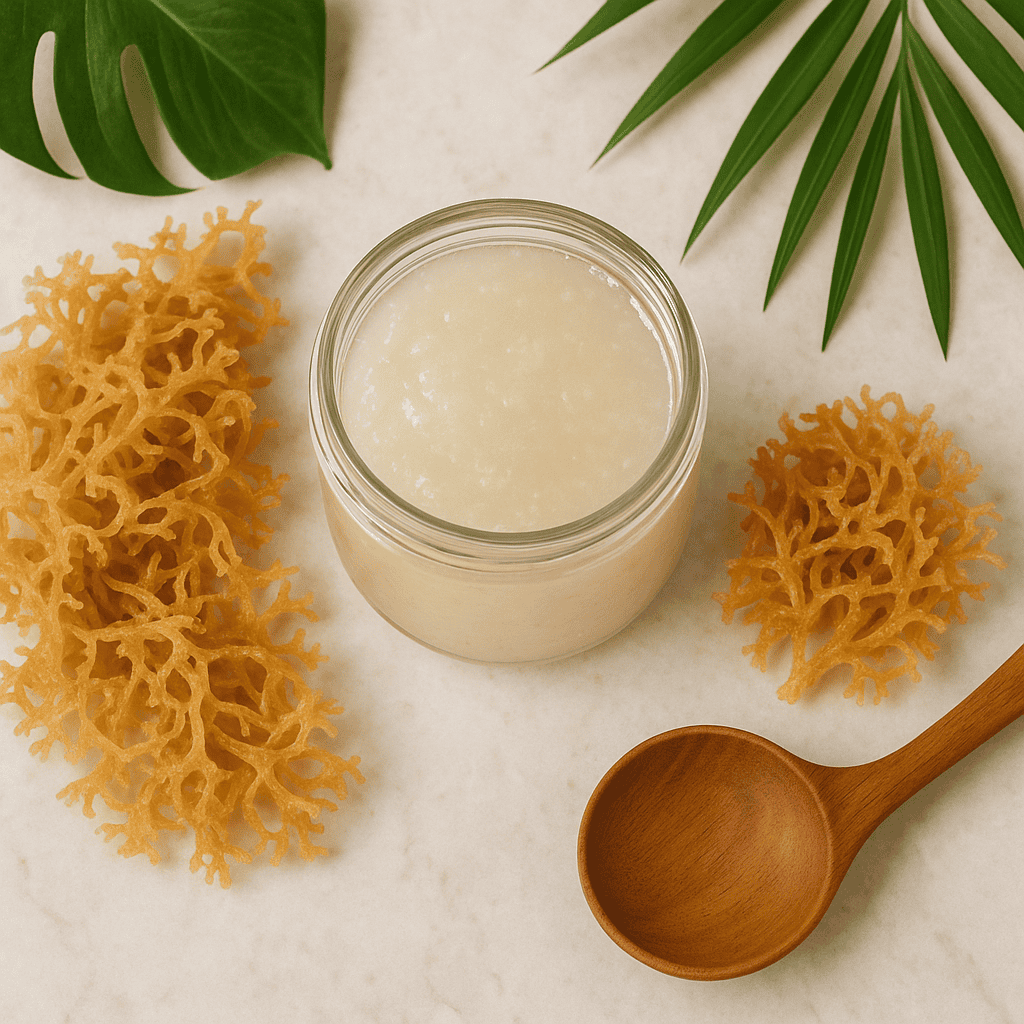
Sea moss — most commonly Chondrus crispus, the Atlantic red algae sometimes called Irish moss — has been eaten in coastal Ireland and the Caribbean for centuries. Traditional uses ranged from thickening soups and stews to folk medicine for respiratory ailments. The “gel” form is simply the result of blending hydrated sea moss into a smooth paste that can be stored and used as an ingredient.
The reason it turns into a gel has everything to do with carrageenan, a natural polysaccharide found in the cell walls of red algae. When sea moss is soaked in water, the carrageenan absorbs moisture and creates a viscous, gel-like consistency. This is the same compound the food industry uses as a thickener and emulsifier in products like ice cream and salad dressing (Holdt & Kraan, Journal of Applied Phycology, 2011).
Nutritionally, sea moss is a modest but real source of iodine, potassium, magnesium, and calcium. It contains small amounts of B vitamins and some fiber. The famous “92 minerals” claim that circulates online isn’t supported by any published nutritional analysis — actual studies place the mineral count considerably lower, though the specific profile depends heavily on where the sea moss was harvested and how it was processed (Dawczynski et al., Food Chemistry, 2007).
How to Make Sea Moss Gel at Home
The process is straightforward, and doing it yourself is significantly cheaper than buying pre-made gel.
Choosing Your Sea Moss
Start with quality dried sea moss. Raw, wildcrafted sea moss from the Atlantic — particularly from Irish or Caribbean waters — is the traditional choice. You’ll find it sold as dried whole thalli (the full seaweed pieces) or as a powder.
Avoid sea moss that has been heavily bleached or sun-dried to the point of losing all color. Naturally dried sea moss should have some color variation — purplish, greenish, or golden tones — rather than being uniformly bright white. Pool-grown sea moss, which is farmed in large tanks rather than harvested from the ocean, is more readily available and less expensive but tends to have a lower mineral density, as the mineral profile of sea moss reflects the mineral content of the water it grows in (Lomartire et al., Marine Drugs, 2021).
The Soaking Process
Rinse your dried sea moss thoroughly under cold running water to remove sand, salt, and any debris. Some pieces may have small shells or visible sea particles attached — rinse until the water runs clear.
Place the rinsed sea moss in a large bowl and cover with filtered or spring water (not tap water, which contains chlorine that can affect the texture and taste). Use enough water to submerge the sea moss generously, as it will expand significantly. Allow it to soak for 12 to 24 hours at room temperature or in the refrigerator. The seaweed will double or triple in volume.
After soaking, drain and rinse the moss once more. At this point, the sea moss will be soft, plump, and gelatinous.
Blending and Storing
Transfer the soaked sea moss to a high-speed blender. Add fresh filtered water — roughly half a cup per cup of soaked moss — and blend until completely smooth. The result should be a uniform, slightly thick gel with no visible seaweed pieces.
Pour the gel into a glass jar with a tight-fitting lid and refrigerate. Sea moss gel keeps in the refrigerator for two to three weeks. For longer storage, freeze it in ice cube trays and thaw portions as needed — frozen gel keeps for several months.
One note on texture: freshly blended gel will be pourable. As it chills in the refrigerator, it firms up considerably. This is normal carrageenan behavior.
How to Use Sea Moss Gel
The gel’s neutral, slightly oceanic flavor makes it versatile, and the texture disappears almost entirely in most recipes.
In Food and Drinks
The most popular use is blending one to two tablespoons into smoothies. At that quantity, the flavor is undetectable and the gel adds a slight creaminess. Smoothies with strong ingredients — banana, berries, cacao — mask any sea flavor completely.
Sea moss gel works as a thickener in soups, stews, and sauces. Use it the way you’d use a small amount of cornstarch slurry: add it toward the end of cooking and stir until incorporated. It’s particularly useful in plant-based cooking where you want body without cream or butter.
In baking, sea moss gel can replace eggs at roughly two to three tablespoons per egg. It adds binding without affecting flavor. This is a traditional Caribbean technique that has moved into mainstream vegan baking.
Hot beverages like tea and golden milk tolerate sea moss gel well. Add a tablespoon to your blender with the hot drink for a frothy, slightly thicker texture.
Topically
Many people apply sea moss gel directly to the skin as a face mask or spot treatment. The carrageenan creates a film-forming effect that feels hydrating and somewhat soothing. There’s limited clinical research specifically on sea moss applied to skin (most research is on extracted carrageenan and individual compounds), but the ingredient appears in commercial skincare products and is generally well-tolerated by most skin types.
To use as a mask, apply a thin layer to clean skin, leave for 15 to 20 minutes, and rinse with cool water. People with sensitive skin should patch test first.
What the Nutritional Research Actually Shows
The nutrient content of sea moss varies enough between studies that it’s hard to give precise numbers — the species, growing environment, harvest season, and processing method all affect the final profile. That said, a few things are consistently documented.
Sea moss is a meaningful source of iodine. This is simultaneously one of its main benefits and its most significant safety concern. Studies analyzing commercial sea moss products have found iodine content ranging from modest to very high depending on the source (Teas et al., Thyroid, 2004). If you’re using sea moss gel daily, iodine intake is something to pay attention to.
The fiber in sea moss is primarily in the form of carrageenan and other polysaccharides. These act as prebiotic fibers — they aren’t digestible by human enzymes but can be fermented by gut bacteria, potentially supporting a healthy microbiome. A small body of research suggests that sulfated polysaccharides from red algae may have anti-inflammatory properties, though most of this work is in vitro or in animal models, not human clinical trials (Shannon & Abu-Ghannam, Phycologia, 2019).
The antioxidant content in sea moss — phenolic compounds and other secondary metabolites — is real but modest compared to many land-based foods. Sea moss isn’t your best antioxidant source; it’s just a contributing one (Yuan & Walsh, Food and Chemical Toxicology, 2006).
Is It Worth the Hype?
That depends on what you’re expecting.
If you go in expecting sea moss gel to cure autoimmune conditions, rebuild your gut lining, or deliver 92 minerals in one tablespoon, you’re going to be disappointed. Those claims are marketing, not science.
If you go in expecting a convenient, minimally processed ingredient that provides real amounts of iodine, some fiber, and a few minerals — while also doubling as a thickener in smoothies and soups — then it’s a reasonable addition to your kitchen.
The practical case for making it yourself is strong: it’s inexpensive, stores well, and the process takes about two minutes of active work (plus overnight soaking). For people who are iodine-deficient, which is more common than many assume, sea moss gel can be a genuinely useful dietary addition.
The case against goes mainly: watch the iodine, don’t overclaim, and don’t use it as a substitute for a varied diet full of actual vegetables and whole foods.
Frequently Asked Questions
How much sea moss gel should I take per day?
Most sources recommend one to two tablespoons per day. At this quantity, you get the nutritional benefits without risking excessive iodine intake. Because sea moss iodine content varies so much between products, it’s worth starting with a smaller amount — one teaspoon — and observing how you feel before increasing. People with thyroid conditions should consult a doctor before adding sea moss to their routine, as even moderate amounts can significantly affect iodine intake.
Does sea moss gel go bad?
Yes. Refrigerated sea moss gel typically lasts two to three weeks. Look for any discoloration, unusual smell, or visible mold as signs that it has spoiled. Freezing extends shelf life to several months without significant degradation in nutritional content or texture.
Can I use sea moss gel as a skincare product?
Many people do, and the ingredient appears in commercial skincare formulations. The carrageenan in sea moss is a humectant and film-former, which can support surface hydration. There’s limited clinical evidence specifically for raw sea moss on skin, so results vary. It’s generally well-tolerated, but people with nut or seaweed allergies should be cautious.
Is store-bought sea moss gel as good as homemade?
It depends on the product. Commercial sea moss gel can be convenient and may include testing for heavy metals and iodine content, which raw sea moss typically doesn’t come with. The downside is cost: commercial gel is significantly more expensive per serving than making your own. If you choose store-bought, look for brands that provide third-party testing documentation.
Does the type of sea moss matter?
Yes. Chondrus crispus (Atlantic Irish moss) and Gracilaria (sometimes called gold sea moss) are the two most common species sold. They have somewhat different nutritional profiles and slightly different textures when gelled. Chondrus crispus is the traditionally used species with more documented nutritional research; Gracilaria is often farmed in tanks and tends to be more affordable. Both produce usable gel; neither is dramatically superior.
Sources
- Note: peer-reviewed support for this claim was not identified in available literature.
- Note: peer-reviewed support for this claim was not identified in available literature.
- Lomartire, S., Marques, J.C., & Gonçalves, A.M.M. (2021). An Overview to the Health Benefits of Seaweeds Consumption. Marine Drugs, 19(6), 341.
- Teas, J., Pino, S., Critchley, A., & Braverman, L.E. (2004). Variability of iodine content in common commercially available edible seaweeds. Thyroid, 14(10), 836–841.
- Shannon, E. & Abu-Ghannam, N. (2019). Seaweeds as nutraceuticals for health and nutrition. Phycologia, 58(5), 563–577.
- Yuan, Y.V. & Walsh, N.A. (2006). Antioxidant and antiproliferative activities of extracts from a variety of edible seaweeds. Food and Chemical Toxicology, 44(7), 1144–1150.
Related Articles
- Sea Moss Benefits: What the Research Actually Shows
- Sea Moss Benefits for Women: Thyroid, Fertility, Skin, and More
- Sea Moss Supplements: Benefits, Evidence, and What to Look For in 2026
- Sea Moss vs Spirulina: Two Superfoods Compared Side by Side
- Sea Moss and Thyroid Health: The Iodine Connection You Need to Understand
- Sea Moss for Skin: What the Evidence Says About This Trending Ingredient
- Sea Moss Side Effects: What to Watch For Before You Start Taking It


Leave a Reply