Retatrutide 2026: The Triple Agonist GLP-1 Drug Poised to Change Weight Loss Forever
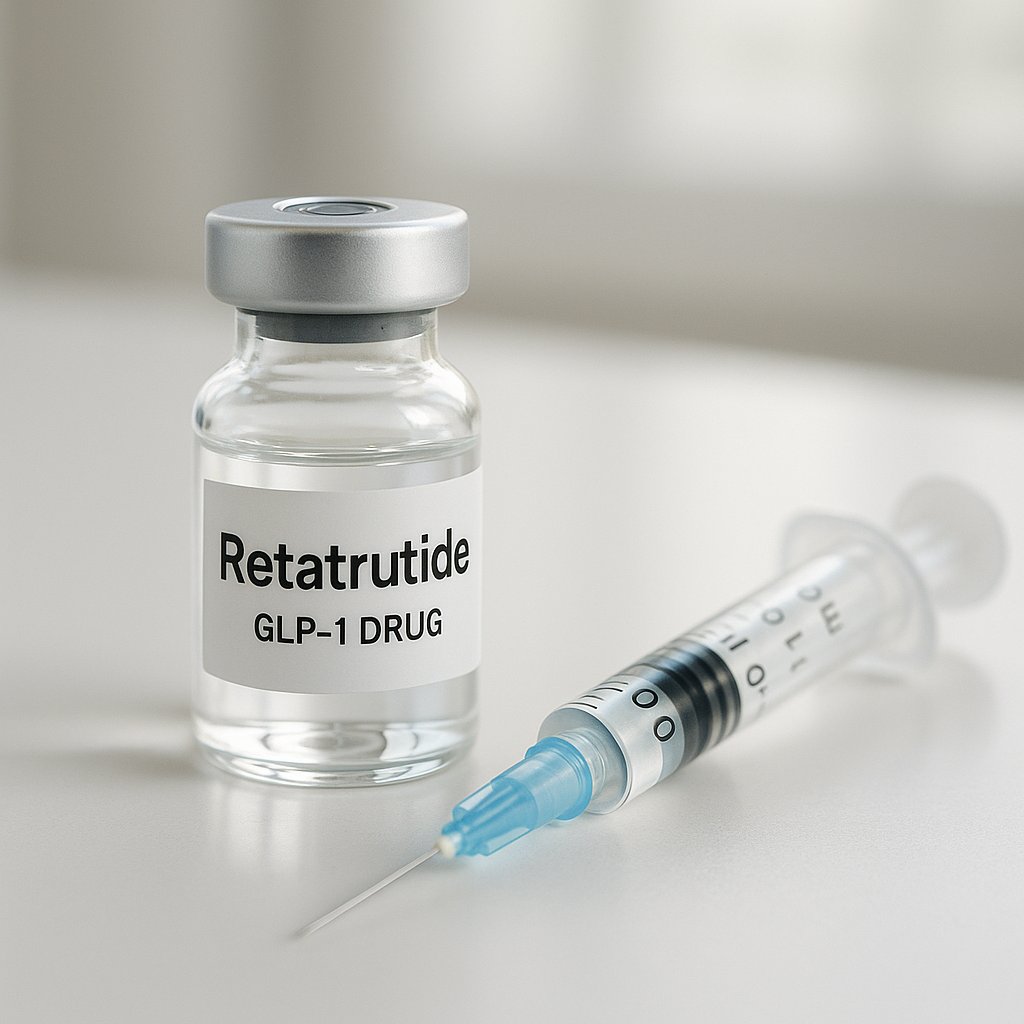
Quick Answer: Retatrutide is an experimental drug developed by Eli Lilly that targets three metabolic receptors simultaneously — GLP-1, GIP, and glucagon. Phase 2 clinical trials recorded up to 24% body weight loss at 48 weeks, making it the most potent weight-loss drug ever tested. It is not yet FDA approved, is not a supplement, and is currently in Phase 3 clinical trials.
The GLP-1 drug revolution that began with semaglutide (Ozempic/Wegovy) and continued with tirzepatide (Mounjaro/Zepbound) may be about to take its biggest leap yet. Retatrutide — sometimes called a “triple agonist” — is pushing the boundaries of what we thought possible in metabolic medicine. If you’ve been tracking the GLP-1 space, this one deserves your full attention.
Let’s break down exactly what retatrutide is, how it works, what the clinical data actually says, and what a realistic timeline to market looks like.
What Is Retatrutide?
Retatrutide (development code: LY3437943) is an injectable peptide drug developed by Eli Lilly and Company — the same company behind tirzepatide (Mounjaro). It belongs to a new class of metabolic drugs sometimes called triagonists because it activates three distinct hormone receptors in the body:
GIP (glucose-dependent insulinotropic polypeptide) — enhances insulin release and may improve fat metabolism
Glucagon receptor — increases energy expenditure, promotes fat burning, and supports liver fat clearance
This triple-receptor approach is what sets retatrutide apart from everything else currently on the market or in late-stage development. It’s not just doing more of the same thing — it’s hitting the metabolic system from three different angles simultaneously.
How It Differs from Semaglutide and Tirzepatide
To understand why retatrutide is generating so much buzz, it helps to see the progression:
Drug
Receptor Targets
Approved?
Peak Weight Loss (Trials)
Semaglutide (Wegovy)
GLP-1 only
✅ Yes
~15–17%
Tirzepatide (Zepbound)
GLP-1 + GIP
✅ Yes
~20–22%
Retatrutide
GLP-1 + GIP + Glucagon
❌ Not yet
~22–24%
Each step in this progression has added a receptor target and, with it, meaningfully more weight loss efficacy. Tirzepatide already outperformed semaglutide by a significant margin in head-to-head and comparative data. Retatrutide appears to push the envelope even further.
The glucagon receptor activation is the key differentiator. Glucagon is typically thought of as the hormone that raises blood sugar (the opposite of insulin), but activating the glucagon receptor in a controlled, co-agonist context actually increases resting energy expenditure — essentially raising your metabolic rate — and promotes the breakdown of fat stored in the liver. This combination of reduced calorie intake and increased calorie burning is a powerful metabolic one-two punch that neither semaglutide nor tirzepatide can fully replicate.
Mechanism of Action: How Retatrutide Works in the Body
Retatrutide’s three-pronged mechanism works through coordinated hormonal signaling:
GLP-1 Agonism
GLP-1 receptors are found in the pancreas, brain, gut, and heart. Activating them stimulates insulin secretion in a glucose-dependent manner (meaning it doesn’t cause dangerous hypoglycemia in most people), slows how quickly food moves through the stomach, and — critically — suppresses appetite by signaling satiety to the brain. This is the same primary mechanism behind semaglutide’s success.
GIP Agonism
GIP was historically considered a secondary incretin hormone without much clinical relevance for weight loss. Tirzepatide changed that assumption. GIP agonism appears to enhance the effect of GLP-1 in the pancreas, potentially reduce GI side effects compared to GLP-1 alone, and have direct effects on adipose (fat) tissue metabolism. There’s also emerging evidence that GIP receptor activity may affect the reward pathways in the brain associated with food intake.
Glucagon Receptor Agonism
This is retatrutide’s most novel mechanism. Glucagon receptor agonism at the liver promotes hepatic fat oxidation (burning of liver fat), which is directly relevant for non-alcoholic fatty liver disease (NAFLD/MASLD). At the same time, systemic glucagon signaling increases energy expenditure — essentially making the body burn more calories at rest. The concern with pure glucagon agonists has always been hyperglycemia, but when combined with GLP-1 and GIP agonism, the blood sugar-raising effects of glucagon are largely neutralized while the fat-burning and metabolic benefits remain.
Phase 2 Trial Results: The Data That Stunned Researchers
The pivotal Phase 2 data for retatrutide was published in the New England Journal of Medicine in July 2023, and the numbers made headlines across the medical world.
The randomized, double-blind, placebo-controlled trial enrolled 338 adults with obesity (BMI ≥ 30) or overweight with at least one weight-related condition. Participants were randomized to receive retatrutide at doses of 1 mg, 4 mg, 8 mg, or 12 mg weekly via subcutaneous injection, or placebo, over 48 weeks.
Key results:
Participants receiving the 12 mg dose lost an average of 22.8% of body weight from baseline
The highest-efficacy responders in the 12 mg group approached 24% body weight loss
Even the 8 mg dose group averaged around 17.3% — comparable to the best-performing semaglutide doses
By contrast, the placebo group lost approximately 2.1%
Importantly, weight loss had not plateaued at 48 weeks in the highest-dose group, suggesting that longer treatment could yield even greater results
These are not incremental improvements. Losing ~24% of body weight pharmacologically — without surgical intervention — represents a watershed moment in obesity medicine. For context, bariatric surgery (Roux-en-Y gastric bypass) typically produces 25–35% weight loss long-term. Retatrutide is approaching surgical territory through a once-weekly injection.
Liver fat content (particularly relevant for MASLD/NAFLD)
Current Clinical Trial Status
Following the impressive Phase 2 results, Eli Lilly has moved retatrutide into Phase 3 clinical trials. These large-scale, long-duration trials are required by the FDA before any drug can be approved for public use.
As of early 2026, the Phase 3 program — known as the TRIUMPH trial program — includes multiple parallel trials examining:
TRIUMPH-1 and TRIUMPH-2: Weight loss in adults with obesity, with and without type 2 diabetes
TRIUMPH-3: Cardiovascular outcomes — specifically whether retatrutide reduces major adverse cardiovascular events (heart attacks, strokes, cardiovascular death), similar to the SURMOUNT-4 trials for tirzepatide and SELECT for semaglutide
TRIUMPH-4: Weight maintenance after initial weight loss
Additional trials examining effects on MASLD/NAFLD, obstructive sleep apnea, and kidney disease
Phase 3 trials typically enroll thousands of participants across multiple countries and run for 2–5 years. Eli Lilly has not published an official FDA submission target, but based on trial enrollment timelines and typical Phase 3 durations, many analysts and medical observers estimate a potential NDA (New Drug Application) submission to the FDA in 2026–2027, with possible approval in 2027–2028 if data is strong and review proceeds on standard timelines.
Side Effects: What the Trials Showed
Retatrutide’s side effect profile in Phase 2 was broadly consistent with other GLP-1-based therapies — mostly gastrointestinal (GI) in nature:
Nausea — the most common side effect, reported in 40–60% of participants at higher doses, though typically mild-to-moderate and transient (most intense during dose escalation)
Vomiting — less common than nausea, but a dose-dependent effect
Diarrhea — reported in roughly 20–30% of participants at higher doses
Constipation — some participants reported the opposite GI effect
Decreased appetite — technically a mechanism, but also reported as a subjective side effect
Injection site reactions — minor, consistent with other subcutaneous injectables
Serious adverse events were relatively rare. Some participants discontinued due to GI side effects, though discontinuation rates were lower than in earlier GLP-1 trials, possibly because the dose escalation schedule used in retatrutide trials was gradual.
One area of ongoing monitoring is heart rate. Glucagon receptor agonism can mildly increase resting heart rate — an effect also seen with some GLP-1 drugs. This was observed in the Phase 2 data and will be closely tracked in Phase 3 cardiovascular outcome trials.
Gallbladder issues (including gallstones) have been a class-wide concern with rapid weight loss agents, including GLP-1 drugs. This will be monitored in longer Phase 3 follow-up.
Who Might Benefit from Retatrutide?
When (and if) retatrutide receives FDA approval, it will likely be indicated for:
Adults with obesity (BMI ≥ 30)
Adults who are overweight (BMI ≥ 27) with at least one weight-related comorbidity such as type 2 diabetes, hypertension, dyslipidemia, cardiovascular disease, or sleep apnea
Potentially adults with type 2 diabetes who also need weight management (a separate indication would require additional trial data)
People with MASLD/NAFLD — the glucagon receptor component’s direct liver benefits make retatrutide particularly interesting for this population
It will likely not be appropriate for:
People with a personal or family history of medullary thyroid carcinoma (a warning common to all GLP-1 drugs)
People with Multiple Endocrine Neoplasia syndrome type 2 (MEN2)
Those with a history of pancreatitis (a cautionary flag across the GLP-1 class)
Pregnant or breastfeeding women
Why Retatrutide Matters for Metabolic Health
It’s easy to frame this story purely as a weight-loss drug narrative, but retatrutide’s significance goes deeper than the scale number. Obesity is a root cause — or major contributor — to type 2 diabetes, cardiovascular disease, sleep apnea, fatty liver disease, certain cancers, joint disease, and many other conditions that collectively represent an enormous burden on human health and longevity.
If retatrutide can produce ~24% weight loss consistently across diverse populations, the downstream effects on metabolic health could be profound:
Diabetes remission — significant weight loss in people with early-stage type 2 diabetes can lead to remission or substantially improved glycemic control
Cardiovascular risk reduction — the ongoing TRIUMPH cardiovascular outcomes trial will be pivotal here; semaglutide and tirzepatide have already shown cardiovascular benefit
Liver disease — the glucagon-mediated reduction in liver fat could make retatrutide a first-line candidate for MASLD treatment, a condition with no currently approved pharmacological cure
Metabolic syndrome — the constellation of high blood pressure, high triglycerides, low HDL, high blood sugar, and abdominal obesity that dramatically raises cardiovascular risk could be substantially addressed by a single weekly injection
For longevity researchers and health-focused individuals, this class of drugs is being increasingly studied in the context of healthspan extension — not just treating disease but slowing the biological processes that accelerate aging.
Pricing and Availability Outlook
Honestly, this is the hardest part of the retatrutide story to forecast — not because we lack information, but because the GLP-1 pricing landscape is already complex and politically charged.
Tirzepatide (Zepbound) launched at a list price of around $1,059 per month in the US without insurance. Semaglutide (Wegovy) is similarly priced. With Medicare drug price negotiations and ongoing political pressure around GLP-1 costs, the pricing environment by the time retatrutide potentially reaches market (2027–2028) could look quite different.
Likely scenarios:
With insurance/Medicare: Coverage will depend on how retatrutide is labeled and the ongoing CMS (Centers for Medicare & Medicaid Services) policy evolution around obesity drugs
Without insurance: Expect launch pricing in the range of $1,000–$1,500/month, consistent with the current market, unless competitive pressure from multiple approved agents drives prices down
Compounding pharmacies: As happened with semaglutide and tirzepatide during shortages, compounding pharmacies may offer lower-cost versions, though FDA enforcement in this space is active and evolving
Generic/biosimilar competition: Not relevant at launch, but over a 10–15 year horizon, costs will eventually fall significantly
One important note: retatrutide is not a supplement and is not available over the counter. It is an investigational drug in clinical trials. Any product currently marketed as “retatrutide” for purchase online is either mislabeled, unregulated research chemical, or outright fraudulent. Wait for the actual FDA approval process to play out.
The Bottom Line
Retatrutide represents the most compelling pharmacological advance in obesity and metabolic medicine in decades. The Phase 2 data — ~24% weight loss, broad metabolic improvements, and a once-weekly injection — is genuinely remarkable. The triple agonist mechanism targeting GLP-1, GIP, and glucagon all at once is more than an incremental step; it’s a new category.
But it’s also still an experimental drug. Phase 3 trials are ongoing. Long-term safety data beyond 48 weeks is still being generated. FDA approval, if it comes, is likely 2–3 years away. The honest message is: this drug has enormous potential, but the science needs to finish its course before anyone should be taking it.
Watch this space closely. If the Phase 3 data holds up, retatrutide could be the most significant metabolic drug of this decade.
Sources
Jastreboff AM, et al. “Triple–Hormone-Receptor Agonist Retatrutide for Obesity — A Phase 2 Trial.” New England Journal of Medicine. 2023;389(6):514–526. doi:10.1056/NEJMoa2301972
Drucker DJ. “The biology of incretin hormones.” Cell Metabolism. 2006;3(3):153–165. doi:10.1016/j.cmet.2006.01.004
Frías JP, et al. “Tirzepatide versus Semaglutide Once Weekly in Patients with Type 2 Diabetes.” New England Journal of Medicine. 2021;385(6):503–515. doi:10.1056/NEJMoa2107519
Loomba R, et al. “Mechanisms and disease consequences of nonalcoholic fatty liver disease.” Cell. 2021;184(10):2537–2564. doi:10.1016/j.cell.2021.04.015
Wilding JPH, et al. “Once-Weekly Semaglutide in Adults with Overweight or Obesity.” New England Journal of Medicine. 2021;384(11):989–1002. doi:10.1056/NEJMoa2032183
Disclaimer: This article is for informational purposes only and does not constitute medical advice. Retatrutide is an investigational drug and has not been approved by the FDA. It is not available as a supplement or over-the-counter product. Do not attempt to obtain or use unapproved pharmaceutical compounds. Always consult a qualified healthcare provider before making any decisions about medications or treatments for obesity, diabetes, or any other medical condition.
[…] Retatrutide, the first triple agonist acting on GLP-1, GIP, and glucagon receptors simultaneously, showed weight loss of 22–24% of body weight in Phase 2 trials (Jastreboff et al., NEJM, 2023) — greater than either semaglutide or tirzepatide. More powerful weight loss means more aggressive caloric restriction, more rapid lean mass loss risk, and greater electrolyte depletion. The supplement principles are the same but the urgency is higher. For more on retatrutide specifically: Retatrutide 2026: The Triple Agonist GLP-1 Drug […]






Leave a Reply