Best Probiotics for Dogs – An Evidence-Based Guide to Canine Gut Health
Quick Answer: Probiotics for dogs are live beneficial bacteria that support digestive health, immune function, and may reduce the duration of diarrhea and symptoms of inflammatory bowel disease. Dog-specific strains such as Enterococcus faecium SF68, Bacillus coagulans, and Lactobacillus acidophilus have the strongest clinical support — and because the canine microbiome differs meaningfully from the human gut, dog-formulated products generally outperform human probiotic supplements.
If your dog has ever had a bout of loose stools after antibiotics, a stressful boarding stay, or simply a dietary indiscretion involving something from the trash, you have probably heard the recommendation to add a probiotic. What you may not have heard is the science behind why these supplements can actually help — and why reaching for your own probiotic capsule to share with your dog is usually the wrong move. The canine gut is its own ecosystem, colonized by a microbial community that looks quite different from the one living in a human colon, and the strains that have been clinically studied and validated specifically in dogs are worth knowing by name.
This guide breaks down the clinical evidence, the strains that matter most, how different delivery formats compare, how to dose by your dog’s body weight, and what to watch out for when shopping. It is written as a supplement education resource, not veterinary advice — always work with your vet for diagnosis and treatment decisions, especially if your dog has a chronic health condition.
How the Canine Microbiome Differs from the Human Gut
Before evaluating any probiotic product, it helps to understand why canine gut health has its own research track rather than simply borrowing from human gastroenterology.
Dogs are omnivores with a digestive tract that sits anatomically somewhere between the carnivore-leaning short intestine of a cat and the longer, more fermentative gut of a herbivore. The canine colon is proportionally shorter than a human colon, meaning fermentation time is reduced and the resident microbial community has evolved to reflect that. Studies using 16S rRNA gene sequencing have found that while some bacterial genera — Firmicutes, Bacteroidetes, Proteobacteria — appear in both species, the relative abundances and specific species present diverge considerably (Minamoto et al., PLOS ONE, 2015).
Dogs also carry different proportions of Fusobacteria, a phylum that is relatively minor in the human gut but notably abundant in healthy dogs. Researchers have proposed that this phylum plays a role in protein metabolism in carnivore-adapted guts. On the flip side, Bifidobacterium — one of the most studied and supplemented genera in human probiotic research — is actually present at quite low levels in most healthy adult dogs (Pilla & Suchodolski, Frontiers in Veterinary Science, 2020).
This matters a great deal when you are looking at a probiotic label. A human supplement optimized to deliver high-dose Bifidobacterium longum and Lactobacillus rhamnosus may not meaningfully colonize the canine gut, and it definitely has not been tested there. Dog-specific formulations, by contrast, have at least some clinical backing in the actual species you are trying to help.
Understanding the core microbiome differences also clarifies why antibiotic-associated dysbiosis hits dogs hard. When antibiotics wipe out competing bacteria, opportunistic pathogens can bloom rapidly in the shorter fermentative window. This is where the evidence for probiotic intervention is clearest.
The Strains with the Best Evidence in Dogs
Not all probiotic strains behave the same way, even within the same genus. Research in canine gastroenterology has converged on a handful of strains with the most reproducible results in controlled trials.
Enterococcus faecium SF68
This is arguably the most studied probiotic strain in veterinary medicine. Enterococcus faecium SF68 (also sold under the trade name Fortiflora by Purina) has been evaluated in multiple randomized controlled trials in dogs. A landmark study by Bybee and colleagues (Journal of the American Animal Hospital Association, 2011) found that SF68 supplementation significantly reduced the duration of diarrhea in shelter dogs compared to placebo. The strain has also been shown to modulate immune parameters — specifically increasing IgA concentrations in intestinal secretions and improving lymphocyte proliferation responses in adult dogs (Benyacoub et al., Journal of Nutrition, 2003).
What makes SF68 particularly practical is its stability. Enterococcus faecium is more heat- and acid-tolerant than many Lactobacillus strains, making it a reliable choice in chews and food-mixed powders where the manufacturing process and stomach acid could otherwise compromise viability.
Bacillus coagulans
Bacillus species form protective spores that allow them to survive extreme temperature, gastric acid, and long shelf lives. Bacillus coagulans has been studied in dogs for its ability to improve stool consistency and reduce episodes of diarrhea, particularly in animals with stress-related gut disruption. Nixon and colleagues (PLOS ONE, 2022) found that dogs receiving B. coagulans showed meaningful improvements in fecal microbiome diversity and stool scores over a 30-day period compared to a control group.
The spore-forming nature of Bacillus coagulans makes it particularly well-suited for powders and chews that are stored at room temperature for extended periods. If you are evaluating a shelf-stable dog probiotic, this genus is a good sign of quality formulation thinking.
Lactobacillus acidophilus
While the evidence base for Lactobacillus strains in dogs is somewhat thinner than in humans, L. acidophilus has demonstrated benefits for stool consistency and may help restore microbial balance after antibiotic courses. It is commonly found in combination canine probiotic products alongside E. faecium SF68 and B. coagulans. Pascher and colleagues (Journal of Animal Physiology and Animal Nutrition, 2008) evaluated a multi-strain product containing L. acidophilus and found improvements in fecal quality scores in adult dogs with chronic intermittent diarrhea.
Multi-strain formulations combining E. faecium SF68 with one or more Lactobacillus strains appear to perform better than single-strain products in some trials, suggesting synergistic colonization effects — though the research is still maturing.
What Dogs With Diarrhea Need From a Probiotic
Diarrhea is the most common reason dog owners reach for probiotics, and it is also the condition with the strongest clinical evidence base for probiotic benefit. Mechanisms include competitive exclusion of pathogenic bacteria, restoration of mucosal barrier integrity, production of short-chain fatty acids (SCFAs) that nourish enterocytes, and direct immunomodulation.
The evidence is strongest for acute, antibiotic-associated, and stress-induced diarrhea. Shelter environments, boarding, travel, and dietary changes are all recognized triggers of acute diarrhea in dogs, and the research on E. faecium SF68 in particular shows consistent reduction in duration and severity under these conditions.
For chronic diarrhea linked to inflammatory bowel disease (IBD), the evidence is more mixed but still promising. Rossi and colleagues (Journal of Veterinary Internal Medicine, 2014) reported that a multi-strain probiotic product (VSL#3, adapted for veterinary use) reduced clinical activity index scores in dogs with IBD when combined with standard dietary therapy. The probiotic group had significantly better outcomes than the control group at six months. This does not mean probiotics replace immunosuppressive therapy in severe IBD cases — but as an adjunct, the data is encouraging.
It is worth noting that not all diarrhea responds to probiotics. Parasitic infections, parvovirus, hemorrhagic gastroenteritis, and other structural or systemic causes need direct veterinary treatment. Probiotics are most useful for functional and dysbiosis-driven gut disruption.
Probiotics and Dog Allergies
One of the emerging areas of canine probiotic research is atopic dermatitis — the itchy, inflamed skin condition that affects an estimated 10-15% of the dog population. The gut-skin axis in dogs appears to parallel the one documented in human atopic disease: dysbiosis in the gut microbiome correlates with increased gut permeability, systemic immune activation, and worse skin outcomes.
Marsella and colleagues (Veterinary Dermatology, 2012) found that supplementing pregnant bitches and their puppies with L. rhamnosus reduced the development of atopic signs in the offspring compared to controls. While this was a small study, it aligns with the “window of opportunity” hypothesis in both human and veterinary immunology — early microbiome shaping influences immune tolerance.
For adult dogs with established allergies, the evidence is less clear-cut. Probiotics appear to help manage allergy-related gut symptoms and may modulate systemic inflammatory markers, but they do not reliably eliminate environmental or food allergy reactions without addressing the underlying trigger. If your dog is itching, food elimination trials and allergen testing remain the diagnostic priority.
Probiotic Forms for Dogs: Powder vs. Chews vs. Capsules
Delivery format affects palatability, strain viability, and how easily you can adjust the dose. Each format has practical tradeoffs worth understanding.
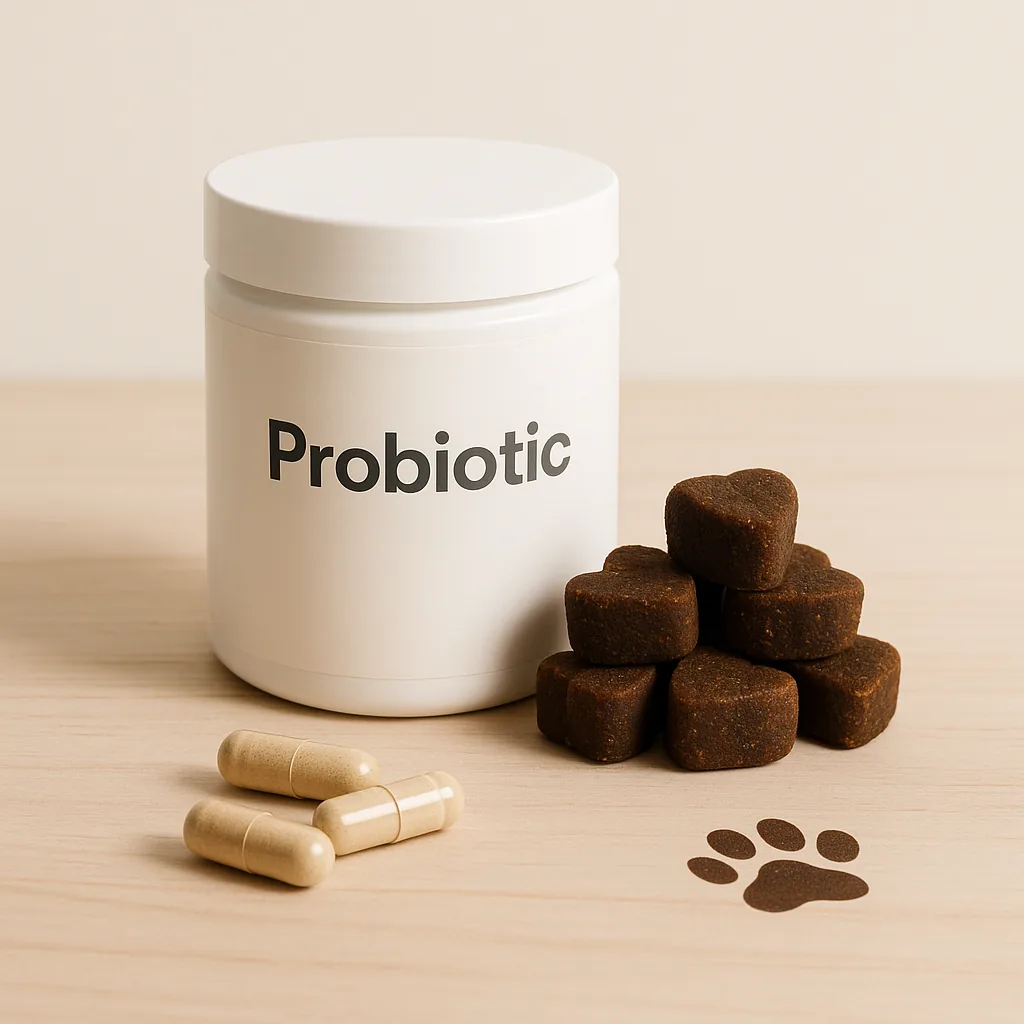
| Format | Strain Viability | Palatability | Dose Flexibility | Best For | |—|—|—|—|—| | Powder | High (if sealed properly) | Medium — mixes into wet or dry food | High — scoop to size | Multi-dog households, precise dosing | | Chews | Moderate (heat-sensitive strains at risk) | Very high — dogs often treat as reward | Low — fixed per-chew dose | Picky dogs, travel convenience | | Capsules | High (protected shell) | Low — must be hidden in food | High — open and sprinkle | Dogs that eat around chews; veterinary recommendations | | Probiotic-fortified food | Variable (verify CFU at expiry date) | N/A — already in diet | None | Maintenance support with existing diet |
Powders mixed directly into food are a common preference among integrative veterinarians because they allow precise CFU (colony-forming unit) dosing by body weight, hold up well in sealed pouches, and can accommodate spore-forming strains like Bacillus coagulans that are more resilient to temperature fluctuation.
Chews are popular with pet owners because most dogs accept them willingly. The main risk is heat degradation of live Lactobacillus cultures during the manufacturing process. If a chew product relies on Lactobacillus for most of its CFU count, look for third-party testing data confirming live cell counts at the expiration date, not just at the time of manufacture.
Why Human Probiotics Are Usually Not Ideal for Dogs
This deserves its own section because the temptation to share a high-quality human probiotic is understandable — especially when your dog needs help tonight and the pet store is closed.
The core problem is not that human probiotic strains are harmful to dogs; most of them are simply irrelevant. Bifidobacterium longum, L. rhamnosus GG, and L. acidophilus NCFM are optimized for the human gut environment: pH dynamics, transit time, mucin substrate, and competitive flora that are all different in dogs. The strains may pass through the canine GI tract without establishing any meaningful colonization.
Beyond efficacy, dosing is a concern. Human probiotic products are formulated for a 150–180 lb adult with a long, multi-chambered gut. A 15-lb dog getting that dose is receiving a very different CFU-per-pound load, and while probiotics are generally safe, flooding a small dog’s gut with strains it cannot accommodate offers no benefit and risks temporary digestive upset.
Finally, some human probiotic products are formulated with ingredients that are unsafe for dogs — xylitol in chewable tablets is the most dangerous example. Always check labels before giving any human supplement to a pet.
Dosing Probiotics by Dog Size
Canine probiotic dosing in research and clinical practice is most commonly expressed in CFU per day, with adjustments for body weight. General guidance from veterinary nutritionists suggests:
Small dogs (under 20 lbs): 1–2 billion CFU per day
Medium dogs (20–50 lbs): 2–5 billion CFU per day
Large dogs (50–90 lbs): 5–10 billion CFU per day
Giant breeds (90+ lbs): 10 billion CFU per day or more
These are maintenance ranges. During active diarrhea episodes, antibiotic courses, or post-surgical recovery, some veterinary protocols use higher therapeutic doses — typically 2–3x the maintenance range for the duration of the disruption, tapering back afterward. Your veterinarian can advise on whether a therapeutic protocol applies to your dog’s specific situation.
Always introduce probiotics gradually over 5–7 days, especially in sensitive dogs. Starting at half the target dose and working up reduces the chance of temporary bloating or loose stools as the microbiome adjusts.
Safety Profile
Probiotics have an excellent safety profile in dogs across the published literature. Serious adverse events are exceedingly rare and have generally been confined to immunocompromised animals or those with severe underlying gastrointestinal disease such as hemorrhagic enteritis with a compromised mucosal barrier. In healthy dogs and those with functional digestive complaints, the risk profile is very low.
The most common “side effects” in the first week of supplementation are mild: temporary gas, loose stools, or slightly increased borborygmus (gut sounds). These typically resolve as the microbiome stabilizes.
If your dog is immunosuppressed, recovering from surgery, or has a confirmed diagnosis of hemorrhagic gastroenteritis or parvovirus, consult your veterinarian before starting any probiotic supplement. These are not absolute contraindications, but they warrant clinical supervision.
How to Choose a Quality Dog Probiotic
With hundreds of products on the market, a few screening criteria help separate well-formulated products from marketing noise:
Named strains on the label. A quality product names its strains specifically — “Enterococcus faecium SF68″ — not just “probiotic blend” or “lactic acid bacteria.”
CFU count at expiration, not manufacture. Live bacteria die over time. The count on the label should be guaranteed through the expiry date.
Third-party testing or NASC seal. The National Animal Supplement Council (NASC) quality seal indicates the manufacturer follows good manufacturing practices and adverse event reporting.
Storage instructions honored. If a product containing live Lactobacillus strains is sold unrefrigerated in a clear plastic bag, that is a quality signal worth noting.
No added xylitol or other dog-toxic ingredients. Check the full ingredient list.
The research supporting probiotic mechanisms in the gut consistently emphasizes strain specificity and viable cell counts as the two most important quality determinants — and this holds true whether you are buying for yourself or for your dog. If you want to understand the broader science of how probiotics interact with the digestive tract, our guide to gut health supplements covers the underlying biology in detail.
Key Takeaways
The canine microbiome differs significantly from the human gut — Bifidobacterium is sparse in dogs, and Fusobacteria plays a larger role — making dog-specific probiotic formulations more appropriate than human supplements.
Enterococcus faecium SF68 has the most robust clinical evidence in dogs, with multiple randomized controlled trials showing reduced diarrhea duration and improved immune markers.
Bacillus coagulans offers superior shelf stability due to spore formation and has shown benefits for fecal microbiome diversity and stool consistency in canine trials.
Clinical evidence supports probiotic use for antibiotic-associated diarrhea, stress-induced diarrhea, and as an adjunct in IBD management; evidence for allergy is promising but more limited.
Dose by body weight (1–10 billion CFU/day depending on size) and introduce gradually over 5–7 days.
Human probiotics are not harmful to dogs in most cases, but they are largely irrelevant to the canine microbiome and may contain dangerous additives like xylitol.
Look for named strains, CFU guaranteed at expiry, and NASC seal when selecting a product.
FAQ
Are probiotics safe for dogs to take daily?
Yes, daily probiotic supplementation is generally safe for healthy adult dogs. The published research includes studies lasting 30–90 days with no adverse effects in healthy animals. Long-term daily use is common in clinical practice, particularly for dogs prone to stress diarrhea, those with chronic loose stools, or animals on repeated antibiotic courses. The exception is immunocompromised dogs or those with severe mucosal disease — in those cases, discuss daily supplementation with your vet.
How long does it take for probiotics to work in dogs?
Most owners report noticeable improvement in stool consistency within 3–7 days of starting a quality probiotic during an acute diarrhea episode. For longer-term benefits — improved skin coat condition, fewer allergy flares, better immune resilience — a full 4–8 weeks of consistent supplementation is typically needed before drawing conclusions. Microbiome shifts take time, and consistency matters more than any single large dose.
Can I give my dog yogurt or kefir as a probiotic?
Plain, unsweetened yogurt and kefir contain live bacterial cultures and are not harmful to most dogs in small amounts. However, they are not a substitute for a properly formulated canine probiotic. The CFU counts are unpredictable, the strains are optimized for the human gut, and many dogs have some degree of lactose sensitivity that can worsen digestive symptoms. A small spoonful as a treat is fine; relying on yogurt as your dog’s primary probiotic source is not.
What probiotic strains are best for dogs with diarrhea specifically?
Enterococcus faecium SF68 has the strongest evidence for reducing duration and severity of acute diarrhea in dogs, including antibiotic-associated and shelter-stress diarrhea. Bacillus coagulans has also shown benefits for stool consistency. For dogs with chronic or intermittent diarrhea linked to IBD, multi-strain products that include both Lactobacillus species and E. faecium appear to outperform single-strain products in the limited trial data available.
Do probiotics help with dog allergies and itching?
The evidence here is emerging rather than definitive. Studies support a role for early probiotic intervention (in puppies or pregnant mothers) in reducing atopic disease development. For adult dogs with established atopic dermatitis, probiotics may help manage gut-related inflammatory load and reduce flare severity when used alongside dietary management. They are unlikely to resolve environmental allergies on their own. Think of them as part of a broader skin-gut health strategy rather than a standalone allergy treatment.
Should I give my dog prebiotics alongside probiotics?
Prebiotics — typically non-digestible fibers like fructooligosaccharides (FOS), inulin, or psyllium — feed the beneficial bacteria in your dog’s gut and can enhance the effectiveness of probiotic supplementation. Many high-quality dog probiotic products include both in a “synbiotic” formulation. For a deeper look at how prebiotics and probiotics work together, see our prebiotics vs. probiotics guide.
Are there probiotics designed for puppies?
Yes. Some canine probiotic products are specifically formulated for puppies with lower CFU doses appropriate for a developing gut. The Marsella research on atopic dermatitis cited above actually found the most significant benefits when probiotics were started in the neonatal period, suggesting early microbiome seeding has lasting immune effects. For puppies, consult your veterinarian on timing, strain choice, and dosing — particularly if the puppy is undergoing its vaccine series, which can create temporary immune fluctuations.
Sources
Bybee, S.N., Scorza, A.V., & Lappin, M.R., “Effect of the Probiotic Enterococcus faecium SF68 on Presence of Diarrhea in Cats and Dogs Housed in an Animal Shelter,” Journal of Veterinary Internal Medicine, 2011.
Benyacoub, J., Czarnecki-Maulden, G.L., Cavadini, C., et al., “Supplementation of Food with Enterococcus faecium (SF68) Stimulates Immune Functions in Young Dogs,” Journal of Nutrition, 2003.
Minamoto, Y., Otoni, C.C., Steelman, S.M., et al., “Alteration of the Fecal Microbiota and Serum Metabolite Profiles in Dogs with Idiopathic Inflammatory Bowel Disease,” PLOS ONE, 2015.
Pilla, R. & Suchodolski, J.S., “The Role of the Canine Gut Microbiome and Metabolome in Health and Gastrointestinal Disease,” Frontiers in Veterinary Science, 2020.
Nixon, S.L., Rose, L., & Muller, A.T., “Efficacy of an Orally Administered Anti-Nausea and Probiotic Compound on Clinical Measures of Acute Gastroenteritis and Diarrhea in Dogs,” PLOS ONE, 2022.
Pascher, M., Hellweg, P., Khol-Parisini, A., & Zentek, J., “Effects of a Probiotic Lactobacillus acidophilus Strain on Feed Tolerance in Dogs with Non-Specific Dietary Sensitivity,” Journal of Animal Physiology and Animal Nutrition, 2008.
Rossi, G., Pengo, G., Caldin, M., et al., “Comparison of Microbiological, Histological, and Immunomodulatory Parameters in Response to Treatment with Either Combination Therapy with Prednisone and Metronidazole or Probiotic VSL#3 Strains in Dogs with Idiopathic Inflammatory Bowel Disease,” Journal of Veterinary Internal Medicine, 2014.
Marsella, R., Santoro, D., & Ahrens, K., “Early Exposure to Probiotics in a Canine Model of Atopic Dermatitis Has Long-Term Clinical and Immunological Effects,” Veterinary Immunology and Immunopathology, 2012.





Leave a Reply