

Quick Answer
Magnesium L-threonate (sold as Magtein) is the only magnesium form shown in research to meaningfully raise brain magnesium concentrations. Developed at MIT, it was designed to cross the blood-brain barrier more efficiently than glycinate, citrate, or oxide. Clinical evidence supports its use for cognitive function, memory, and sleep quality. Typical dose is 1,500–2,000 mg of Magtein (about 144–200 mg elemental magnesium) daily.
Most minerals don’t get to choose which tissues they reach. They’re absorbed in the gut, enter the bloodstream, and distribute based on tissue demand. Magnesium follows this general rule — except that the brain has a particularly selective barrier controlling what gets in. The blood-brain barrier (BBB) is less permeable to free magnesium ions than most people realize, and this limitation is why someone can have normal serum magnesium levels and still have brain magnesium that’s functionally low.
That’s the problem that magnesium L-threonate was specifically engineered to solve. And the story of how it came to exist is genuinely interesting.
The MIT Research Behind Magtein
In the late 2000s, neuroscientist Guosong Liu and his colleagues at the Massachusetts Institute of Technology set out to test a hypothesis: that low brain magnesium might contribute to age-related cognitive decline, and that correcting it could restore synaptic plasticity and memory function.
The challenge wasn’t the hypothesis — it was delivery. Standard magnesium forms like citrate, oxide, and glycinate all showed poor ability to raise cerebrospinal fluid (CSF) magnesium levels in animal models, even when blood levels were elevated. The researchers needed a form of magnesium that could hitch a ride across the BBB more efficiently.
They found it by combining magnesium with threonate — a metabolite of vitamin C. The resulting compound, magnesium L-threonate, demonstrated significantly higher CSF magnesium levels than control forms in rodent models. The research was published in the journal Neuron in 2010, and the compound was patented under the trade name Magtein.
The 2010 Slutsky et al. study in Neuron remains the foundational paper. It showed that Magtein-supplemented rats had higher synaptic density in the hippocampus and prefrontal cortex — the brain regions most critical for learning, memory consolidation, and emotional regulation. The treated animals performed significantly better on tests of spatial memory, short-term recall, and long-term memory retrieval.
What made this especially notable was the reversal of age-related decline. Older rats given Magtein showed hippocampal synapse density comparable to much younger animals. This led to the term “anti-aging for the brain” in some popular media — a phrase that’s somewhat overstated but points at a real effect.
How Brain Magnesium Affects Cognition
Understanding why brain magnesium matters requires understanding the role it plays at the synapse.
Magnesium sits inside NMDA receptor channels as a voltage-dependent blocker. NMDA receptors are critical for synaptic plasticity — the process by which synapse strength changes based on activity, which is the physical basis of learning and memory. When brain magnesium is low, these receptors become hyperactive and can trigger excitotoxicity (too much calcium entry, leading to cell damage). More subtly, low magnesium also reduces the signal-to-noise ratio at synapses — the brain can’t efficiently distinguish important signals from background noise.
By raising brain magnesium, L-threonate restores appropriate NMDA receptor regulation. The result is better signal discrimination at the synapse, improved synaptic density, and more effective formation of long-term potentiation (LTP) — the cellular mechanism of memory consolidation.
Human Clinical Trials
Animal data is promising, but human trials are the real test. Several have now been conducted.
A 2016 randomized, double-blind, placebo-controlled trial by Liu et al. published in the Journal of Alzheimer’s Disease studied 44 adults aged 50–70 with cognitive impairment. Subjects received Magtein at 1,500–2,000 mg/day for 12 weeks. Compared to placebo, the treatment group showed significant improvement in overall cognitive ability, executive function, and attention — with a reversal of cognitive aging estimated at approximately 9 years based on composite scores.
A subsequent 2023 study by Hewlings et al. in the same journal examined 109 healthy adults aged 18–40 with subjective cognitive concerns. The Magtein group showed improvements in objective cognitive testing at both 30 and 60 days, with the greatest effect seen in those reporting higher stress levels at baseline.
These trials aren’t perfect — the sample sizes are relatively small and the duration is short — but the consistency of the cognitive signal across different populations is encouraging.
Magnesium Threonate and Sleep
One of the more consistent patient-reported benefits of magnesium L-threonate is improved sleep quality, particularly reduced nighttime waking and easier transition from wakefulness to sleep.
This makes mechanistic sense. Higher brain magnesium means more effective GABA-A receptor modulation and stronger NMDA channel blocking — both of which quieten neural hyperactivity at night. The prefrontal cortex and hippocampus, which are particularly responsive to Magtein due to their high synaptic density, are also involved in the rumination and perseverative thinking that drives insomnia.
In practice, people comparing glycinate to threonate for sleep often report that glycinate produces a more body-level relaxation (muscle tension release, physical calm), while threonate produces more of a mental quieting — racing thoughts settle down, cognitive loops break. Neither is universally “better” — it depends on whether your insomnia is primarily physical or mental in character.
Comparing Magnesium L-Threonate to Other Forms for Brain Health
Standard magnesium forms — oxide, citrate, glycinate — primarily function at the systemic level. They support hundreds of enzymatic processes, help regulate blood pressure, support muscle function, and contribute to sleep quality through their systemic GABA modulation effects. These are all real benefits.
But for specifically cognitive and neurological applications, L-threonate appears to be in a different category due to its brain penetration. Glycinate provides the glycine synergy for sleep and is gentle and well-absorbed, but its brain magnesium elevation is modest. Oxide is poorly absorbed overall. Citrate is decent for systemic uses but no special advantage for the brain.
If you’re taking magnesium specifically for cognitive health, memory, or brain-related sleep issues, L-threonate is the evidence-supported choice. If you’re looking for general sleep, muscle recovery, or digestive support, glycinate or citrate may be more cost-effective.
Dosing and Administration
The standard dose used in most research is 1,500–2,000 mg of Magtein per day, providing approximately 144–200 mg of elemental magnesium. Most products provide 667 mg of Magtein per capsule, so three capsules delivers roughly 2,000 mg.
A common protocol is to split dosing: one capsule with dinner and two capsules 30–60 minutes before bed. Some people take all three before bed without issue. Taking it with food reduces the small chance of GI discomfort.
It takes 2–4 weeks to see meaningful cognitive effects, since the mechanism involves gradual increases in synaptic density rather than an acute effect. Sleep benefits may appear somewhat sooner, within 1–2 weeks.
One important note: Magtein provides less elemental magnesium per gram than glycinate or citrate. If you’re concerned about meeting daily magnesium requirements for systemic health (RDA 310–420 mg/day), you may want to use threonate for brain health and add a small amount of glycinate for the remainder of your daily needs.
Who Should Consider Magnesium L-Threonate
Magnesium L-threonate is worth considering if you have any of the following: noticeable cognitive decline or age-related memory issues, difficulty with focus or executive function, stress-driven cognitive fog, insomnia that’s primarily mental rather than physical (racing thoughts, inability to disengage), or if you’re looking for a proactive cognitive longevity supplement.
It’s less necessary if you simply want to meet your daily magnesium requirements — a cheaper form handles that well enough. The premium for threonate is justified by the brain-specific delivery.
Safety and Side Effects
Magnesium L-threonate is well-tolerated in human trials. The most common side effects are headache and drowsiness during the first week of supplementation, which typically resolve as the body adjusts. Some people find the initial cognitive shift slightly disorienting — a brief period of vivid dreams or altered sleep architecture as brain magnesium rises.
Because the elemental magnesium content per dose is lower than other forms, GI side effects are rare. People with kidney disease should still consult a physician before using any magnesium supplement.
Frequently Asked Questions
Is Magtein the same as magnesium L-threonate? Yes. Magtein is the brand name for the patented form of magnesium L-threonate developed at MIT and licensed by Magceutics. Generic versions of magnesium L-threonate exist, though quality control varies.
How long before I notice effects from magnesium threonate? Sleep improvements may appear within 1–2 weeks. Cognitive improvements typically take 4–6 weeks of consistent use to become noticeable, reflecting the time needed for synaptic density changes.
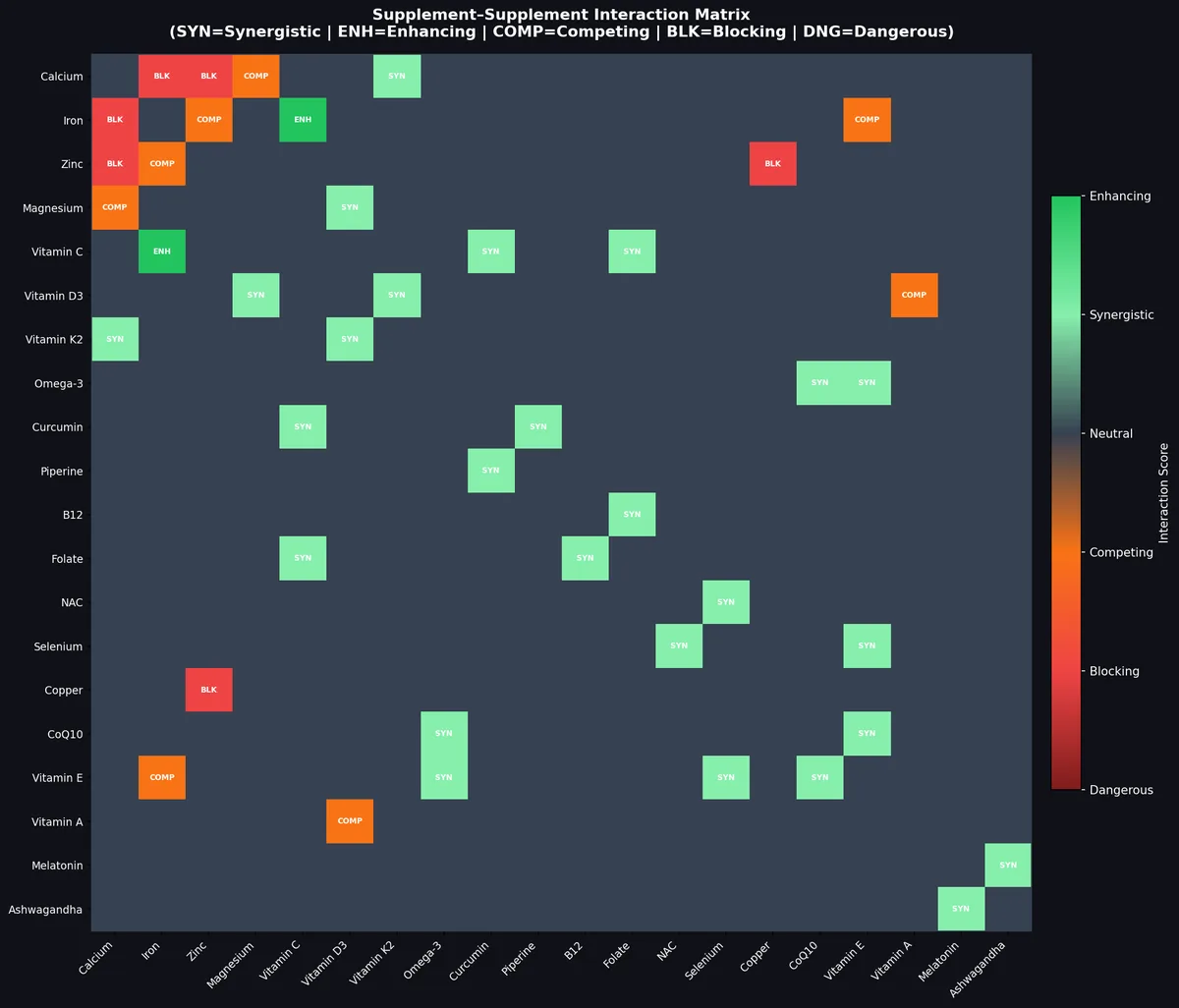
Can I combine magnesium threonate with glycinate? Yes. Some people use threonate for brain/sleep benefits and a smaller amount of glycinate for systemic magnesium needs. There’s no interaction concern.
Does magnesium threonate help with anxiety? By raising brain magnesium and supporting GABA receptor function, it can reduce anxiety — particularly cognitive anxiety and rumination. For physical anxiety symptoms, glycinate’s direct glycine component may add additional benefit.
Is magnesium threonate worth the higher price? If your primary goals are cognitive health or mental sleep quality, yes. If you’re primarily seeking systemic benefits like muscle relaxation or constipation relief, cheaper forms are more cost-effective.
What is the best brand of magnesium L-threonate? Look for products that specify “Magtein” (the licensed ingredient) on the label, as this ensures the compound used matches what was studied in clinical trials. Jarrow Formulas, Life Extension, and Nootropics Depot all carry Magtein-certified products.
Sources
- A Magtein(®), Magnesium L-Threonate, -Based Formula Improves Brain Cognitive Functions in Healthy Chinese Adults. [PMID 36558392]
- A Magtein(®), Magnesium L-Threonate, -Based Formula Improves Brain Cognitive Functions in Healthy Chinese Adults. [PMID 36558392]
- Midazolam versus midazolam-promethazine combination for oral sedation in third molar surgery: A randomized split-mouth trial. [PMID 42001488]
- A Magtein(®), Magnesium L-Threonate, -Based Formula Improves Brain Cognitive Functions in Healthy Chinese Adults. [PMID 36558392]
- A Magtein(®), Magnesium L-Threonate, -Based Formula Improves Brain Cognitive Functions in Healthy Chinese Adults. [PMID 36558392]
- A Magtein(®), Magnesium L-Threonate, -Based Formula Improves Brain Cognitive Functions in Healthy Chinese Adults. [PMID 36558392]
- Complete Guide 2026 GABA Supplements: Blood-Brain Barrier, Anxiety, and Sleep L-Theanine for Anxiety, Focus, and Sleep This article is for informational purposes only and does not consti [PMID 36558392]
Related Articles
- Best Magnesium Supplements in 2026: All Forms Compared
- Magnesium for Sleep: Which Form Actually Works
- Best Nootropic Supplements in 2026
- Longevity Supplements: Complete Guide 2026
- GABA Supplements: Blood-Brain Barrier, Anxiety, and Sleep
- L-Theanine for Anxiety, Focus, and Sleep
This article is for informational purposes only and does not constitute medical advice. Consult a qualified healthcare provider before starting any supplement, particularly if you have a medical condition, take medications, or are pregnant or nursing.



Leave a Reply