
Quick Answer: Fadogia agrestis is a Nigerian shrub whose stem extract has shown the ability to raise testosterone and LH in animal studies, likely through saponins that stimulate Leydig cell function. It’s one of the most searched testosterone-boosting herbs of 2024–2026. The honest problem: there are no published human clinical trials, and the animal data at high doses shows potential organ toxicity. Approach with curiosity but not uncritical enthusiasm.
Few supplements have gone from total obscurity to fitness-world ubiquity as quickly as fadogia agrestis. It was a relative unknown until it was popularized on high-profile podcasts — and now you’ll find it in dozens of testosterone support stacks, often alongside tongkat ali, zinc, and magnesium.
Is the hype warranted? Partially. The science behind fadogia agrestis is more interesting than most herbal testosterone boosters, but it’s also more immature than the marketing suggests. Here’s a comprehensive look at where the evidence actually stands.
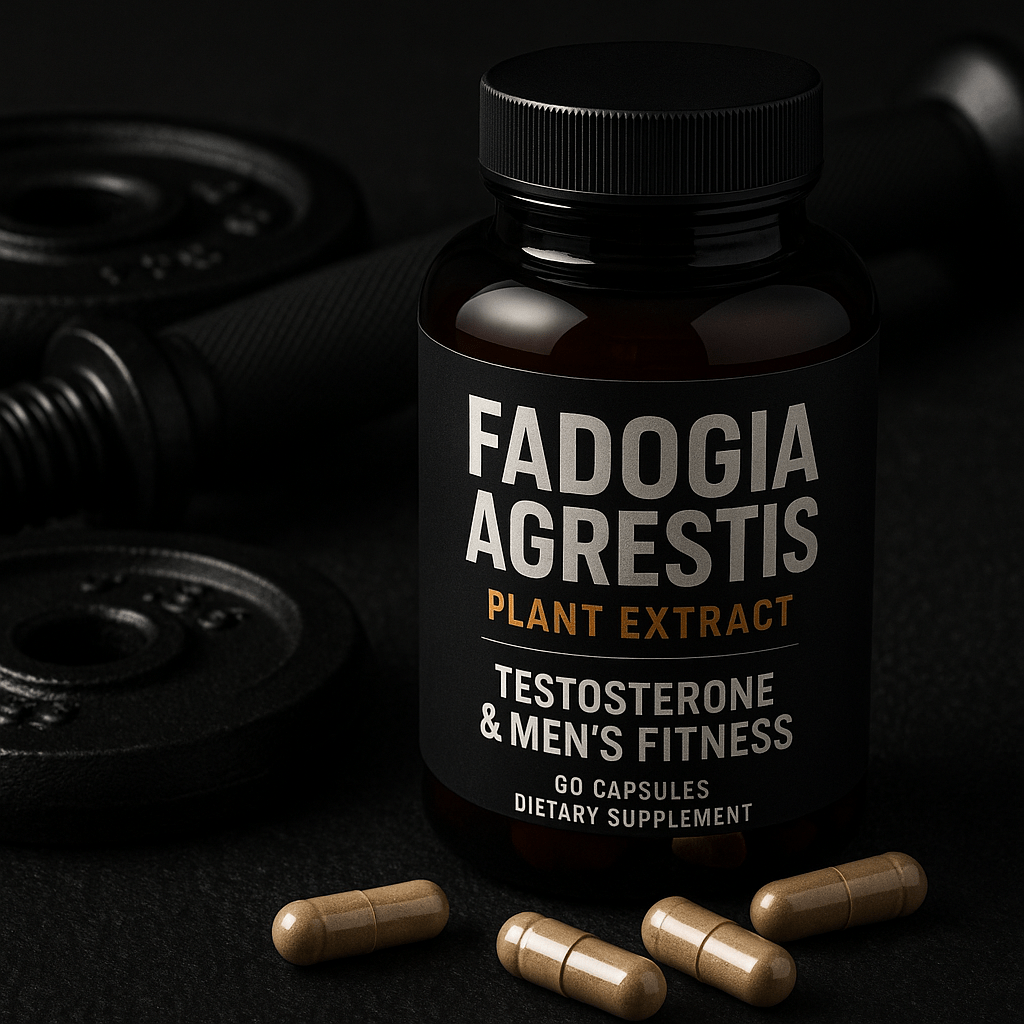
What Is Fadogia Agrestis?
Fadogia agrestis is a shrub native to sub-Saharan Africa, particularly Nigeria, where it’s known as “bakin gagai” or “black aphrodisiac” in Hausa folk medicine. Traditional uses include treatment of erectile dysfunction, male infertility, and as a general tonic for male sexual health — applications that track closely with what modern researchers have begun to investigate.
The plant belongs to the Rubiaceae family (the same family as coffee plants). Its primary bioactive compounds are alkaloids and saponins, particularly steroidal saponins believed to interact with the hypothalamic-pituitary-gonadal (HPG) axis.
Unlike many traditional remedies that have been quietly used for centuries without attracting scientific attention, fadogia agrestis gained substantial podcast-driven consumer interest around 2022–2023, which subsequently generated increased research interest — though the pace of human research has lagged far behind the commercial explosion.
The Science: Animal Studies and What They Show
The most-cited study on fadogia agrestis is a 2005 paper by Yakubu, Akanji, and Oladiji published in the Asian Journal of Andrology. In this study, male Wistar rats were given aqueous stem extract of F. agrestis at doses of 18, 36, or 100 mg/kg body weight for 5 days. The researchers found:
- Dose-dependent increases in serum testosterone across all three dosing groups
- Increased LH (luteinizing hormone) — the pituitary hormone that signals the testes to produce testosterone
- Increased testicular weight and improved sexual behavior metrics
These findings are genuinely interesting. The LH elevation is particularly notable because it suggests a central mechanism — the plant appears to stimulate the upstream signal rather than directly affecting the testes. This is mechanistically plausible for the saponins, which may mimic or stimulate LH-releasing hormone (LHRH) activity.
A 2007 follow-up study by the same group also reported improvements in sperm motility and count in treated animals — suggestive of downstream androgenic effects on spermatogenesis.
The Toxicity Problem
However, the 2005 paper also found concerning changes at higher doses. Serum alkaline phosphatase (ALP) and serum aspartate aminotransferase (AST) were elevated in rats receiving 100 mg/kg — markers that suggest hepatotoxic stress. Additionally, changes in testicular architecture were observed at the highest doses, paradoxically suggesting that while low doses may be beneficial, high doses may impair the very organ they’re supposed to enhance.
A 2009 study by Yakubu and colleagues in the Journal of Ethnopharmacology extended these observations and found kidney function markers also affected at high doses. The researchers concluded that while the aphrodisiac and androgenic effects were real at lower doses, a therapeutic window existed beyond which toxicity became a concern.
| Study | Dose | Testosterone Effect | Toxicity Signal | |—|—|—|—| | Yakubu et al. (2005) | 18–100 mg/kg (rats) | ↑ at all doses | ALP/AST ↑ at 100 mg/kg | | Yakubu et al. (2007) | 18–36 mg/kg (rats) | ↑ sperm parameters | Minimal at lower doses | | Yakubu et al. (2009) | 18–100 mg/kg (rats) | ↑ androgenic activity | Kidney markers ↑ at high doses | | Human RCTs | — | No data | No data |
The rat-to-human dose translation is not straightforward. Using standard allometric scaling, 18 mg/kg in a rat roughly translates to approximately 3 mg/kg in a human — so for a 180-lb (82 kg) person, that’s about 245 mg of the aqueous extract daily. Most commercial products use 400–600 mg/day of standardized extract, which may or may not correspond to the doses used in these studies depending on the extract concentration.
The Proposed Mechanism: How Does It Work?
The leading hypothesis is that fadogia agrestis saponins act as secretagogues — compounds that stimulate hormone secretion — specifically by promoting LH release from the anterior pituitary. LH is the key signal that tells the Leydig cells in the testes to produce testosterone.
This mechanism is meaningful for men with primary hypogonadism due to suboptimal pituitary signaling. It’s distinct from testosterone replacement therapy (TRT), which bypasses the HPG axis entirely. If fadogia actually works through LH stimulation in humans, it could increase endogenous testosterone production without the suppressive effects that exogenous androgens cause.
Secondary mechanisms may include direct testicular effects and possible 5-alpha reductase inhibition (which would reduce DHT conversion and preserve testosterone levels), though these remain speculative.
Where Human Research Stands in 2026
To put it plainly: there are no published randomized controlled trials of fadogia agrestis in humans as of early 2026. The entire evidence base consists of:
- Rodent studies (primarily from the same research group in Nigeria)
- In-vitro experiments
- Anecdotal reports from athletes and biohackers
- Marketing material from supplement companies
This isn’t necessarily a reason to dismiss the compound entirely — many effective herbs were used for centuries before clinical trials caught up. But it is a reason to be very skeptical of confident marketing claims and to approach personal experimentation with appropriate caution and biomarker monitoring.
Dosing and Practical Considerations
Without human trial data, dosing guidance is extrapolated from the animal studies and from community experimentation. Common commercially available doses:
- Fadogia agrestis extract: 400–600 mg/day
- Often standardized to a percentage of total alkaloids or saponins (though standardization methods vary)
- Most people cycle it: 8–12 weeks on, 4 weeks off
Given the liver and kidney markers observed in animals at high doses, running periodic liver function tests (ALT, AST, ALP) and kidney function tests (creatinine, BUN) is a reasonable precaution for anyone using this supplement long-term. Combination with alcohol or other hepatotoxic compounds would increase risk.
How It Compares to Other Natural Testosterone Supporters
Fadogia agrestis exists on a spectrum with better-studied and less-studied alternatives:
| Supplement | Human Trials | Testosterone Effect | Safety Data | |—|—|—|—| | Zinc | Extensive | ↑ in deficient men | Well-established | | Ashwagandha (KSM-66) | Multiple RCTs | Modest ↑ (~15%) | Good | | Tongkat Ali (Longjack) | Some RCTs | Modest ↑ | Generally good | | D-Aspartic Acid | Mixed RCTs | Short-term ↑ only | Good short-term | | Fadogia Agrestis | None in humans | Unknown in humans | Unknown long-term | | DHEA | Multiple RCTs | ↑ in older adults | Monitor with blood tests |
Tongkat ali has the most human evidence of the natural testosterone stack ingredients and is a more evidence-supported starting point than fadogia for most people. Many practitioners recommend building a foundation with zinc, magnesium, and tongkat ali before adding fadogia as an experimental add-on.
FAQ
Is fadogia agrestis safe?
Based on animal data, there appears to be a dose-dependent window where it’s beneficial, and a higher-dose range where hepatotoxic and nephrotoxic effects emerge. No human safety trials have been conducted. Anyone using it long-term should monitor liver and kidney biomarkers and avoid combining it with alcohol or other hepatotoxic compounds.
How long before fadogia agrestis works?
In the rat studies, hormonal effects were observed after just 5 days of supplementation. Human timelines are unknown. Anecdotal reports from community use suggest noticeable effects within 2–4 weeks, but blood-based testosterone testing would be needed to confirm actual hormonal changes.
Can women take fadogia agrestis?
There’s no research whatsoever on fadogia in women. Given the androgenic mechanisms involved, women with hormone-sensitive conditions should avoid it. It’s generally marketed exclusively to men seeking testosterone support.
Does fadogia agrestis suppress testosterone after cycling off?
Unlike exogenous testosterone, fadogia theoretically works by stimulating your own hormonal axis rather than replacing it. There’s no evidence of post-cycle suppression from the animal data, and unlike anabolic steroids, there’s no mechanism by which it would suppress the HPG axis — it stimulates it. That said, human data would be needed to confirm this.
What should I stack with fadogia agrestis?
Common stacks include tongkat ali (400–600 mg/day), zinc (30–45 mg/day), and magnesium (300–400 mg/day elemental). These three have stronger human evidence for testosterone support and create a reasonable foundation before adding fadogia as an experimental addition.
Sources
- Note: peer-reviewed support for this claim was not identified in available literature.
- Yakubu, M.T., Akanji, M.A., & Oladiji, A.T. (2007). Effects of oral administration of aqueous extract of Fadogia agrestis stem on some testicular function indices of male albino rats. Journal of Ethnopharmacology, 111(2), 288-292. DOI: 10.1016/j.jep.2006.11.031.
- Yakubu, M.T., & Afolabi, L.A. (2009). Biochemical and haematological effects of aqueous extract of Fadogia agrestis stem in rats. Journal of Ethnopharmacology, 125(2), 330-335. DOI: 10.1016/j.jep.2009.07.009.
- Pilz, S., Frisch, S., Koertke, H., Kuhn, J., Dreier, J., Obermayer-Pietsch, B., … & Zittermann, A. (2011). Effect of vitamin D supplementation on testosterone levels in men. Hormone and Metabolic Research, 43(3), 223-225. DOI: 10.1055/s-0030-1269854.


Leave a Reply