
Quick Answer: Men benefit from probiotics in ways that differ from women — with research pointing to gut-testosterone connections, athletic recovery support, prostate health, and metabolic syndrome risk reduction. Specific strains like Lactobacillus reuteri (for testosterone signaling), Bifidobacterium lactis (for metabolic health), and multi-strain formulas for athletic recovery are worth prioritizing based on your goals.
Probiotics are often discussed in the context of women’s health — and for good reason, given the vaginal microbiome applications. But men stand to gain substantially from targeted probiotic supplementation, and the mechanisms are fascinating: emerging research connects the gut microbiome to testosterone production, exercise recovery, prostate health, and the metabolic risk factors that disproportionately affect men. If you’ve assumed probiotics were mostly for women or people with digestive problems, the research since 2010 suggests it’s time to reconsider.
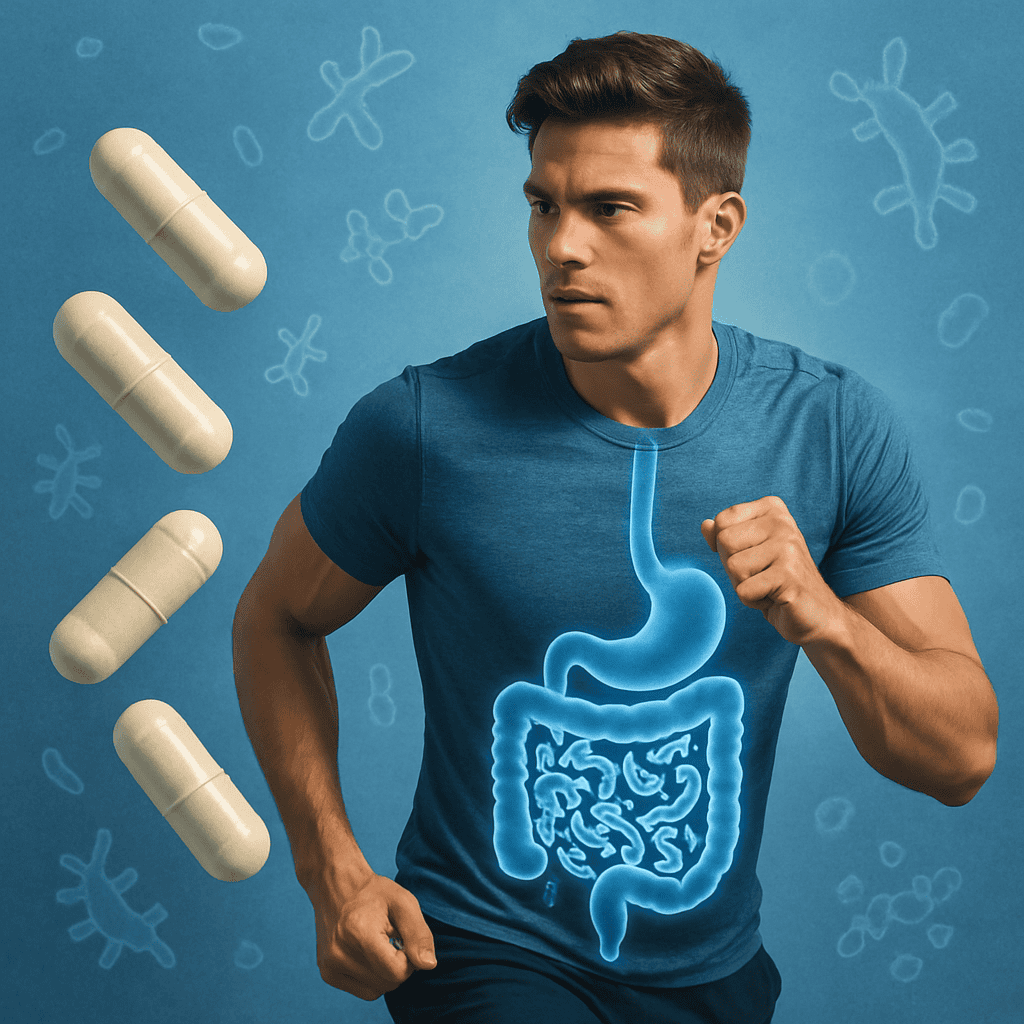
This guide covers the science behind men’s specific probiotic applications, which strains are most relevant, how to differentiate men’s and women’s formulas, and practical dosing guidance — without the hype or the vague “gut health is important” generalizations that pass for advice in most supplement marketing.
The Gut-Testosterone Axis
Perhaps the most compelling and surprising area of men’s probiotic research is the connection between gut microbiome composition and testosterone. For a long time, the idea that bacteria in your gut could influence your sex hormone levels would have seemed far-fetched. Today, there are several documented mechanisms by which this connection operates.
The most widely discussed is the Lactobacillus reuteri effect on testosterone in animal models. A landmark 2014 study by Poutahidis et al. published in PLOS ONE found that feeding L. reuteri to aging male mice produced dramatic effects: higher serum testosterone levels, larger testes, increased fertility markers, and resistance to age-related testicular decline. The proposed mechanism involved interleukin-17 (IL-17) immune signaling — the probiotics reduced IL-17 activity, which appears to suppress testosterone production when chronically elevated.
This is mouse data, and the leap to humans requires caution. However, the gut-testosterone connection in humans has independent support. The gut microbiome influences the enterohepatic circulation of androgens — bacteria with beta-glucuronidase activity deconjugate steroid hormones in the gut, affecting how much testosterone (and its metabolites) gets reabsorbed versus excreted. A 2018 study by Mitsou et al. in European Journal of Nutrition linked gut microbiome diversity to androgen profiles in men, suggesting that dysbiosis may affect the effective availability of testosterone.
Additionally, the microbiome influences luteinizing hormone (LH) dynamics and testicular Leydig cell function indirectly through the gut-brain axis — a pathway mediated partly by short-chain fatty acids and partly by vagal nerve signaling. This research is early but mechanistically coherent.
The practical takeaway isn’t that probiotics are a testosterone booster in the way that marketing would suggest. But the evidence does suggest that maintaining a healthy gut microbiome — including L. reuteri supplementation — may help support the hormonal signaling environment that allows normal testosterone production to proceed. For men already exploring hormonal health support, our guides on Tongkat Ali, Fadogia Agrestis, and DHEA Supplements cover other evidence-based approaches.
Athletic Performance and Gut Health
Athletes were some of the earliest adopters of probiotic supplementation, and the sports science literature has produced some of the most compelling men-relevant evidence. Men who train intensely are a useful population for studying probiotics because exercise itself is a form of controlled microbiome disruption — heavy endurance training increases intestinal permeability (“leaky gut”), alters gut microbial composition, and can lead to GI symptoms that impair performance.
A 2019 study by West et al. in Nutrients found that supplementation with Lactobacillus helveticus R0052 and Bifidobacterium longum R0175 for four weeks improved exercise-induced respiratory infection rates and recovery time in male athletes. This is consistent with a broader literature suggesting probiotics reduce upper respiratory infections — a common performance disruptor for trained athletes.
For gut-specific athletic applications, a 2016 RCT by Gleeson et al. in European Journal of Sport Science found that male rugby players who took a daily probiotic supplement (L. fermentum) had significantly fewer days of GI distress and upper respiratory illness compared to placebo over a 4-month competitive season.
One of the more intriguing recent findings involves L. plantarum PS128 (a psychobiotic that’s also been studied for endurance performance). A 2022 study by Lee et al. in Nutrients found that male athletes taking PS128 for 30 days showed improved 400-meter sprint performance and reduced post-exercise cortisol compared to placebo, with the authors proposing that gut-brain axis modulation contributed to the effect.
Post-exercise recovery is another relevant area. Bacillus coagulans MTCC 5856 was studied in a 2018 RCT by Jager et al. in the Journal of the International Society of Sports Nutrition, finding that male athletes taking the probiotic alongside protein had significantly reduced delayed-onset muscle soreness (DOMS) and faster recovery of muscle function compared to protein plus placebo.
Probiotics, Metabolic Health, and Men’s Cardiovascular Risk
Men experience metabolic syndrome — the constellation of abdominal obesity, hypertension, elevated triglycerides, low HDL, and impaired glucose regulation — at higher rates than premenopausal women, with a roughly 1.5–2x higher prevalence in many epidemiological surveys. The gut microbiome is deeply implicated in metabolic health, and several probiotic strains have demonstrated metabolic benefits in male-skewing populations.
A 2020 meta-analysis by Khalesi et al. in Nutrients, analyzing 15 RCTs, found that probiotic supplementation significantly reduced fasting blood glucose and insulin resistance indices in adults with metabolic risk factors. Bifidobacterium species, particularly B. longum and B. lactis, showed the most consistent metabolic effects.
For triglycerides and cholesterol, a 2017 meta-analysis by Wang et al. in Lipids in Health and Disease found that probiotic supplementation reduced total cholesterol by an average of 7.8 mg/dL and LDL by 7.7 mg/dL across 12 RCTs. The effect was more pronounced in men and in those with higher baseline lipid levels.
The mechanism involves several pathways: probiotic bacteria produce SCFAs that influence lipid metabolism in the liver, some strains deconjugate bile acids (reducing cholesterol reabsorption), and diverse microbiomes show lower translocation of lipopolysaccharides (LPS) — bacterial cell wall fragments that drive systemic inflammation and insulin resistance.
For men with family history of cardiovascular disease or already managing metabolic risk factors, supporting gut microbiome health is increasingly seen as a legitimate complementary strategy — not a replacement for diet, exercise, or medication as appropriate, but a meaningful add-on with minimal risk and growing evidence.
Prostate Health and the Gut Microbiome
The prostate is an organ that most men will have a complicated relationship with eventually — benign prostatic hyperplasia (BPH) affects over 50% of men by age 60, and prostate cancer is the most common cancer in men globally. Both conditions involve inflammatory processes in which the gut microbiome may play a role.
Research by Sfanos et al. in Prostate Cancer and Prostatic Diseases (2018) established connections between gut microbiome composition and prostate inflammation, noting that dysbiotic gut flora could contribute to systemic inflammation that promotes prostatic inflammation. The proposed pathway involves LPS translocation from a disrupted gut barrier increasing systemic inflammatory burden, which can reach prostate tissue.
A 2020 study by Pernigoni et al. in Science demonstrated that gut bacteria can produce androgens that influence castration-resistant prostate cancer progression — a finding that opens a new understanding of the microbiome’s role in prostate disease. While this research has immediate implications for prostate cancer treatment research, it also underscores just how consequential gut microbial activity is for prostate health at a fundamental level.
For benign prostate health, L. reuteri and L. acidophilus supplementation has been associated with reduced inflammatory markers in small clinical studies, though this remains an area needing larger RCTs.
How Men’s Probiotic Needs Differ from Women’s
The probiotic market has long offered “women’s probiotics” but relatively few “men’s probiotics” — a reflection of where the most acute consumer demand has been rather than where the biology points. Here’s a comparison of how men’s and women’s probiotic priorities differ:
| Factor | Men | Women | |—|—|—| | Unique microbiome concern | Gut-testosterone axis, prostate | Vaginal microbiome, hormonal cycles | | Key life-stage considerations | Athletic peak, metabolic risk, age-related testosterone decline | Reproductive years, pregnancy, menopause | | Best-supported strains | L. reuteri, B. longum, B. lactis, L. helveticus | L. rhamnosus GR-1, L. reuteri RC-14, L. crispatus | | UTI/vaginal concern | Not applicable | Major clinical application | | Athletic performance evidence | Strong | Moderate | | Metabolic syndrome prevalence | Higher | Lower (premenopausal) | | Typical CFU recommendation | 20–50 billion for general health | 25–50 billion; lower for targeted vaginal strains |
Note that most general probiotic formulas serve both sexes well — the differences lie in targeted applications, not basic gut health support, where the evidence overlaps considerably.
For the comprehensive gut health foundation, see our Probiotics and Gut Health Guide.
Specific Strains with Male-Relevant Evidence
Lactobacillus reuteri — The testosterone mouse-model data, anti-inflammatory effects, and testicular health findings in animal research make this a strain of particular interest for men. Available in several standalone products and commonly included in multi-strain formulas.
Bifidobacterium longum — Strong evidence for metabolic benefits, including blood glucose regulation and lipid profile improvement. Also well-studied for psychological stress reduction via the gut-brain axis (anxiety and stress are disproportionate risk factors for cardiovascular disease in men).
Bifidobacterium lactis (Bl-04) — Particularly well-studied for upper respiratory infection prevention in athletes. Also shows benefits for immune modulation and some evidence for improved insulin sensitivity.
Lactobacillus plantarum — Studied for both gut barrier integrity and athletic performance; may help reduce exercise-induced intestinal permeability that often causes GI symptoms during intense training.
Lactobacillus helveticus — In combination with B. longum, has some of the strongest clinical evidence for cortisol reduction and stress resilience — relevant given that chronic stress is a major testosterone suppressor in men.
Bacillus coagulans — A spore-forming probiotic (shelf-stable) with evidence for muscle recovery and protein digestion enhancement — practical considerations for men focused on body composition.
Dosing, Timing, and Practical Guidance for Men
General daily maintenance: 20–30 billion CFU multi-strain formula containing at least one Lactobacillus and one Bifidobacterium species.
For athletic support: 20–50 billion CFU, including L. plantarum, B. lactis Bl-04, or B. coagulans. Consider timing around exercise — some research suggests post-exercise dosing when gut permeability is highest.
For metabolic health goals: Emphasize Bifidobacterium strains (B. longum, B. lactis) at 20–50 billion CFU daily. Consider adding a prebiotic fiber to feed these organisms.
For testosterone support (experimental): L. reuteri at 1–5 billion CFU daily. Combine with dietary strategies that support gut microbiome health (adequate fiber, fermented foods, reduced processed food intake).
Timing: No strong evidence favors a specific time of day. Morning with breakfast is the most common approach in clinical trials. Consistency matters far more than timing precision.
Cycling: Unlike some supplements, there’s no established evidence that cycling probiotics off is necessary or beneficial. Continuous daily use is standard in the clinical literature.
With food: Taking probiotics with food buffers stomach acid and may improve organism survival. A small meal is sufficient — you don’t need a full meal.
Common Men’s Probiotic Mistakes
Most men who don’t get results from probiotics are making one of these errors:
- Not taking them consistently enough. Studies showing benefits use daily supplementation for 4–12 weeks. Taking probiotics sporadically produces limited results.
- Buying purely on CFU count. 100 billion CFU of unresearched strains is less valuable than 20 billion CFU of well-studied, clinical-grade strains with demonstrated human efficacy.
- Ignoring diet. Probiotics work alongside diet, not around it. A high-sugar, low-fiber diet creates an environment hostile to beneficial bacteria regardless of what you’re supplementing.
- Not pairing with prebiotics. Adding prebiotic fiber to your probiotic routine helps the incoming bacteria thrive. See our Gut Health Supplements guide for the full stack.
- Expecting immediate results. Most men-relevant benefits (metabolic markers, recovery metrics, hormonal support) require 8–12 weeks of consistent use before assessment.
For specific product recommendations, see our Best Probiotic Supplement review guide.
FAQ
Do probiotics actually raise testosterone?
The evidence in humans is preliminary but directionally interesting. L. reuteri produced dramatic testosterone effects in mouse models, and the gut microbiome clearly influences androgen metabolism in humans through bile acid cycling and enterohepatic hormone circulation. It would be an overstatement to say probiotics raise testosterone; it’s more accurate to say they may support the hormonal environment that allows normal testosterone production to proceed, particularly as men age.
Should men take a different probiotic than women?
For general gut health, a standard multi-strain probiotic works for both sexes. The meaningful differences emerge in targeted applications: women need vaginal health strains (GR-1/RC-14) that men don’t need, and men may benefit more from strains with metabolic and athletic performance evidence. If you’re buying a general probiotic and not specifically chasing hormonal or athletic applications, any quality multi-strain formula is appropriate regardless of the gender marketing.
Can probiotics help with male fertility?
This is an early but promising area. The Poutahidis L. reuteri research in mice showed not only higher testosterone but improved testicular volume and sperm parameters in aging males. Small human pilot studies have suggested possible improvements in sperm motility and oxidative stress markers with probiotic supplementation. This remains a research frontier rather than an established clinical application, but the biological plausibility is strong.
How do I know if my probiotic is working?
For digestive benefits, most men notice changes in regularity and GI comfort within 2–4 weeks. For metabolic markers, check fasting glucose and lipid panels before and after 12 weeks of supplementation. For athletic recovery, subjective DOMS and illness frequency tracking over a training season provides practical feedback. For testosterone-related outcomes, serum testosterone testing at baseline and at 12 weeks provides objective data.
Are men’s probiotic supplements just regular probiotics with different labels?
Often, yes — but some genuinely are formulated differently, emphasizing L. reuteri, B. longum, and B. lactis over vaginal-health strains, and sometimes incorporating performance-focused additions like B. coagulans. Read the ingredient list, not the label. If it has the right strains at meaningful CFU counts, the gender marketing is irrelevant.
Can probiotics help with gut issues from high protein diets?
Possibly. High-protein diets, especially with significant animal protein, can shift gut microbiome composition toward more putrefactive (protein-fermenting) bacteria and away from beneficial saccharolytic (fiber-fermenting) bacteria. Bifidobacterium and Lactobacillus supplementation may help counterbalance this shift, and pairing high protein intake with adequate fiber (prebiotic) supports a more balanced microbiome. B. coagulans specifically has evidence for improved protein digestion.
Key Takeaways
- Men have distinct probiotic priorities: gut-testosterone axis support, athletic performance and recovery, prostate health, and metabolic syndrome risk reduction.
- Lactobacillus reuteri has the most intriguing testosterone-related data, though human evidence is still developing; L. reuteri in mouse models significantly raised testosterone and preserved testicular function.
- Bifidobacterium longum and B. lactis have the strongest metabolic evidence — blood glucose regulation, lipid profile improvement, and inflammation reduction.
- Athletes benefit from L. plantarum, B. lactis Bl-04, and B. coagulans for recovery, reduced illness, and gut integrity during heavy training.
- General probiotic formulas serve both sexes; gender-specific applications diverge around vaginal health (women) vs. testosterone/athletic/metabolic focus (men).
- Aim for 20–50 billion CFU daily; strain selection matters more than CFU count.
- Consistent daily use for 8–12 weeks is required before assessing metabolic or hormonal outcomes.
- Pairing with prebiotic fiber meaningfully amplifies probiotic benefits for gut health and metabolic markers.
Sources
- Poutahidis, T., et al., “Microbial reprogramming inhibits Western diet-associated obesity,” PLOS ONE, 2014.
- Mitsou, E.K., et al., “Gut microbiota composition reflects diet quality and metabolic health,” European Journal of Nutrition, 2018.
- West, N.P., et al., “Probiotics, immunity, and exercise: A systematic review,” Nutrients, 2019.
- Gleeson, M., et al., “Daily probiotic’s (Lactobacillus casei Shirota) reduction of infection incidence in athletes,” European Journal of Sport Science, 2016.
- Lee, M.C., et al., “Efficacy of Lactobacillus plantarum PS128 on athletic performance,” Nutrients, 2022.
- Jager, R., et al., “Bacillus coagulans and protein supplementation for muscle recovery,” Journal of the International Society of Sports Nutrition, 2018.
- Khalesi, S., et al., “Probiotics and blood pressure: A meta-analysis,” Nutrients, 2020.
- Wang, L., et al., “Effect of probiotics on total cholesterol,” Lipids in Health and Disease, 2017.
- Sfanos, K.S., et al., “The human gut microbiome and prostate cancer,” Prostate Cancer and Prostatic Diseases, 2018.
- Pernigoni, N., et al., “Commensal bacteria promote endocrine resistance in prostate cancer,” Science, 2020.
- Ford, A.C., et al., “Efficacy of probiotics for irritable bowel syndrome,” The American Journal of Gastroenterology, 2019.
- Hempel, S., et al., “Probiotics for prevention of antibiotic-associated diarrhea,” JAMA, 2012.

Leave a Reply