Best Tongkat Ali Supplements in 2026: Testosterone, Energy, and LJ100 Evidence Review
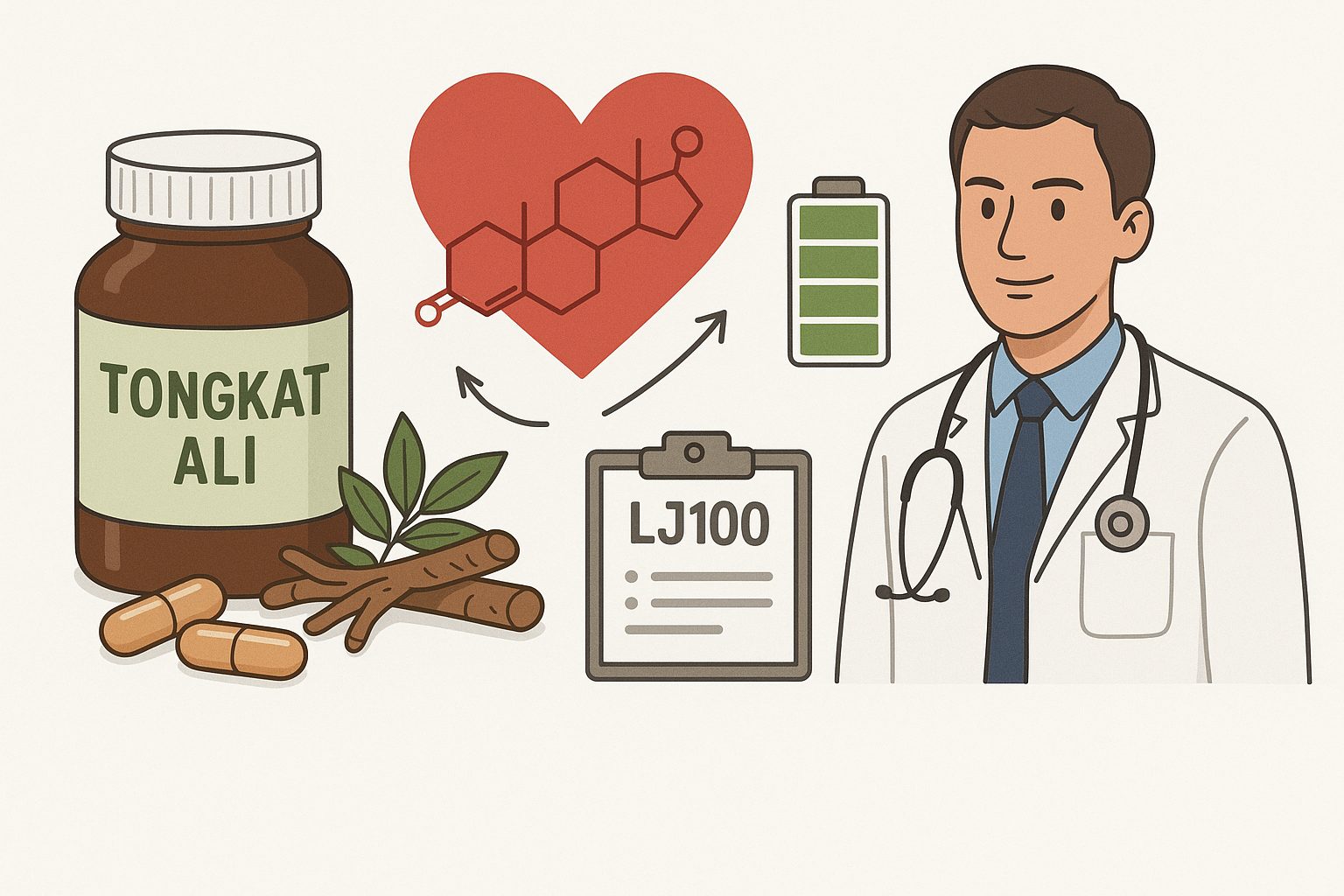
Quick Answer: Tongkat Ali (Eurycoma longifolia) has genuine clinical evidence for improving testosterone levels, sexual function, and stress hormone balance in adults with age-related testosterone decline — particularly when using standardized extracts like LJ100 (a patented water-soluble glycoprotein extract) at 200–400 mg/day. It’s not a magic testosterone booster for healthy young men, but it’s one of the more evidence-backed botanical options for men over 40 experiencing low-normal T.
Tongkat Ali — also known as Longjack, Malaysian ginseng, and Eurycoma longifolia — has been used in Southeast Asian traditional medicine for centuries as a male vitality herb. In the last 20 years, it has accumulated a meaningful body of Western clinical research. The results are more nuanced than the marketing suggests, but genuinely more promising than most herbal testosterone boosters.
This guide reviews what the evidence actually shows, what LJ100 standardization means, how Tongkat Ali compares to other options, and what to look for in a quality product in 2026.
What Is Tongkat Ali?
Eurycoma longifolia is a flowering plant native to the rainforests of Malaysia, Indonesia, Thailand, and Vietnam. The roots are the medicinally active part, containing a range of bioactive compounds:
Eurycomanone — the primary quassinoid, responsible for much of the androgenic activity
Eurypeptides — low-molecular-weight peptides that appear to stimulate steroidogenesis
Glycoprotein fraction — the target of the LJ100 extraction process
Polysaccharides — immunomodulatory effects
Canthin-6-one alkaloids — antimicrobial and potential anti-tumor activity
The androgenic mechanism appears to work by reducing sex hormone-binding globulin (SHBG), thereby freeing more testosterone from being protein-bound, and by increasing LH (luteinizing hormone) signaling to stimulate Leydig cell testosterone production.
LJ100: The Standardized Extract That Matters
Not all Tongkat Ali extracts are equal. The raw root market is flooded with products of unknown potency, inconsistent extraction, and poorly characterized bioactive content.
LJ100 is a patented, water-soluble standardized extract developed by MIT-licensed researchers and the Malaysian government’s forest research institute (FRIM). It is standardized to contain:
≥22% eurypeptides
≥40% glycosaponins
≥30% polysaccharides
≤0.8% eurycomanone
This standardization ensures consistent potency and allows meaningful comparison between clinical trials that use the same extract.
Other extracts you’ll encounter:
1:50, 1:100, 1:200 root extracts: These ratios indicate concentration but not standardization. A 1:200 extract is more concentrated than the root but may still be potent-variable.
Physta: Another trademarked standardized extract (freeze-dried water extract, standardized to glycosaponins), used in several Malaysian clinical trials.
Generic root powder: Lowest quality, highly variable, not recommended for clinical purposes.
What the Research Actually Shows
Testosterone
The most-cited testosterone research:
Tambi et al. (2012) — A double-blind, placebo-controlled trial of LJ100 200 mg/day in late-onset hypogonadal men found a significant increase in free testosterone (46% of subjects moved from “normal” to “high” free T range) and improvements in erectile function scores. This is the landmark study, though sample size was modest (n=76).
Henkel et al. (2014) — A crossover study in recreational athletes found 400 mg/day Tongkat Ali significantly increased testosterone and reduced sex hormone-binding globulin compared to placebo.
Leisegang et al. (2021) — A systematic review concluded that Eurycoma longifolia significantly increased testosterone levels (both free and total) in men with low-normal testosterone, but effects in men with normal baseline T were modest and inconsistent.
The practical takeaway: Tongkat Ali appears to raise testosterone most meaningfully in men who already have below-normal-to-low-normal testosterone — typical of men over 40 experiencing age-related decline, stress-related suppression, or physical overtraining. If you’re a healthy 25-year-old with normal T levels, expect minimal effect.
Sexual Function and Libido
Multiple trials and systematic reviews support Tongkat Ali’s effect on sexual desire, erectile function, and satisfaction. A 2014 Evidence-Based Complementary and Alternative Medicine meta-analysis found consistent improvements in erectile function scores across multiple trials.
The mechanism may partially bypass testosterone — some research suggests Tongkat Ali has direct PDE-5 inhibitor-like activity in animal models, though this hasn’t been definitively confirmed in human clinical dosing.
Cortisol and Stress Response
One of the more interesting and reproducible findings is Tongkat Ali’s effect on cortisol:testosterone ratio.
Talbott et al. (2013) — A double-blind RCT of 200 mg/day LJ100 in “moderately stressed” adults found significant improvements in cortisol (−16%), testosterone (+37%), and mood, anger, and tension scores vs. placebo. This suggests adaptogen-like HPA axis modulation.
Body Composition
Several studies show modest improvements in lean mass and reductions in body fat with Tongkat Ali, particularly when combined with resistance training. Effects are attributed to the androgenic support rather than direct lipolysis.
A 2003 study (Hamzah & Yusof) found that men given 100 mg/day showed significantly greater increases in lean body mass and strength over 5 weeks of training compared to placebo.
Fertility and Sperm Quality
Multiple studies — including a notable 1-year clinical study (George & Henkel, 2014) — found that Tongkat Ali improved sperm motility, morphology, and volume in subfertile men. Effects may be mediated through testosterone support and antioxidant mechanisms.
Cognitive and Energy Function
Some emerging research suggests Tongkat Ali may improve working memory and reaction time, possibly through testosterone’s role in brain function, though this evidence is preliminary.
Dosing Guidelines
Standard dose range: 200–400 mg/day of standardized extract (LJ100 or Physta)
For LJ100 specifically: 200 mg/day is the dose used in most clinical trials. Some practitioners go up to 400 mg for 6–12 weeks before cycling off.
Cycling: Many sources recommend cycling Tongkat Ali (e.g., 5 days on, 2 days off; or 8 weeks on, 2 weeks off) to prevent tolerance, though clinical evidence for required cycling is limited.
Timing: Most commonly taken in the morning with food. Some users take it pre-workout.
Onset: Testosterone-related effects typically take 2–6 weeks to manifest meaningfully.
Safety and Side Effects
Tongkat Ali has a generally good safety profile in clinical trials at 200–400 mg/day. The most comprehensive safety data comes from LJ100 trials.
Common mild side effects:
Insomnia or vivid dreams (especially at higher doses)
Increased body heat / restlessness
Mild agitation
At higher doses (>400 mg):
Androgenic effects could theoretically worsen androgenic alopecia or acne
Possible prostate stimulation concerns (though clinical evidence doesn’t clearly show prostate-specific effects)
Mercury contamination concern: Older analyses of Tongkat Ali products from Southeast Asian markets found significant lead and mercury contamination in some raw root products. This underscores the importance of buying from brands with verified COAs and third-party testing.
Interactions:
May interact with blood pressure medications (hypotensive effects in some models)
Additive androgenic effects with testosterone replacement therapy
Use with caution in hormone-sensitive conditions
Not recommended for:
Hormone-sensitive prostate cancer
Men on TRT without physician awareness
Pregnant or nursing women
How to Choose a Quality Tongkat Ali Product in 2026
Look for standardized extracts
LJ100 and Physta are the two most researched, standardized extracts. Other reputable suppliers may use validated extraction processes — look for documented bioactive concentrations (eurycomanone %, eurypeptide %).
Third-party testing for heavy metals
Given historical contamination issues, any quality Tongkat Ali should have CoA documentation for lead, mercury, arsenic, and cadmium.
Avoid proprietary blends with undisclosed Tongkat Ali content
Many “testosterone booster” formulas include Tongkat Ali alongside 10–15 other ingredients at sub-effective doses. If you want to evaluate Tongkat Ali, use a standalone product or one where the Tongkat Ali dose is clearly stated.
Reputable brands using LJ100
Nutribiologix LJ100
Solaray LJ100
Sports Research (uses Physta)
NOW Foods (uses standardized extract with CoA)
Tongkat Ali vs. Other Testosterone-Supporting Supplements
Supplement
Mechanism
Evidence Level
Best For
Tongkat Ali (LJ100)
Reduces SHBG, stimulates LH
Moderate (RCTs)
Men with low-normal T
Ashwagandha (KSM-66)
Reduces cortisol, supports LH
Moderate (RCTs)
Stress-related T suppression
Zinc
Cofactor for testosterone synthesis
Good for deficient adults
Zinc-deficient men
D3 + Magnesium
Support T synthesis indirectly
Good for deficient adults
Those with nutrient gaps
Fadogia Agrestis
LH stimulation (animal data)
Very limited in humans
Unverified; caution advised
Fenugreek
Inhibits 5-alpha reductase
Moderate
Older men with DHT concerns
Tongkat Ali compares favorably with ashwagandha for testosterone support specifically in men, while ashwagandha may be more versatile for cortisol and sleep.
Key Takeaways
Tongkat Ali has genuine clinical evidence for improving testosterone, libido, and stress hormones in men with low-normal T
LJ100 is the most researched, standardized extract — look for it specifically
Standard effective dose is 200–400 mg/day — not arbitrary “boosts” sold in testosterone blends
Effect is greatest in men over 40 with below-normal testosterone or high-stress cortisol suppression
Safety profile is good at standard doses, but buy from tested sources to avoid heavy metal contamination
Not for healthy young men with normal T levels — evidence of benefit is weak in that group
Banned by WADA (World Anti-Doping Agency) and prohibited in many competitive sports contexts
Frequently Asked Questions
Does Tongkat Ali actually increase testosterone?
Yes, in men with low-normal or below-average testosterone, clinical trials using LJ100 show meaningful increases in free testosterone. The effect is more modest or absent in young men with already-normal levels.
What is LJ100 and why does it matter?
LJ100 is a patented, standardized water-soluble extract of Eurycoma longifolia developed through MIT-licensed research. It’s standardized to specific bioactive fractions and is the extract used in most high-quality clinical trials on Tongkat Ali.
How long does Tongkat Ali take to work?
Most users notice changes in energy and libido within 2–3 weeks. Measurable changes in testosterone typically appear after 4–6 weeks of consistent use.
Is Tongkat Ali safe for long-term use?
Clinical trials up to 12 months have found no significant safety concerns at 200–400 mg/day. However, long-term (multi-year) safety data is limited. Periodic cycling is often recommended but not definitively evidence-supported.
Can women take Tongkat Ali?
Some research (including the Talbott 2013 cortisol study) included women and found benefits for mood and cortisol. DHEA-S and testosterone improve in women too, but androgenic effects (acne, hair changes) may emerge. Women should use lower doses (100 mg) and monitor carefully.
Is Tongkat Ali banned in sports?
Yes. DHEA and several of its precursors and related compounds are banned by WADA, and Tongkat Ali is on the prohibited list for competitive athletes. Check the specific rules of your sport.

Leave a Reply