

Quick Answer: Vitamin K2 activates calcium-directing proteins that put calcium in bones and teeth, not arteries. MK-7 at 100-200 mcg/day is the best daily form; always pair it with vitamin D3.
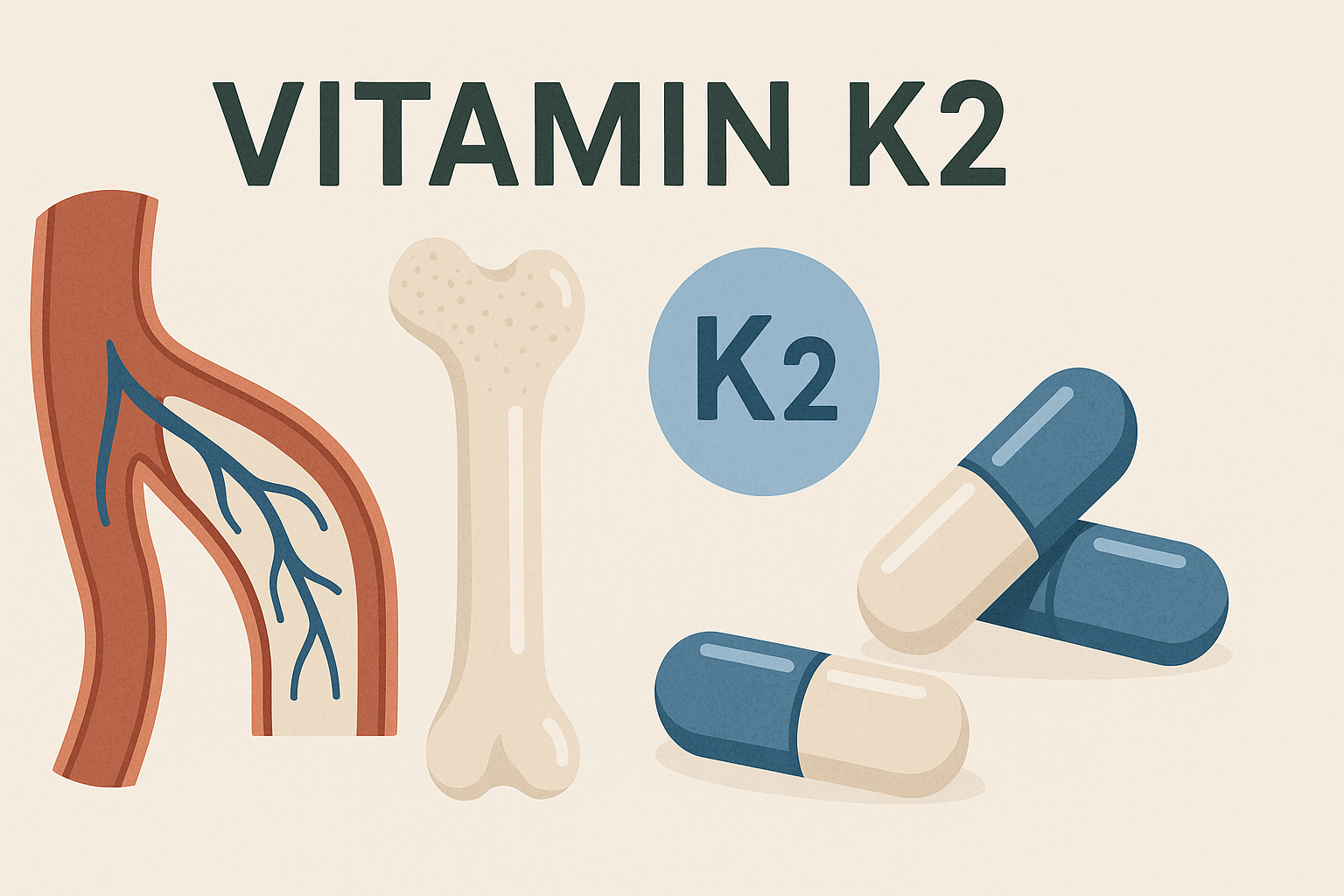
Vitamin K2 is one of the most underappreciated nutrients in the supplement world. While vitamin K1 is known primarily for blood clotting, K2 plays an entirely different role: it activates proteins that direct calcium to the right places — bones and teeth — and away from the wrong places, like arteries and soft tissues. If you’re taking high-dose vitamin D3 or calcium, you may be creating a K2 deficiency without knowing it.
This guide covers everything you need to know about vitamin K2 in 2026: the forms, the evidence, the dosing, and what to look for in a quality supplement.
What Is Vitamin K2?
Vitamin K2 belongs to the menaquinone family of compounds. The number after MK- indicates the length of the side chain, which affects how the body absorbs and distributes the compound. The two most relevant forms are:
- MK-4 (menatetrenone): Short-chain form. Rapidly absorbed but has a short half-life (hours). Found in animal foods like egg yolks, butter, and cheese from grass-fed animals.
- MK-7 (menaquinone-7): Long-chain form. Longer half-life (days). Derived primarily from natto (fermented soybeans). This is the dominant form in most supplements today.
Both forms activate the same key proteins — osteocalcin (bone) and matrix Gla protein (MGP) — but their pharmacokinetics differ significantly.
How Vitamin K2 Works
K2’s primary role is as a cofactor in carboxylation reactions. Two proteins depend on vitamin K2:
Osteocalcin: Produced by osteoblasts (bone-building cells). When carboxylated (activated) by K2, it binds calcium and incorporates it into the bone matrix. Without adequate K2, osteocalcin is undercarboxylated and largely nonfunctional.
Matrix Gla Protein (MGP): The body’s most potent inhibitor of arterial calcification. MGP is synthesized in vascular smooth muscle cells. When undercarboxylated due to K2 deficiency, it cannot prevent calcium from depositing in arterial walls. This is one reason why populations with higher K2 intake have lower rates of cardiovascular mortality.
The famous Rotterdam Study (2004) followed over 4,000 subjects and found that those with the highest dietary K2 intake had a 52% lower risk of severe aortic calcification and a 57% lower risk of dying from cardiovascular causes compared to those with the lowest intake. The effect was specific to K2, not K1.
MK-4 vs MK-7: Which Is Better?
This is the central debate in K2 supplementation.
MK-4 Arguments
- Used in the majority of clinical trials, especially at pharmacological doses (45 mg/day) for osteoporosis treatment in Japan
- Works more rapidly due to fast distribution to tissues
- Available in higher-dose forms for therapeutic use
- Not derived from soy (relevant for those with soy sensitivities)
MK-7 Arguments
- Much longer half-life (up to 72 hours) means more stable blood levels with once-daily dosing
- Effective at lower doses (90–200 mcg/day)
- Better studied for arterial calcification endpoints at physiological doses
- Most modern research uses MK-7
Bottom line: For general supplementation and arterial health, MK-7 at 100–200 mcg/day is the most practical and evidence-supported choice. MK-4 at pharmacological doses (1–15 mg) may be preferred for aggressive bone density management under medical supervision.
Vitamin K2 and Dental Health
This is a fascinating and underexplored area. Weston A. Price, a dentist who traveled the world in the 1930s studying traditional diets, identified a fat-soluble activator he called “Activator X” in traditional diets that protected teeth from decay. Decades later, researchers identified this as vitamin K2, particularly MK-4.
The mechanisms are plausible:
- K2 activates osteocalcin in the dentin matrix
- It may support the activity of dental pulp fibroblasts
- Adequate K2 appears necessary for proper jaw formation and tooth mineralization in development
While direct clinical trials on K2 and cavity prevention in adults are limited, the animal and mechanistic data are compelling. Many practitioners now recommend K2 as part of a dental remineralization protocol alongside adequate D3, calcium, and phosphorus from diet.
Vitamin K2 and Arterial Calcification
Coronary artery calcification (CAC) is one of the strongest predictors of cardiovascular events. The MGP connection makes K2 directly relevant to arterial health.
The ECKO trial (2009) was a large RCT using MK-7 200 mcg/day. While it showed no fracture reduction in postmenopausal women, secondary analyses showed reduced loss of height (a proxy for vertebral integrity).
More compelling is the Rotterdam Follow-Up Study and subsequent Dutch cohort data showing inverse relationships between K2 intake and both CAC and cardiovascular mortality. The VitaK-CAC trial (2015) used 180 mcg/day MK-7 for 2 years in postmenopausal women and found it significantly slowed progression of existing CAC compared to placebo.
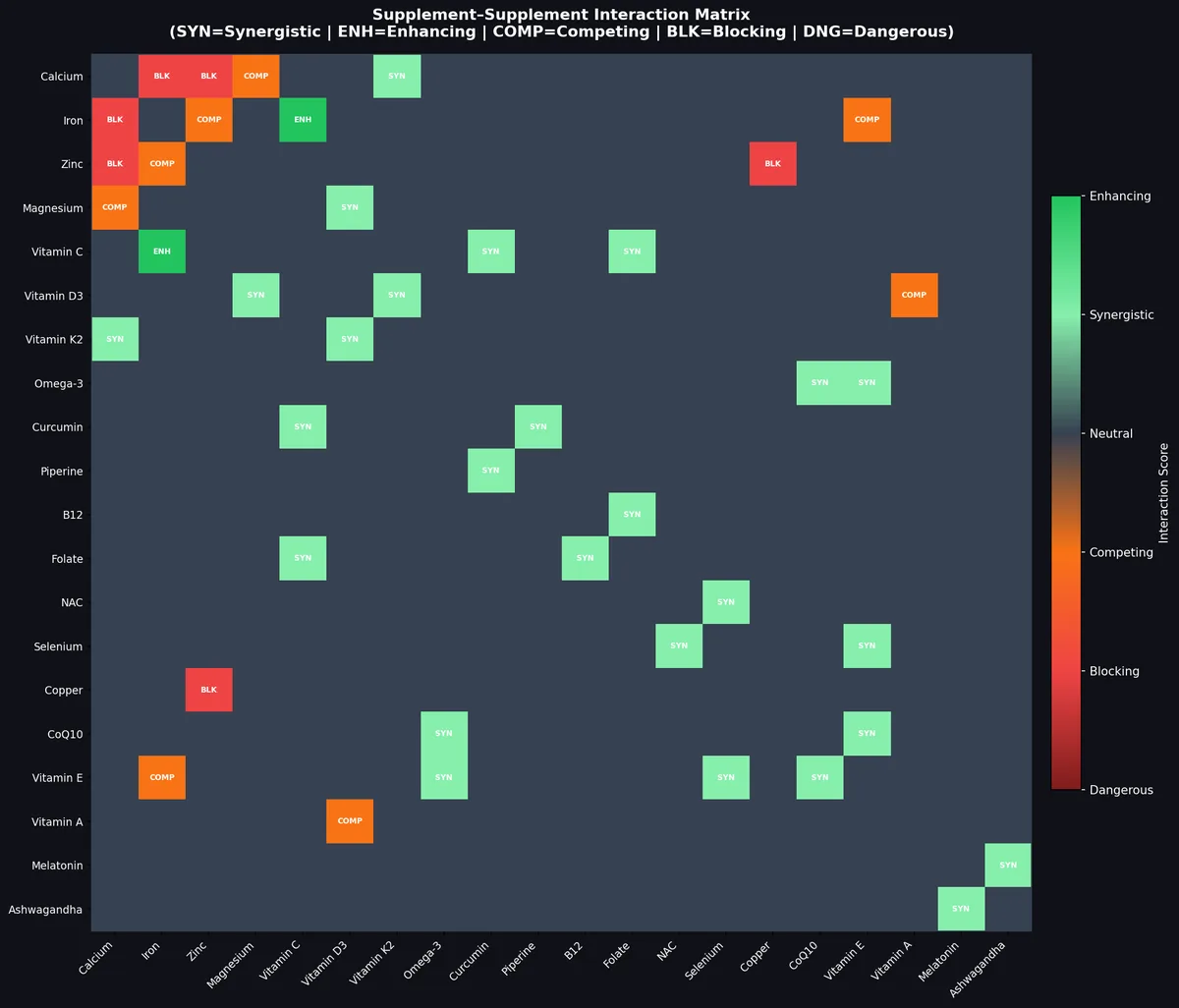
For those who are already taking high-dose vitamin D3, the D3/K2 connection is critical: vitamin D upregulates production of K2-dependent proteins. If you’re taking 5,000 IU/day of D3, you need adequate K2 to handle the increased calcium mobilization. Many functional medicine practitioners recommend pairing every 1,000 IU D3 with 10 mcg MK-7.
Vitamin K2 and Bone Health
The bone health data is strongest at pharmacological MK-4 doses (45 mg/day), which is actually approved as a pharmaceutical drug for osteoporosis in Japan.
At more common supplemental doses, the evidence is mixed:
- A 2019 meta-analysis in Osteoporosis International found MK-7 supplementation significantly increased carboxylated osteocalcin and reduced undercarboxylated osteocalcin, indicating improved K2 status
- The COSMOS trial did not find vitamin K supplementation reduced fracture risk in elderly men and women, though K2 dosing was modest
- Several smaller RCTs show MK-7 at 180–200 mcg/day improves bone mineral density in postmenopausal women
Bone health appears to require a combination approach: adequate calcium, vitamin D3, K2, magnesium, and weight-bearing exercise. K2 alone won’t rebuild bone in isolation.
Who Is Most Likely Deficient?
- People eating low-fat diets (K2 is fat-soluble and concentrated in animal fats)
- Those on long-term warfarin/anticoagulants (these block K vitamin activity — important note: K2 can interfere with warfarin; never supplement without physician guidance if on anticoagulants)
- People with gut dysbiosis or poor fat absorption (IBD, celiac, post-bariatric surgery)
- Those eating grain-fed rather than grass-fed animal products
- Anyone taking high-dose D3 without K2
What to Look For in a K2 Supplement
Form: MK-7 for most people. Look for a natural trans-MK-7 form (not synthetic cis-MK-7). High-quality brands use MenaQ7® or similar licensed MK-7 extracts.
Dose:
- General health and D3 pairing: 100–200 mcg MK-7/day
- Arterial calcification focus: 180–200 mcg MK-7/day
- Bone density (therapeutic): MK-4 at 1–15 mg with medical oversight
Combination products: D3+K2 combinations are popular and convenient. Ensure the D3:K2 ratio is reasonable. A 5,000 IU D3 + 100–200 mcg MK-7 combo is common and sensible.
Carrier fat: K2 is fat-soluble and absorbs better with food. Oil-based capsules (MCT, olive oil) improve bioavailability compared to dry powder tablets.
Third-party testing: Look for NSF, USP, or Informed Sport certification, especially if you’re an athlete subject to testing.
Top Considerations When Choosing
- Baibatyrova S et al. (2026). Mineral-Vitamin Complexes in Sheep Nutrition: Patent Analysis and Functional Evaluation for Pregnant Ewes and Lambs. Molecules (Basel, Switzerland). PMID: 41900039.
- Blood thinners: Vitamin K in all forms can interact with warfarin. Consult your physician.
- Pregnancy: K2 appears safe and may be beneficial during pregnancy for fetal bone development, but always check with your OB.
- Statin users: Some evidence suggests statins deplete K2; supplementation may be especially relevant.
Frequently Asked Questions
Q: Can I get enough K2 from food alone? A: Possibly, if you eat natto regularly (it has extremely high MK-7 content — 700–900 mcg per 100g) or consume significant amounts of high-fat dairy and meat from grass-fed/pasture-raised animals. For most people eating a standard Western diet, supplementation fills the gap.
Q: Should I take K2 with D3? A: Yes, this pairing is strongly recommended. High-dose D3 increases calcium-binding protein synthesis, and K2 is needed to activate those proteins. Taking them together reduces the risk of calcium being directed to arteries.
Q: Is there a risk of vitamin K toxicity? A: Unlike K1, vitamin K2 (especially MK-7) at supplement doses does not appear to cause toxicity. There’s no established tolerable upper limit for K2. However, extremely high doses haven’t been studied long-term.
Q: How long does it take to see effects from K2 supplementation? A: Increases in carboxylated osteocalcin can be seen within 4–8 weeks. Arterial calcification changes take months to years to observe meaningfully on imaging.
Q: Can K2 reverse existing arterial calcification? A: The VitaK-CAC trial showed slowing of progression, not reversal. Some practitioners report reversal in observational data, but this remains controversial. Prevention appears more supported than reversal.
Q: What’s the difference between K1 and K2 for heart health? A: K1 primarily supports blood clotting in the liver. K2 (especially longer-chain forms) distributes to peripheral tissues including arteries and bones, where it activates MGP and osteocalcin. The Rotterdam data showed heart protection with K2 but not K1.
Q: What dose should I take with 10,000 IU of D3? A: Many functional medicine practitioners suggest 100 mcg MK-7 per 1,000 IU D3 as a rough guideline, putting you at about 1,000 mcg for 10,000 IU D3. However, evidence for specific ratios is limited. Discussing with a knowledgeable practitioner is advised at high D3 doses.
Q: Can children take K2? A: Yes, K2 is considered safe for children and may be especially important during bone and tooth development. Pediatric doses are lower (typically 45–90 mcg MK-7). Consult a pediatrician before supplementing.
Key Takeaways
- MK-7 has a long half-life suitable for once-daily dosing at 100-200 mcg; MK-4 is used at pharmacological doses for osteoporosis therapy.
- K2 activates Matrix Gla Protein (MGP), the body’s main arterial calcification inhibitor — Rotterdam Study found high K2 intake correlated with 57% lower cardiovascular mortality.
- Pair K2 with vitamin D3: high-dose D3 increases calcium-binding protein synthesis, requiring adequate K2 to safely direct calcium to bones.
- Look for natural trans-MK-7 (e.g., MenaQ7), oil-based capsules, and third-party testing.
- Warfarin users must consult a physician before supplementing — vitamin K in all forms can interact with anticoagulants.
Conclusion
Vitamin K2 is one of the few supplements where the mechanistic rationale is crystal clear, the observational evidence is compelling, and the safety profile is excellent. If you’re taking vitamin D3, eat a low-fat diet, or simply want to support long-term bone and cardiovascular health, K2 deserves a place in your regimen.
Choose MK-7 (100–200 mcg/day) for daily supplementation, take it with a fat-containing meal, and pair it with your D3. Look for natural trans-MK-7 from reputable brands with third-party testing. The Rotterdam data and the MGP mechanism make a compelling case that this is one of the most important “forgotten” nutrients in modern diets.
Sources
- Comparison of menaquinone-4 and menaquinone-7 bioavailability in healthy women. [PMID 23140417]
- Comparison of menaquinone-4 and menaquinone-7 bioavailability in healthy women. [PMID 23140417]



Leave a Reply