Best Vitamin B12 and B-Complex Supplements in 2026: Methylcobalamin vs Cyanocobalamin
Quick Answer: Methylcobalamin and adenosylcobalamin are the active B12 forms; cyanocobalamin is cheaper but requires conversion. Vegans, the elderly, metformin users, and PPI users are at highest deficiency risk. Sublingual or high-dose oral forms bypass intrinsic factor absorption issues.
Vitamin B12 deficiency is more common than most people realize, and its consequences — neurological damage, megaloblastic anemia, cognitive decline — can be serious and sometimes irreversible. Yet the supplement market is confusing: multiple forms, misleading potencies, and the perpetual question of whether you need just B12 or the whole B-complex.
This guide covers B12 bioavailability, the methylcobalamin vs cyanocobalamin debate, who genuinely needs supplementation, and whether broad B-complex supplements deliver real value.
Understanding Vitamin B12
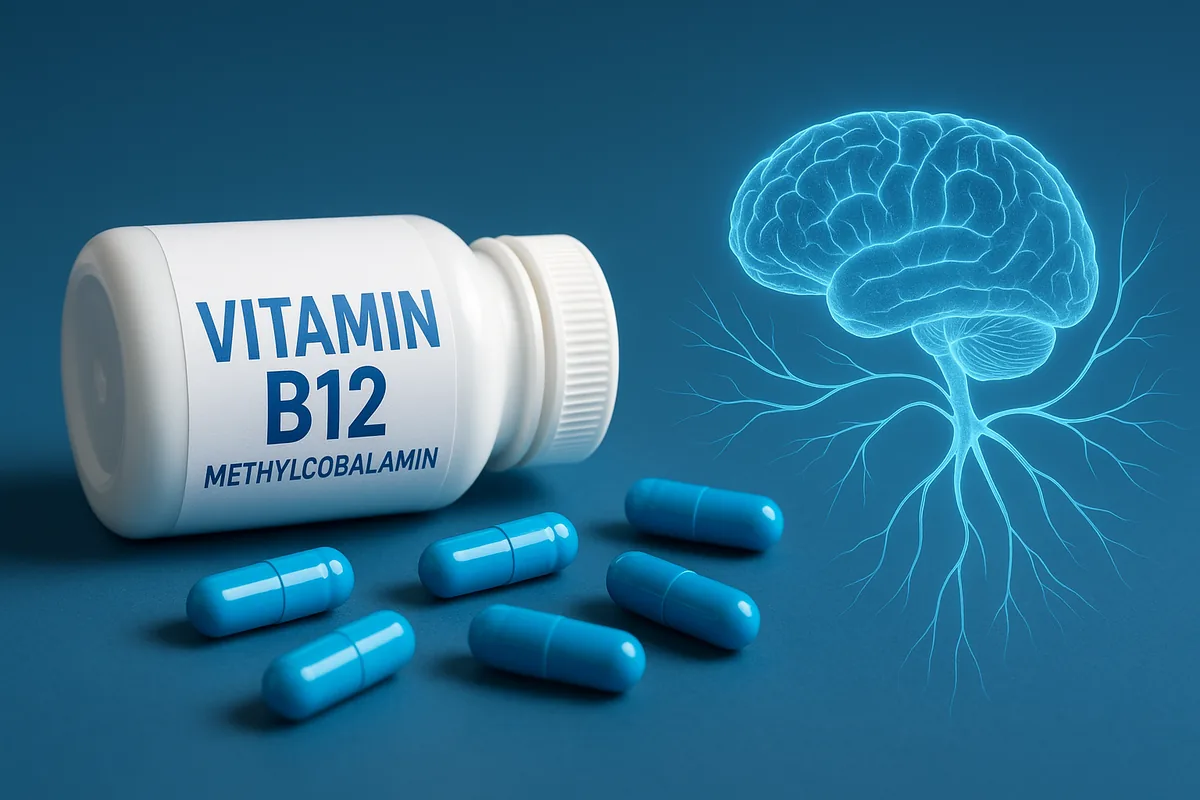
B12 (cobalamin) is unique among vitamins: it’s required in tiny amounts (2.4 mcg/day for adults), it’s found almost exclusively in animal foods, and its absorption mechanism is unusually complex — involving intrinsic factor (IF) from stomach cells, gastric acid, and multiple transport proteins.
B12’s primary roles:
DNA synthesis (working with folate in the methionine cycle)
Myelin sheath formation and maintenance (explaining neurological consequences of deficiency)
Adenosylcobalamin — The other active coenzyme form; primary mitochondrial form
Hydroxocobalamin — Natural form found in food, IV form used in B12 deficiency treatment, converted to both active forms
Methylcobalamin vs Cyanocobalamin: The Real Story
This debate is oversimplified in many supplement discussions.
Cyanocobalamin arguments:
Contains a trace cyanide molecule, but the amounts are negligible (far below toxic thresholds)
Very stable in supplements — longer shelf life
Well-studied in clinical trials for deficiency treatment
Effectively converts to active forms in the body for most people
Cheaper; allows higher doses
Methylcobalamin arguments:
Already in active form (bypasses conversion step)
Theoretically preferred for those with impaired cobalamin metabolism
May be preferred for neurological conditions
Retained longer in tissues in some animal studies
No cyanide molecule (relevant for smokers, patients with kidney disease who may have impaired cyanide clearance)
The honest assessment: For most healthy people with no significant metabolic issues, both forms are effective at correcting B12 deficiency. The conversion of cyanocobalamin to active forms is efficient and not a significant bottleneck for typical absorption and metabolism.
However, for individuals who are concerned about methylation (MTHFR mutations, homocysteine management), have neurological symptoms, or prefer to avoid synthetic precursors, methylcobalamin or adenosylcobalamin (or a combination) is a reasonable choice. The premium for these forms is modest at standard doses.
The dose caveat: Methylcobalamin is less stable and typically available at lower doses in supplements. If you need pharmacological doses (500 mcg – 2 mg/day), cyanocobalamin may offer better stability and cost-effectiveness.
Who Is at Risk of B12 Deficiency?
B12 deficiency has multiple distinct causes:
1. Dietary insufficiency: Strict vegans and vegetarians. B12 is found in meat, fish, shellfish, eggs, and dairy. Plant foods contain negligible bioavailable B12 (the forms in seaweed and fermented foods are largely inactive analogs that may block, not supplement, real B12). This is the most preventable cause.
2. Pernicious anemia / Intrinsic Factor deficiency: Autoimmune destruction of parietal cells in the stomach eliminates intrinsic factor production. Without IF, dietary and standard oral B12 is not absorbed. Requires high-dose oral B12 (passive absorption at 1-2% without IF), sublingual, or IM injection. This is the most severe form and requires medical management.
3. Gastric achlorhydria / Hypochlorhydria: Stomach acid cleaves B12 from food proteins before IF-mediated absorption. Low stomach acid (from aging, H. pylori, PPI use, bariatric surgery) impairs food-bound B12 absorption. Crystalline B12 in supplements doesn’t require food-protein cleavage — so supplement B12 is absorbed better than food B12 in this situation.
4. Metformin use: Metformin (diabetes medication) reduces B12 absorption by competing with calcium-dependent transport in the terminal ileum. Metformin users should be tested and supplemented if deficient.
5. Proton pump inhibitors (PPIs): Long-term PPI use reduces stomach acid, impairing food-bound B12 release. Crystalline supplement B12 is still absorbed, but dietary B12 is compromised.
6. Aging: Both gastric acid production and IF production decline with age. Older adults are at substantially higher risk. NHANES data shows ~5-10% of adults over 60 have deficient B12 levels.
7. H. pylori infection: Damages gastric mucosa, reduces IF and acid production.
Recognizing B12 Deficiency
Neurological symptoms (can be permanent if untreated):
Peripheral neuropathy (numbness, tingling, burning in hands/feet)
Subacute combined degeneration of the spinal cord (severe cases)
Balance problems, weakness
Cognitive decline, memory loss
Hematological:
Megaloblastic anemia (large, dysfunctional red blood cells)
Elevated MCV (mean corpuscular volume)
Other:
Fatigue, weakness
Mouth ulcers, glossitis (inflamed tongue)
Elevated homocysteine (cardiovascular and neurological risk)
Lab testing:
Serum B12: Values below 200-300 pg/mL are concerning; 300-400 pg/mL is a gray zone
MMA (methylmalonic acid): Elevated MMA is a functional marker of B12 deficiency, more sensitive than serum B12 alone
Homocysteine: Elevated with B12 and/or folate deficiency
Dosing: Why Pharmacological Doses Are Sometimes Necessary
The RDA for B12 is 2.4 mcg/day. So why do B12 supplements come in 500 mcg, 1000 mcg, even 5000 mcg doses?
Passive absorption: About 1-2% of any B12 dose is absorbed passively (without IF, through diffusion). At 500 mcg, passive absorption delivers ~5-10 mcg — well above the RDA. This matters enormously for:
Those with IF deficiency (pernicious anemia)
Those with malabsorption
Older adults with compromised absorption
For deficiency correction: High-dose oral B12 (1000-2000 mcg/day for 1-3 months, then 500-1000 mcg/day maintenance) has been shown to be as effective as IM injections in studies of pernicious anemia — provided the dose is high enough to rely on passive absorption.
IM injections: Still preferred by many physicians for certain indications (severe neurological symptoms, confirmed pernicious anemia, reliably fast correction) and are inexpensive. Monthly 1 mg cyanocobalamin or hydroxocobalamin injections are standard in many countries.
Sublingual B12: Dissolves under the tongue for direct mucosal absorption. Some evidence for better absorption than swallowed tablets in those with absorption issues. Convenient and well-tolerated.
Alcohol dependence (depletes multiple B vitamins, especially thiamine/B1)
Vegans/vegetarians (may also be low in riboflavin, some deficient in B6)
Elderly individuals with poor dietary variety
During pregnancy (though a prenatal vitamin is more appropriate)
High-stress periods (stress increases B vitamin turnover)
Those on certain medications (methotrexate depletes folate; isoniazid depletes B6)
When B-complex is wasteful:
If you only need B12 — buy B12 alone
If your diet includes adequate whole foods — marginal benefit
High-dose B vitamins: Many B-complex supplements contain 100x the RDA. This is largely excreted in urine (the neon yellow urine from B2). Excessively high B6 (>100 mg/day long-term) can actually cause peripheral neuropathy — the opposite of what you want.
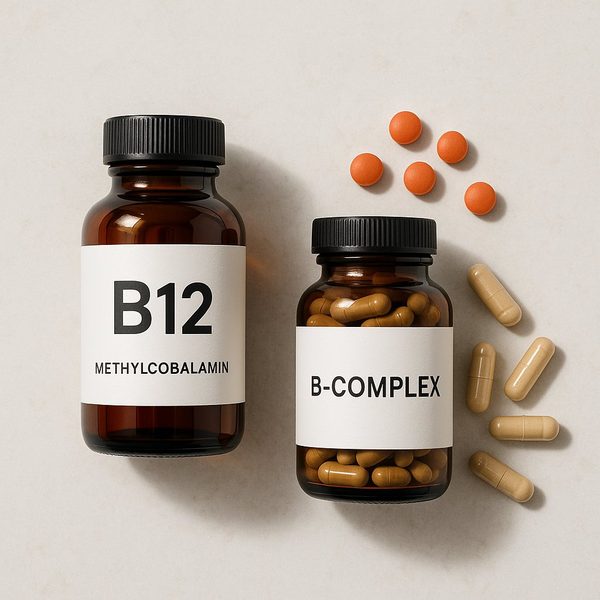
Forms matter in B-complex:
Folate: Look for methylfolate (5-MTHF) rather than folic acid, especially for those with MTHFR polymorphisms
B12: Methylcobalamin or hydroxocobalamin preferred
B6: Pyridoxal-5-phosphate (P5P) is the active form, preferred over pyridoxine HCl at higher doses
Frequently Asked Questions
Q: Can B12 supplements give you more energy? A: In people who are deficient, correcting B12 deficiency can significantly improve energy levels — sometimes dramatically. In people who are already replete, extra B12 does not provide additional energy. Marketing of B12 for energy in healthy, non-deficient people is largely misleading.
Q: Is sublingual B12 better than swallowed tablets? A: For most healthy people, the difference is minimal — both oral forms work. For those with suspected absorption issues, sublingual may be marginally better. IM injection is clearly superior for known pernicious anemia.
Q: How often should I test my B12 levels? A: Vegans and vegetarians should test annually. Older adults, metformin users, and PPI users should test every 1-2 years. If you’re supplementing, follow-up testing in 3-6 months confirms adequacy.
Q: Does methylcobalamin require refrigeration? A: Some manufacturers recommend refrigeration for methylcobalamin supplements due to its light sensitivity. Blister packaging and opaque bottles help. Cyanocobalamin is much more stable. If you travel frequently or store supplements in warm/bright conditions, cyanocobalamin may be more practical.
Q: My B12 is “normal” at 300 pg/mL but I still feel fatigued. Could it still be deficiency? A: The lower “normal” limit is debated. Some experts argue that symptoms can occur with B12 levels up to 400 pg/mL. Testing MMA and homocysteine provides functional assessment of B12 status regardless of serum level. Supplementation is low-risk, so a trial course is reasonable.
Q: Is there any harm from taking too much B12? A: B12 is one of the safer vitamins — no established upper limit. Even high doses are mostly excreted. However, very high serum B12 levels (without supplementation) can sometimes be a marker of underlying disease (liver disease, myeloproliferative disorders). If your serum B12 is high without supplementation, discuss with your physician.
Key Takeaways
Cyanocobalamin is stable and well-studied; methylcobalamin is the active form that does not require conversion – both work for most people.
Vegans, those over 50, metformin users, and PPI users have the highest B12 deficiency risk.
B12 deficiency can cause irreversible neurological damage – symptoms include numbness, fatigue, cognitive decline, and megaloblastic anemia.
Pharmacological doses of 1,000-2,000 mcg/day can overcome absorption deficits through passive diffusion even without intrinsic factor.
B-complex supplements are worth it for documented deficiency, heavy alcohol use, and plant-based diets – less so as routine insurance for healthy omnivores.
Conclusion
B12 is an essential nutrient with serious long-term consequences when deficient, and absorption issues make deficiency common even in people who eat animal products. Methylcobalamin is the preferred form for most supplement users; cyanocobalamin is effective and practical for high-dose correction strategies.
B-complex supplements are warranted for specific populations but unnecessary for people with good diets who only need targeted B12 support. Whatever you choose, prioritize tested products with active forms (methylcobalamin, methylfolate) and appropriate — not excessive — doses.






Leave a Reply