Best Prebiotic Supplements in 2026: FOS, GOS, Resistant Starch, and How They Work
Quick Answer: Prebiotics feed beneficial gut bacteria rather than replacing them. FOS/inulin, GOS, resistant starch, and pectin each feed different bacterial populations and produce different short-chain fatty acids. Match the prebiotic to your goal — microbiome diversity, butyrate production, or IBS relief — for best results.
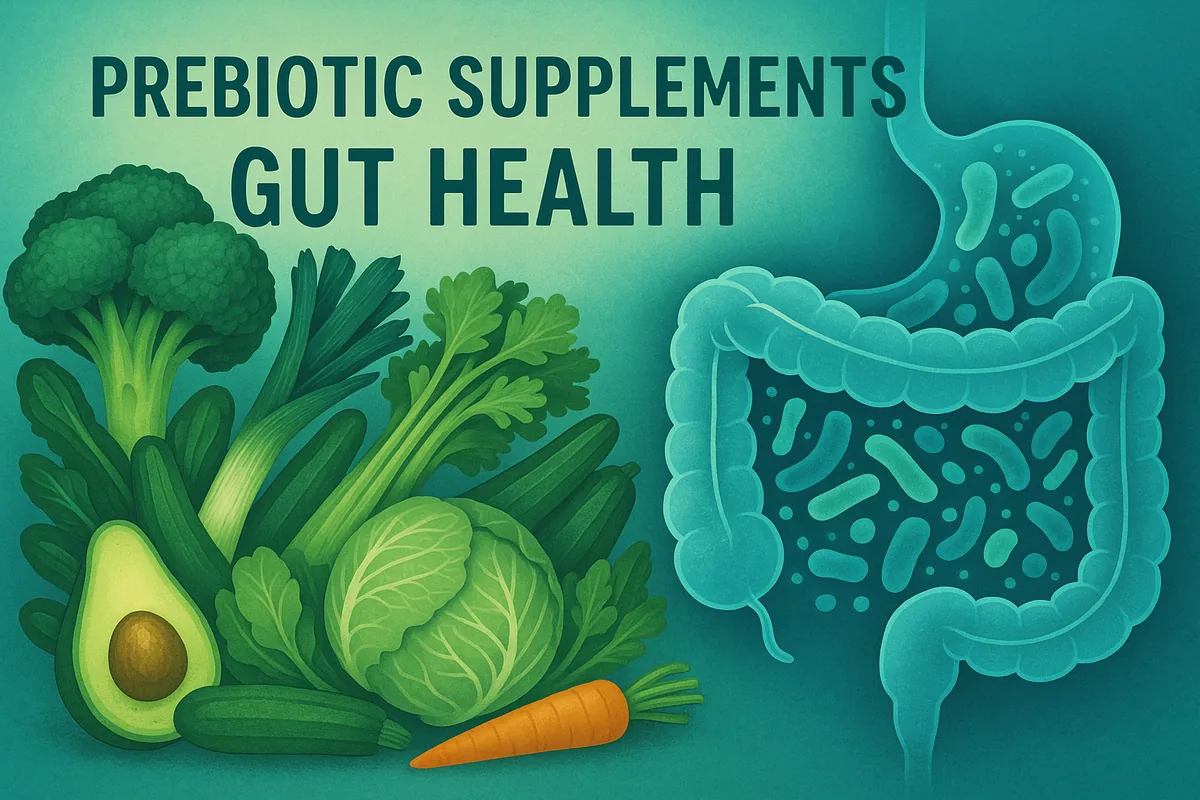
Prebiotics are having their moment in the nutrition world, and for good reason: the microbiome science has become increasingly clear that what we feed our gut bacteria matters at least as much as which bacteria are there. While probiotics introduce specific bacterial strains, prebiotics are the fertilizer for the beneficial bacteria already present — they selectively promote the growth of health-supporting species like Bifidobacterium and Lactobacillus while creating an environment less hospitable to pathogenic bacteria.
But not all prebiotics are equal, they don’t all feed the same bacteria, and some people experience uncomfortable side effects while others thrive on them. Understanding the distinctions makes the difference between a useful supplement and one that just gives you gas.
What Makes Something a Prebiotic?
The current scientific definition of a prebiotic (from the International Scientific Association for Probiotics and Prebiotics) requires:
Note: peer-reviewed support for this claim was not identified in available literature.
Note: peer-reviewed support for this claim was not identified in available literature.
Selectively stimulates growth/activity of beneficial microorganisms associated with health
Most prebiotics are dietary fibers, but not all fibers are prebiotics — some fibers (like insoluble cellulose) are fermented poorly and don’t selectively promote beneficial bacteria.
The Main Prebiotic Types and Their Targets
FOS (Fructooligosaccharides) and Inulin
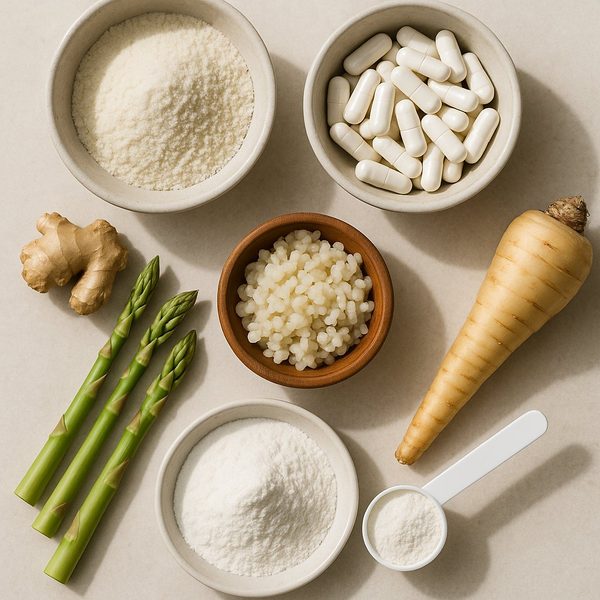
FOS and inulin are closely related — inulin is the longer-chain version, FOS is shorter-chain. Both are found naturally in chicory root, garlic, onion, leeks, asparagus, and bananas. Chicory root is the primary commercial source.
What they feed: Primarily Bifidobacterium (strong effect), with secondary benefits for Lactobacillus and other fermenters. The most studied prebiotic class for Bifidobacterium enhancement.
How they work: FOS/inulin resist digestion in the small intestine and arrive in the colon where Bifidobacterium possess β-fructosidase enzymes to ferment them. The fermentation produces acetate, propionate, and butyrate (short-chain fatty acids) that feed colonocytes, reduce luminal pH (inhibiting pathogens), and modulate immune function.
Clinical evidence:
Consistent Bifidobacterium enrichment at doses of 4-8g/day
Improvements in stool frequency and consistency
Some evidence for calcium absorption enhancement (lowered pH increases ionic calcium absorption in the colon)
Modest effects on blood lipids and glycemic response
The GI tolerance issue: FOS and inulin are rapidly fermented in the proximal colon, producing significant gas and bloating, especially at doses above 5-8g/day or when introduced too quickly. Starting at 2-3g/day and increasing by 1-2g/week minimizes this.
Best products: Chicory inulin powder (Orafti Synergy1, Beneo P95), FOS capsules from reputable manufacturers, or foods naturally rich in inulin.
GOS (Galactooligosaccharides)
GOS are produced from lactose (milk sugar) through enzymatic processing. Found naturally in human breast milk — they’re the primary prebiotic in breast milk and likely explain the superior Bifidobacterium colonization in breastfed infants.
What they feed: Very potent Bifidobacterium and Lactobacillus stimulant. Also enriches Faecalibacterium prausnitzii — an important anti-inflammatory species.
Clinical evidence:
Excellent microbiome enrichment of beneficial bacteria
Better GI tolerance than FOS at equivalent doses — important for people with IBS
Evidence for immune modulation (infant studies, some adult data)
Prebiotic GOS (B-GOS, Bimuno®) shown to reduce stress-related gut symptoms in clinical trials
Specific GOS products (B-GOS) have been studied for anxiety reduction via the gut-brain axis — a 2015 study showed B-GOS reduced salivary cortisol and attention to negative stimuli
Best form: Bimuno® (B-GOS) is the most clinically studied. Other GOS products from FrieslandCampina (Vivinal GOS) are well-characterized. 3-5g/day typical dose.
Resistant Starch (RS)
Resistant starch is starch that resists digestion in the small intestine and arrives in the large intestine as substrate for fermentation. There are four types (RS1-RS4), each with different characteristics.
What it feeds: Particularly important for Ruminococcus bromii (a “keystone” RS-degrading species), Faecalibacterium prausnitzii, and butyrate-producing bacteria. RS is among the best dietary substrates for butyrate production.
Butyrate significance: Butyrate is the primary fuel for colonocytes (the cells lining the colon). Low butyrate is associated with leaky gut, colon cancer risk, and IBD. RS supplementation → increased butyrate → improved colonocyte health. This is one of the strongest mechanistic arguments for RS supplementation.
Some evidence for colon cancer protection in observational data
Reduced appetite (gut hormone effects)
Practical sources for supplementation:
Hi-maize resistant starch (RS2): Corn-derived, heat-stable, neutral flavor. Can be added to smoothies, yogurt, oatmeal (don’t cook — heat converts RS2 to digestible starch)
Bob’s Red Mill unmodified potato starch: Cheap, effective RS2 source. Start with 1 tablespoon and build up slowly
Green banana flour: High RS2 content, also provides potassium
Dose: Start at 1 teaspoon (4-5g) daily and increase to 2-4 tablespoons (25-40g) over 3-4 weeks. Fast increases cause severe gas.
Pectin
Pectin is found in apple and citrus peels. It’s a gel-forming soluble fiber that’s highly fermentable.
What it feeds:Bifidobacterium and Akkermansia muciniphila — a keystone species that supports gut barrier integrity. Pectin is one of the few prebiotics with good evidence for enriching Akkermansia.
Clinical evidence:
Significant microbiome diversity improvements
Gut barrier support through Akkermansia enrichment
Modest cholesterol-lowering effects (viscous gel traps bile acids)
Some evidence for cancer-protective effects in the colon
Best form: Modified Citrus Pectin (MCP) is a processed form with better systemic bioavailability and is also studied for heavy metal chelation. Standard pectin powder works for gut benefits. Apple pectin supplements are widely available.
PHGG (Partially Hydrolyzed Guar Gum)
A soluble, fermentable fiber derived from guar beans. Particularly well-studied for IBS:
Better tolerance than most other prebiotics — low gas production
Dose: 5-10g/day
Lactulose
A synthetic disaccharide used medically as a laxative, but also functions as a prebiotic at lower doses. Strong Bifidobacterium stimulant. Can cause significant diarrhea at high doses.
The Synbiotic Strategy: Prebiotics + Probiotics Together
Synbiotics combine specific prebiotics with specific probiotic strains to create a matched pair:
Bifidobacterium + FOS/inulin or GOS: Natural combination (breast milk does this)
Akkermansia + pectin/polyphenols: Emerging research
The logic: delivering the right bacteria AND the right food for them simultaneously improves colonization odds. See our Best Gut Health Supplements in 2026 for the full probiotic-prebiotic-postbiotic picture.
Who Benefits Most From Prebiotic Supplements?
People with low vegetable/fruit intake: The most natural way to get prebiotics is through diet; supplements fill the gap for those not eating enough plant diversity
Anyone on or post-antibiotics: Antibiotics decimate Bifidobacterium; FOS/GOS supplementation accelerates recovery
IBS-C (constipation-predominant): Inulin, PHGG, and resistant starch improve transit
Those focused on metabolic health: RS for insulin sensitivity; FOS/inulin for modest glycemic benefits
Gut barrier support focus: Resistant starch (butyrate) and pectin (Akkermansia support)
Anxiety/gut-brain axis interest: B-GOS (Bimuno) specifically studied for stress and cortisol reduction
Key Takeaways
FOS/inulin: Best-studied, strongest Bifidobacterium enrichment, most likely to cause gas — start slowly
GOS: Excellent tolerability for IBS patients, potent bifidogenic, breast milk-analogous
Resistant starch: Best butyrate production substrate; critical for colonocyte health; take cold (heat destroys RS2)
Pectin: Best for Akkermansia muciniphila enrichment and gut barrier support
PHGG: Best tolerated for IBS symptoms with less gas than FOS
Combine prebiotics with probiotics (synbiotic approach) for maximum benefit
Start with any prebiotic at very low doses and increase over weeks to minimize gas
Frequently Asked Questions
What’s the difference between prebiotics and probiotics?
Probiotics are live microorganisms (bacteria) that you introduce into the gut. Prebiotics are specific food substrates that selectively feed existing beneficial bacteria. They work through complementary mechanisms. Both are addressed in our Best Gut Health Supplements guide.
Should I take prebiotics if I have IBS?
It depends on your IBS type and which prebiotic. High-FODMAPs (which include FOS, inulin, and GOS) can worsen IBS symptoms in some patients — this is the basis of the Low-FODMAP diet. However, PHGG is specifically studied and well-tolerated for IBS. If you’re on a Low-FODMAP protocol, avoid FOS/inulin/GOS; consider PHGG, psyllium, or RS2 instead.
How long do prebiotics take to affect the microbiome?
Measurable changes in microbiome composition can occur within 1-2 weeks of consistent prebiotic intake. Subjective gut improvements (regularity, less bloating after adjustment) typically appear at 2-4 weeks. Significant microbiome restructuring takes 4-8 weeks.
Can I get enough prebiotics from food?
Yes, with a genuinely plant-rich diet: garlic, onions, leeks, asparagus, bananas, chicory, artichokes, and legumes all provide prebiotics. The average Western diet provides ~5g/day; optimal intake is probably 15-25g/day for robust microbiome support. Supplements make reaching therapeutic doses practical without eating pounds of onions daily.
What happens if I stop taking prebiotics?
The microbiome-modifying effects are generally not permanent — stop prebiotics and the bacterial populations shift back toward baseline over 1-4 weeks. This is why consistent intake (whether from food or supplements) is important for ongoing microbiome support.



Leave a Reply