Scalp Care Guide 2026: Serums, Dandruff & More
Quick Answer: The scalp is skin – treat dandruff (fungal/oily) differently from dry scalp (flaky but not oily). Scalp serums with salicylic acid, niacinamide, and zinc pyrithione are the 2026 standard; minoxidil-based serums remain the gold standard for androgenetic hair loss.
The scalp is skin — but for most of skincare history, it was treated as a haircare problem. In 2026, scalp care has emerged as a sophisticated category, with dedicated serums, targeted treatments, and a growing understanding of the scalp microbiome driving a generation of new products. Whether you’re dealing with dandruff, dryness, flaking, oiliness, or hair thinning, understanding your scalp is the foundation for effective care.
The Scalp vs. the Rest of Your Skin
The scalp has several characteristics that make it unique:
- Higher sebaceous gland density than almost anywhere else on the body (except the face) — making it inherently oilier and more prone to seborrheic conditions
- Densely packed follicles — roughly 100,000 hair follicles on the average scalp, each a potential site of congestion or inflammation
- Rich microbiome — the scalp hosts a complex community of bacteria, fungi, and other microorganisms that influence scalp health
- Direct impact on hair health — the follicular environment of the scalp determines hair growth, density, and quality
Dandruff vs Dry Scalp: The Key Distinction
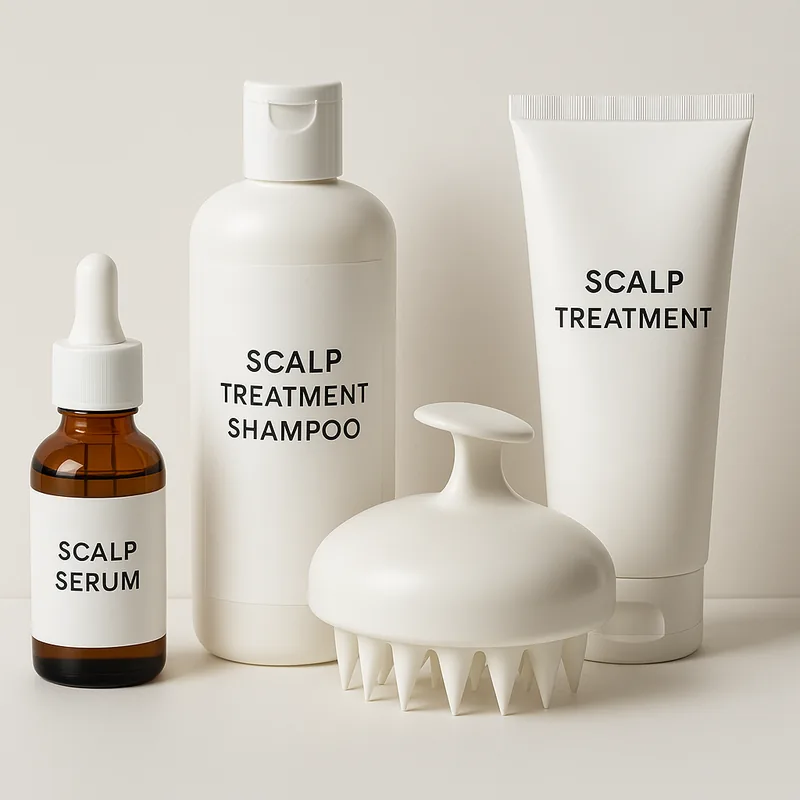
These two conditions look similar (white flakes) but have different causes and require different treatments. Getting this right is critical.
Dandruff (Seborrheic Dermatitis)
What it is: An inflammatory response to an overgrowth of Malassezia — a genus of yeast naturally present on the scalp. Malassezia feeds on sebum, releasing oleic acid byproducts that trigger inflammation and accelerated skin cell shedding in susceptible individuals.
Signs:
- Flakes that are oily and yellowish (not dry and white)
- Scalp feels greasy, especially at the roots
- Flakes are larger and may stick to the hair
- Scalp may appear red or inflamed
- Worsens with stress, hormonal changes, certain weather conditions
- Often worse in winter and better in summer (UV has mild anti-fungal effects)
Treatment: Antifungal agents to control Malassezia:
- Zinc pyrithione (ZnPT): The most common OTC antifungal in shampoos (Head & Shoulders). Effective but requires regular use for maintenance.
- Selenium sulfide: In Selsun Blue. Slightly stronger antifungal action; effective for moderate seborrheic dermatitis.
- Ketoconazole (1% OTC, 2% Rx): The most potent antifungal available for scalp conditions. Nizoral 1% is the standard OTC recommendation for significant dandruff. Use 2–3 times per week initially, then reduce to weekly maintenance.
- Ciclopirox: Prescription antifungal with broad-spectrum activity, including bacteria.
- Coal tar: Anti-inflammatory and antifungal; slightly harsh but effective for severe SD.
- Pyrithione zinc + salicylic acid: Some formulas combine antifungal with keratolytic action to break down flake buildup.
Dry Scalp
What it is: Insufficient moisture in the scalp skin, leading to small, dry flakes that shed.
Signs:
- Flakes that are small and dry white (not oily or yellowish)
- Scalp feels tight or itchy
- Often worsens in winter or low-humidity environments
- Hair tends to be dry as well, not greasy
- No significant redness or inflammation
Treatment: Hydration and barrier support:
- Reduce washing frequency if over-stripping
- Switch to sulfate-free, gentle shampoo
- Use a scalp oil or balm with moisturizing ingredients (jojoba, argan, glycerin)
- Scalp moisturizing serums
- Drink adequate water; dry scalp often reflects systemic dehydration too
The overlap: Some people experience both — seborrheic dermatitis on top of a dry scalp. The approach: treat the fungal component first (ketoconazole shampoo), then add moisturizing scalp products.
The Scalp Microbiome
The scalp microbiome is a complex ecosystem including:
- Malassezia species (14+ species; M. globosa and M. restricta most associated with dandruff)
- Staphylococcus epidermidis and other bacteria
- Cutibacterium acnes (yes, the same acne bacteria on the face)
A balanced microbiome keeps any single organism in check. When this balance is disrupted — by harsh sulfate shampoos, antibiotic overuse, stress, or hormonal changes — certain organisms overgrow and cause scalp conditions.
2026 trend: Probiotic and prebiotic scalp products targeting microbiome support are increasingly evidence-backed. These products aim to:
- Feed beneficial microorganisms (prebiotics: inulin, niacinamide, panthenol)
- Introduce probiotic lysates (non-live bacterial extracts) that modulate inflammatory responses
- Maintain pH in the optimal 4.5–5.5 range for healthy microbiome balance
This is a legitimately emerging science, though the clinical evidence is still maturing compared to well-established actives like ketoconazole.
Scalp Serums: The New Category
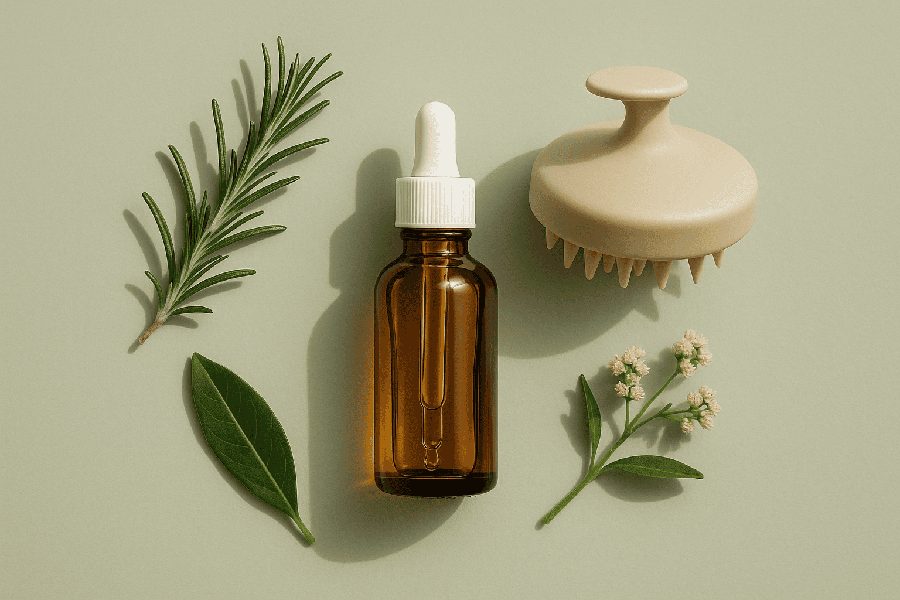
Scalp serums have exploded in 2026, targeting a range of concerns. Key categories:
Hair Growth / Anti-Shedding Serums
- Minoxidil: The gold standard — FDA-approved, well-studied. 2% and 5% topical minoxidil is available OTC. It increases the blood supply to hair follicles and extends the anagen (growth) phase. Now available in newer serum formulations that don’t leave a wet, alcohol-heavy residue.
- Peptides: Copper peptides (specifically GHK-Cu) have growing evidence for stimulating hair follicle growth and reducing inflammation. Found in premium scalp serums.
- Redensyl / Procapil / Capixyl: Plant-derived and peptide-based actives with some clinical evidence for hair growth support. Less proven than minoxidil but gentler.
Scalp Exfoliating Serums
Target buildup, congestion, and scalp texture:
- Salicylic acid (0.5–2%): Oil-soluble, clears follicular buildup
- Glycolic acid: Surface exfoliation for scalp
- Often combined with soothing agents (aloe, panthenol) to prevent over-drying
- Apply to the scalp, massage in, leave on 5–10 minutes before shampooing
Hydrating/Soothing Serums
For dry, sensitive, or reactive scalps:
- Panthenol (pro-vitamin B5): Humectant, soothing
- Aloe vera: Anti-inflammatory, soothing
- Hyaluronic acid: Scalp hydration
- Niacinamide: Barrier support, anti-inflammatory
Scalp SPF
An emerging and underutilized category. The scalp (especially at the part line and hairline) is highly UV-exposed and a common site for skin cancer. Scalp-specific SPF sprays and powders (non-greasy) are increasingly available.
Building a Scalp Care Routine
For Normal Scalp
- Wash every 2–3 days with a gentle, sulfate-free shampoo
- Monthly use of an exfoliating scalp scrub or salicylic acid serum
- Weekly scalp massage (boosts circulation; some evidence for hair growth support)
For Dandruff/Seborrheic Dermatitis
- Active phase: Ketoconazole 1% shampoo 3x/week until flakes are controlled (typically 2–4 weeks)
- Maintenance: 1x/week ketoconazole or zinc pyrithione
- Avoid heavy, occlusive oils that feed Malassezia (coconut oil, olive oil can worsen dandruff)
- Use lightweight, water-based scalp serums if moisturizing is needed
For Dry Scalp
- Reduce shampoo frequency to 2–3 times per week
- Use sulfate-free, moisturizing shampoo
- Apply jojoba or argan oil to the scalp the night before washing
- Use a glycerin-based scalp serum on non-wash days
For Hair Thinning/Shedding
- Minoxidil 5% applied to scalp twice daily
- Gentle daily scalp massage for 4–5 minutes (studies show this helps)
- Scalp exfoliation weekly (keeps follicles clear)
- Consider nutritional support: iron, biotin, zinc if deficient
- See a dermatologist or trichologist for pattern hair loss — this is a medical condition and may need systemic treatment
Frequently Asked Questions
How often should I wash my hair/scalp?
There’s no universal answer — it depends on your scalp’s sebum production, activity level, and hair type. Most people with normal to oily scalps do well with every 2–3 days. Curly, textured, or very dry hair types may wash less frequently (weekly or less). Fine, straight hair with an oily scalp may need daily washing.
Can I use my face skincare products on my scalp?
Some can work — niacinamide serums, salicylic acid toners, and glycolic acid products can be adapted for scalp use. Vitamin C and retinol are generally not recommended for the scalp. Most face products don’t have the right viscosity or delivery for the scalp.
Is coconut oil good for the scalp?
For dry hair and as a pre-shampoo treatment, coconut oil can help. For dandruff-prone scalps, it’s generally inadvisable — it’s high in lauric acid but also feeds Malassezia. For dry scalps without fungal component, it can be used cautiously.
What causes scalp acne?
Scalp pimples or pustules are usually scalp folliculitis — inflammation or infection of the hair follicle. Causes include Malassezia overgrowth (fungal folliculitis), bacterial infection, or comedonal buildup from heavy hair products. Treat with ketoconazole or zinc pyrithione shampoo; for bacterial involvement, see a dermatologist.
Can stress cause scalp issues?
Yes — stress is a significant trigger for seborrheic dermatitis flares, telogen effluvium (temporary increased shedding), and general scalp sensitivity. Stress management has measurable benefits for scalp health.
Does shampooing too much cause hair loss?
Frequent washing doesn’t cause hair loss, but very harsh, stripping shampoos can increase breakage. Normal shedding (50–100 hairs/day) appears in the drain and isn’t a sign of pathological loss. Sudden significant increases in shedding warrant investigation.
Are scalp massages actually effective for hair growth?
There’s emerging evidence — a 2016 study in Japan found that 4 minutes of standardized scalp massage daily led to thicker hair after 24 weeks. The mechanism is thought to involve mechanical stretching of dermal papilla cells, which stimulates hair growth genes. It’s safe, free, and has enough evidence to be worth doing.
Key Takeaways
- Dandruff is caused by Malassezia yeast overgrowth on an oily scalp – treat with antifungal actives (zinc pyrithione, ketoconazole, selenium sulfide, piroctone olamine).
- Dry scalp (flaking without oiliness) needs moisturization, not antifungal treatment – using anti-dandruff shampoos makes it worse.
- Scalp serums with caffeine, peptides, and niacinamide support hair follicle health and are a growing category in 2026.
- The scalp microbiome is distinct from skin – harsh surfactants and over-washing disrupt it, causing increased sensitivity and flaking.
- For hair loss (androgenetic alopecia), topical minoxidil 5% remains the most evidence-backed OTC intervention.
Conclusion
Scalp care in 2026 has grown from “just shampoo” into a sophisticated skincare category with targeted solutions for every concern. The most important step is distinguishing between dandruff (a fungal/inflammatory condition requiring antifungals) and dry scalp (a hydration problem requiring moisture). From there, layering in targeted serums — whether for growth, exfoliation, or microbiome support — can transform scalp health over time. Treat your scalp like the skin it is: with the same evidence-based, consistent approach you’d give your face.
Sources
- Impact of a Structured Brain Care Bundle on Severe Germinal Matrix Hemorrhage-Intraventricular Hemorrhage in Very Preterm Neonates: A Retrospective Cohort Study. Pediatric neurology. 2026. PMID: 41855703.
- Ranganathan S, Mukhopadhyay T. (2010). Dandruff: the most commercially exploited skin disease. Indian J Dermatol, 55(2):130-134.
- Draelos ZD. (2010). Shampoos, conditioners, and camouflage techniques. Dermatol Clin, 31(1):173-178.
- Blumeyer A, et al. (2011). Evidence-based guidelines for the treatment of androgenetic alopecia in men. J Dtsch Dermatol Ges, 9(Suppl 6):S1-57.
- Sinclair R. (2015). Female pattern hair loss: low-dose oral minoxidil and spironolactone. Int J Dermatol, 54(9):e360-361.
Related Articles
- Body Skincare Guide 2026: KP Treatments, Body Retinol, and Dry Skin
- Best Hair Growth Supplements in 2026: Biotin, Collagen, and What the Evidence Shows
- Niacinamide Skincare Guide 2026: Barrier Repair and Pore Minimizer
- How to Build a Skincare Routine: AM/PM Guide by Skin Type



Leave a Reply