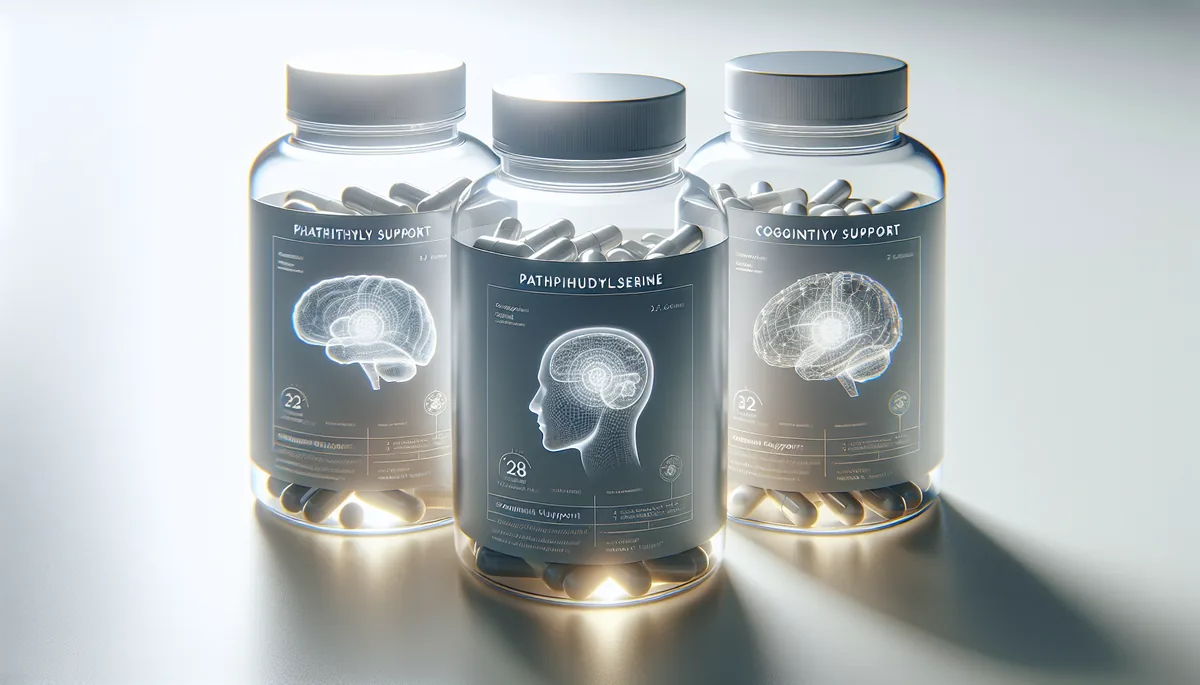
Phosphatidylserine Benefits for Brain and Stress

Phosphatidylserine (PS) is a phospholipid integral to cell membranes, particularly abundant in the brain. At doses of 100-300 mg per day, it has demonstrated modest but real benefits for memory in older adults with age-related cognitive decline and reduction of cortisol response to exercise stress. The FDA has allowed a qualified health claim for PS and cognitive decline (with caveats about the limited nature of evidence). The clearest benefit is in older adults, not young healthy people.
- Phosphatidylserine is a phospholipid naturally found in brain cell membranes; supplemental PS is mostly soy-derived (bovine brain-derived PS is rare due to BSE concerns).
- Clinical trials in older adults with subjective memory complaints show modest improvements in memory and attention tasks with 300 mg/day PS.
- PS blunts cortisol and ACTH responses to exercise stress at 400-800 mg/day; relevant for athletes managing overtraining or stress response.
- The FDA qualified health claim for PS and cognitive decline acknowledges limited evidence; it is not an FDA-approved treatment for dementia.
- PS is generally well-tolerated; the main concern is cost — soy-derived PS supplements are expensive relative to the modest, population-specific evidence base.
Phosphatidylserine, usually shortened to PS, is one of the few brain supplements that has been around long enough to escape pure hype status. It is a phospholipid found in cell membranes, with especially high concentrations in the brain, where it helps support neuronal membrane structure, signaling, and cellular communication.
If I were ranking supplements for people who want a practical, non-stimulant cognitive support option, phosphatidylserine would be high on the list. Not because it is dramatic, but because the research is reasonably consistent for memory support in older adults, stress-related cognitive strain, and cortisol response moderation.
What Is Phosphatidylserine?
Phosphatidylserine is a fat-like compound naturally present in foods such as soy, white beans, mackerel, and organ meats. Modern supplements are usually derived from soy or sunflower lecithin, not animal brain tissue like the earliest research products.
Why PS matters for the brain
Neurons rely on healthy membranes to send signals efficiently. PS helps maintain that membrane fluidity and may influence neurotransmitters involved in memory, learning, and attention.
What the Research Supports
Memory and age-related cognitive support
This is the classic use case. Older trials found that PS supplementation improved memory-related measures in aging adults with memory complaints. More recent work continues to support a role for PS-containing products in mild cognitive decline, though effects are not huge and quality varies by study.
The right expectation is modest but real support, especially when combined with sleep, exercise, blood sugar control, and omega-3 intake.
Stress and cortisol regulation
PS is also popular in the “stressed professional” category for a reason. Some trials suggest phosphatidylserine can blunt excessive cortisol responses to acute stress and may support calm focus under pressure.
Attention and mental performance
The evidence is weaker than for memory or stress, but some users report better focus and mental stamina, especially when PS is combined with caffeine, L-theanine, or omega-3s.
Best Phosphatidylserine Supplements in 2026
Best overall: Jarrow Formulas PS100
A long-standing, simple formula that delivers 100 mg per softgel. Easy to build to the doses used in studies.
Best for: most adults wanting a dependable PS product without a fancy stack.
Best premium pick: Double Wood Phosphatidylserine
Usually offers a cost-effective way to reach 200 to 300 mg daily without needing too many capsules.
Best for: people who want solid dosing at reasonable cost.
Best high-trust brain formula: Life Extension PS Caps
Useful if you prefer a longevity-oriented brand with generally good quality control.
Best for: older adults looking for a basic cognition-support supplement.
Best soy-free choice: Sunflower-derived phosphatidylserine products
If soy is a concern, look for labels that clearly state sunflower phosphatidylserine.
Best for: soy-sensitive or soy-avoidant buyers.
How Much Phosphatidylserine Should You Take?
Most of the clinical literature clusters around 100 to 300 mg daily.
Practical dose guide
- 100 mg/day: gentle starting point
- 200 mg/day: often a sweet spot for stress support
- 300 mg/day: common dose for memory-focused protocols
Take PS with food, ideally a meal containing some fat.
Who Should Consider Phosphatidylserine?
PS may be a good fit for:
- Adults over 50 wanting non-stimulant brain support
- People with stress-related forgetfulness or mental fatigue
- Knowledge workers who want something calmer than stimulant-heavy nootropics
- Anyone building a basic brain stack with omega-3s and sleep support
What to Look for in a Good PS Supplement
Effective dose per serving
A lot of “brain blends” include PS, but only in tiny amounts. If the total formula has 25 to 50 mg, that is probably underdosed.
Source clarity
Look for sunflower- or soy-derived phosphatidylserine and avoid proprietary blends that hide the actual amount.
Safety and Side Effects
Phosphatidylserine is generally well tolerated.
Possible side effects
- Mild GI upset
- Insomnia if taken too late by sensitive users
- Rare headaches
Because PS can be calming for some people and mentally activating for others, morning or early afternoon is a sensible starting time.
FAQ
Does phosphatidylserine really help memory?
It may help, especially in older adults with mild memory complaints. The benefits are generally modest, but better supported than many trendy nootropics.
Is phosphatidylserine good for stress?
Yes, that is one of its more interesting uses. Some research suggests it may help regulate the cortisol response to stress and support calmer mental performance.
How long does phosphatidylserine take to work?
Some people notice stress-related benefits within 1 to 2 weeks, while memory-related effects may take 4 to 12 weeks of consistent use.
Can I take phosphatidylserine with omega-3s?
Yes. That is a sensible stack because both support neuronal membranes and brain function.
Is sunflower phosphatidylserine better than soy phosphatidylserine?
Not necessarily better, but it is a good option if you want to avoid soy. The bigger issue is dose and product quality.
References
- Kato-Kataoka A, et al. Soybean-derived phosphatidylserine improves memory function of the elderly Japanese subjects with memory complaints. J Clin Biochem Nutr. 2010.
- Glade MJ, Smith K. Phosphatidylserine and the human brain. Nutrition. 2015.
- Hellhammer J, et al. Effects of phosphatidylserine on neuroendocrine response to stress. Stress. 2004.
- Wang X, et al. Effects of a food supplement containing phosphatidylserine on cognitive function in older adults with mild cognitive impairment. J Affect Disord. 2024.
This article is for informational purposes only and does not constitute medical advice. Consult your healthcare provider before starting any new supplement regimen.
Related Articles
- Best PQQ Supplements in 2026: Mitochondrial Support, Brain Benefits, and the Reality Behind the Hype
- Best Psychobiotic Supplements in 2026: Gut-Brain Support for Stress, Mood, and Sleep
- Best Magnesium Supplements in 2026: Sleep, Cramps, Stress, and Constipation Uses Compared
- Best Nootropic Supplements in 2026: Smart Stacks for Focus, Memory & Mental Clarity
- Best Creatine Supplements in 2026: Strength, Cognition, and Healthy Aging Benefits Explained