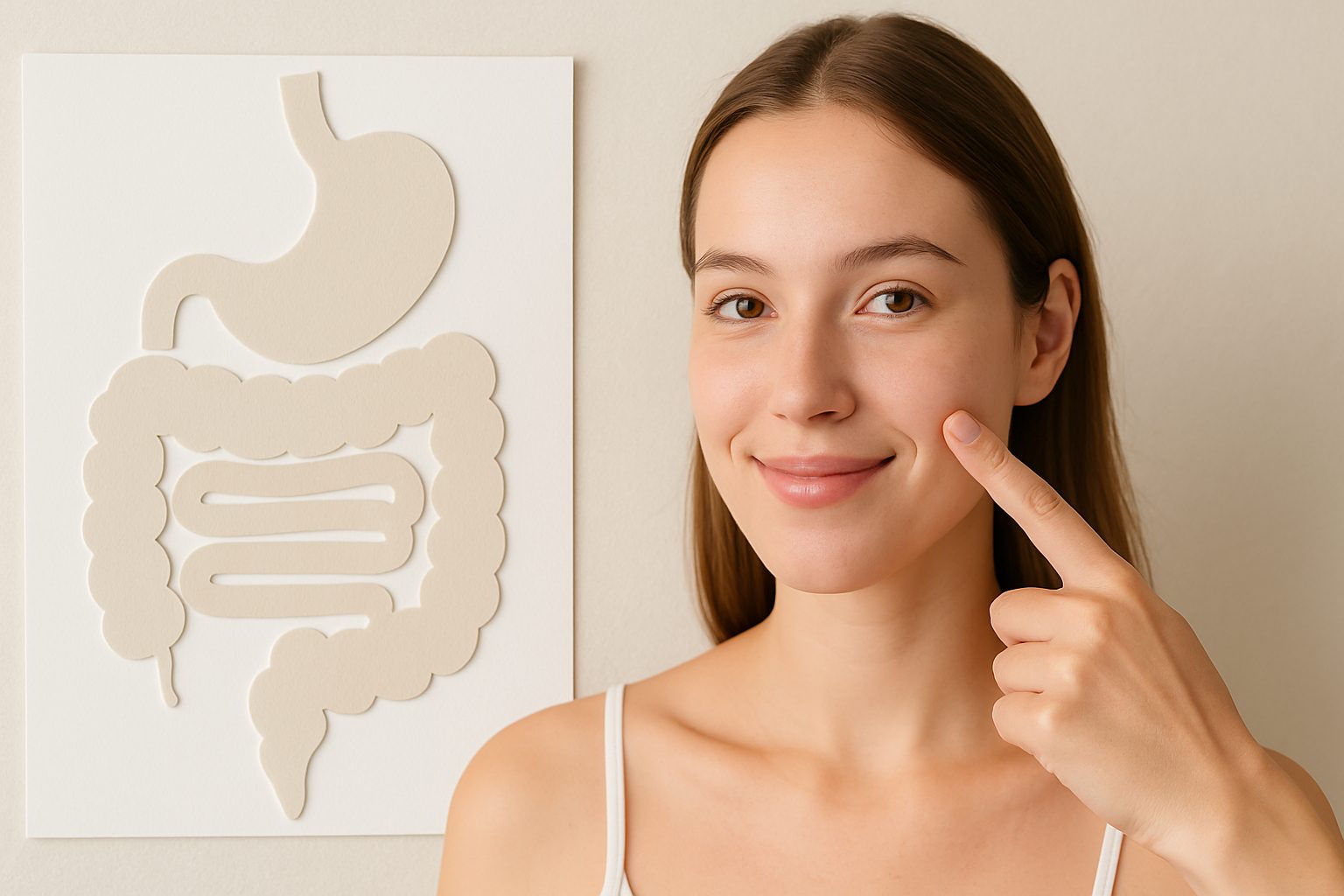
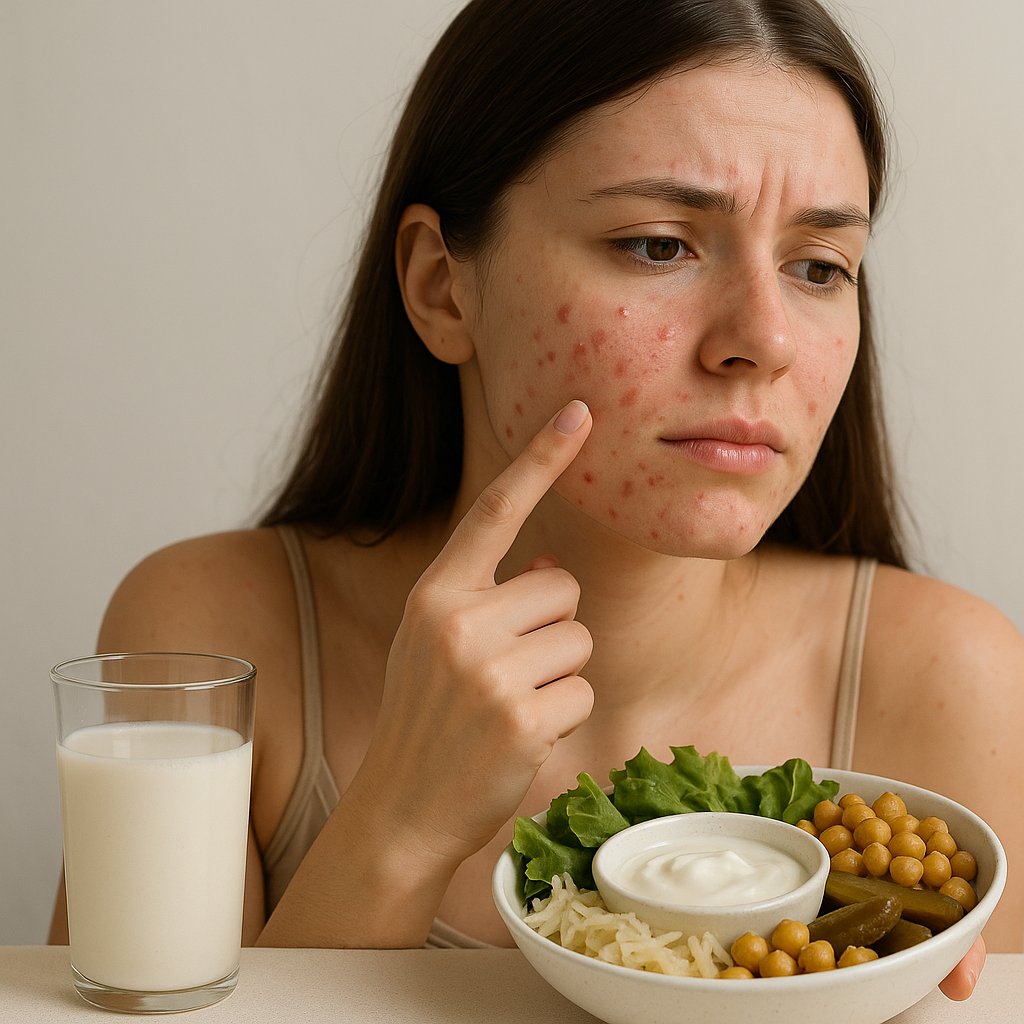
The gut-skin axis is a real, increasingly accepted connection: the gut microbiome influences systemic inflammation, immune regulation, and androgen metabolism – all of which affect acne pathogenesis. Dysbiosis (microbial imbalance) can increase intestinal permeability (‘leaky gut’), allowing bacterial endotoxins (LPS) into the bloodstream, triggering inflammatory responses that manifest in skin. Probiotic supplementation and high-fiber diets have shown modest but reproducible effects on inflammatory acne in several controlled trials. The strongest dietary acne evidence remains for high-glycemic index foods and dairy consumption, both of which affect IGF-1 and insulin signaling that drive sebum production and follicular hyperkeratinization.
- The gut-skin axis operates through multiple pathways: gut microbiome diversity affects systemic IL-10 and IL-6 levels; intestinal permeability influences circulating LPS-triggered inflammation; gut bacteria metabolize estrogens and androgens that regulate sebaceous gland activity.
- Lactobacillus acidophilus and Lactobacillus rhamnosus GG supplementation reduced inflammatory acne lesion counts in small clinical trials (Jung 2013, Fabbrocini 2016) – effect sizes are modest (20-30% lesion reduction) but consistent with a real mechanism.
- High-glycemic index foods (processed carbs, sugary drinks) elevate insulin and IGF-1 – both upregulate SREBP-1 (a lipogenic transcription factor in sebaceous glands), increasing sebum production; multiple prospective cohort studies support this dietary acne connection.
- Dairy consumption (particularly skim milk) correlates with acne in large epidemiological studies – proposed mechanism involves IGF-1 in milk itself plus whey proteins that stimulate mTORC1, a pathway that activates sebaceous gland lipogenesis.
- Probiotic benefit for acne is best viewed as a component of overall diet quality improvement, not a standalone treatment – addressing high-glycemic foods, fiber intake, and hydration simultaneously produces more consistent results than any single supplement.
The idea that your gut affects your skin was dismissed as fringe for decades. It’s not fringe anymore. Research on the gut-skin axis has exploded since 2015, and dermatologists are increasingly acknowledging what integrative practitioners have long suspected: gut health and acne are connected.
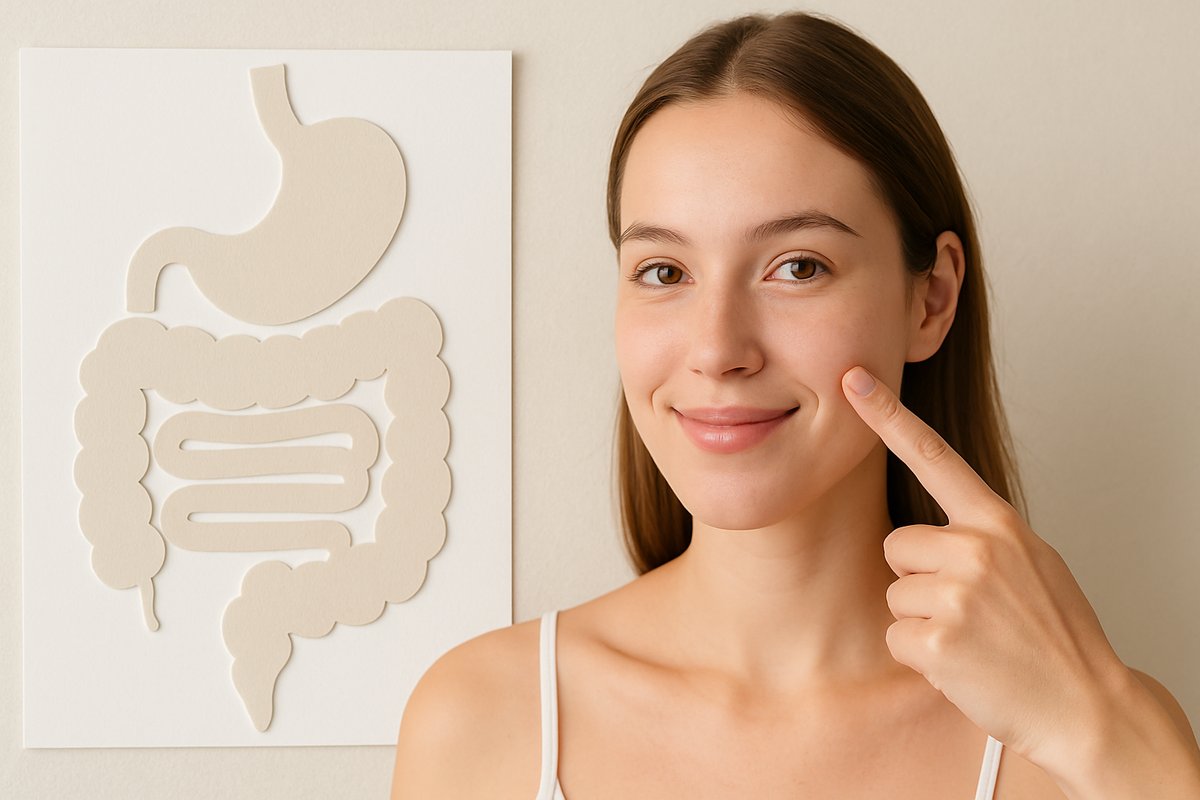
The Gut-Skin Axis: A Quick Primer
Your gut and skin share a bidirectional communication pathway mediated by:
- The immune system – approximately 70% of immune tissue is gut-associated. Gut inflammation produces systemic cytokines that can trigger skin inflammation
- Metabolites – gut bacteria produce short-chain fatty acids (SCFAs), which regulate systemic inflammation. Dysbiosis shifts this balance toward pro-inflammatory metabolites
- The endocrine pathway – gut bacteria influence hormone metabolism, including androgens and IGF-1 (both directly implicated in acne)
- Intestinal permeability – “leaky gut” allows bacterial endotoxins (lipopolysaccharides) into the bloodstream, triggering inflammatory cascades that manifest at the skin
What the Clinical Evidence Shows
Dysbiosis in Acne Patients
Multiple studies have found that acne patients have measurably different gut microbiomes compared to clear-skinned controls:
– A 2018 study in Gut Pathogens found significantly reduced microbial diversity in acne patients
– Firmicutes/Bacteroidetes ratios are often shifted in acne – the same pattern seen in metabolic inflammation
– Specific depletion of Lactobacillus and Bifidobacterium species is a consistent finding
Probiotics for Acne: The RCT Evidence
Several randomized controlled trials have tested probiotics for acne:
– Lactobacillus rhamnosus SP1 (2016, Beneficial Microbes): 12-week supplementation reduced acne lesion count and improved skin oiliness in adults. This is one of the cleanest acne-probiotic trials
– Lactobacillus acidophilus + Bifidobacterium bifidum (2010, Italy): Combined with standard acne treatment, probiotics improved outcomes compared to treatment alone
– Lactoferrin + probiotics (multiple studies): Lactoferrin combined with probiotic strains showed additive benefits for inflammatory acne
Effect size reality check: Probiotics typically reduce lesion counts by 20-40% in these trials. That’s meaningful but modest. They’re not replacing topical retinoids or antibiotics – they’re a complementary approach.
Antibiotics Damage the Gut (And Might Worsen Long-Term Acne)
Here’s the uncomfortable irony: oral antibiotics are a standard acne treatment, but they devastate gut microbiome diversity. Multiple studies show:
– Antibiotic courses for acne reduce Lactobacillus and Bifidobacterium populations, sometimes for months
– Patients who cycle through multiple antibiotic courses may develop increasingly resistant acne and worsened gut dysbiosis
– This creates a plausible (though not yet proven) vicious cycle: antibiotics ? gut damage ? systemic inflammation ? more acne ? more antibiotics
SIBO and Acne
Small intestinal bacterial overgrowth (SIBO) deserves special mention. A 2008 study found SIBO was 10 times more common in rosacea patients than controls, and correcting SIBO resolved skin symptoms in the majority. While this was rosacea specifically, the mechanism is relevant to acne:
– SIBO increases intestinal permeability
– Endotoxins reach systemic circulation
– Skin inflammation follows
If you have acne plus digestive symptoms (bloating, irregular bowels, food intolerances), SIBO testing is worth discussing with your doctor.
Diet, Gut, and Acne: The Triangle
The gut-acne connection also explains why certain dietary patterns affect acne:
– High-glycemic diets shift gut bacteria toward species that produce more pro-inflammatory metabolites
– Dairy contains bioactive hormones and growth factors that may both directly affect sebaceous glands AND alter gut microbiome composition
– Fiber-rich diets increase SCFA production (particularly butyrate), which strengthens gut barrier integrity and reduces systemic inflammation
This “diet ? gut ? skin” pathway is more compelling than “diet ? skin” alone because it provides a mechanism.
Practical Recommendations
What Has Evidence
- Probiotic supplementation – L. rhamnosus SP1 has the best single-strain evidence for acne. Multi-strain products containing Lactobacillus and Bifidobacterium are reasonable based on available data
- Fermented foods – 6+ servings/week of yogurt, kefir, kimchi, or sauerkraut. The Stanford study showed this level improves microbial diversity
- Prebiotic fiber – feeds beneficial bacteria. Sources: onions, garlic, leeks, asparagus, bananas, oats
- Reduce unnecessary antibiotics – if you’re on long-term oral antibiotics for acne, discuss alternatives with your dermatologist
What’s Promising but Unproven
– Postbiotics (heat-killed bacteria or bacterial metabolites) – early data is interesting but thin
– Specific probiotic strains for specific acne types – we’re not there yet in terms of personalization
– Fecal microbiome testing to guide treatment – commercially available tests exist but clinical utility for acne is unvalidated
What to Be Skeptical Of
– “Gut cleanses” or “detoxes” – no evidence, and harsh cleanses can worsen dysbiosis
– Extreme elimination diets based on food sensitivity testing – IgG food panels are not validated diagnostics
– Claims that fixing your gut will cure severe cystic acne – hormonal and genetic factors still dominate in severe cases
When to See a Doctor
Gut-focused approaches make the most sense for:
– Mild to moderate acne, especially if accompanied by digestive symptoms
– Acne that worsened after antibiotic courses
– Adult-onset acne (where hormonal and gut factors may play larger roles than in adolescent acne)
For severe nodulocystic acne, proven dermatological treatments (isotretinoin, hormonal therapy) should come first. Gut health can be complementary, not primary.
—
Related reading:
– [Holistic Skin Nutrition: How Diet, Supplements, and Gut Health Transform Your Skin](/skincare/holistic-skin-nutrition/)
– [Best Foods for Glowing Skin](/skincare/holistic-skin-nutrition/best-foods-for-glowing-skin/)
– [Psychobiotics: Gut Bacteria and Mental Health](/supplements/psychobiotics/)
FAQ
Does gut health really affect acne?
Yes – the gut-skin axis is increasingly supported by clinical evidence. Gut microbiome dysbiosis raises systemic inflammation markers (LPS, IL-6) that can worsen inflammatory acne. Probiotic interventions have shown modest but real reductions in acne lesion counts in small RCTs. Dietary changes targeting gut health (reduced high-glycemic foods, increased fiber, fermented foods) are among the most evidence-supported lifestyle interventions for acne.
What probiotics help with acne?
Lactobacillus acidophilus and Lactobacillus rhamnosus have the most clinical evidence for acne. A 2013 trial (Jung et al.) found 10 weeks of Lactobacillus acidophilus supplementation significantly reduced inflammatory lesions vs placebo. Multi-strain probiotics containing Lactobacillus and Bifidobacterium species are commonly used; the evidence base is still developing but the mechanism is established.
What foods should I avoid for acne based on the gut-skin connection?
The highest-evidence dietary acne triggers are high-glycemic index foods (white bread, sugary drinks, processed snacks) and dairy (especially skim milk). High-GI foods drive insulin and IGF-1 spikes that activate sebaceous gland lipogenesis. Dairy provides IGF-1 and mTORC1-stimulating whey proteins. Conversely, low-GI diets, high fiber intake, and fermented foods that support gut microbiome diversity have been associated with reduced inflammatory acne in observational and dietary intervention studies.
Related Articles
- Anti-Inflammatory Diet for Clearer Skin
- Skin Supplements That Actually Help Dryness
- Collagen, Omega-3, and Ceramides for Skin
- Best Foods for Glowing Skin: Evidence-Based
- Best Ceramide Creams for Barrier Repair
Sources
- Hill C, Guarner F, Reid G, et al. The International Scientific Association for Probiotics and Prebiotics consensus statement on the scope and appropriate use of the term probiotic. Nat Rev Gastroenterol Hepatol. 2014;11(8):506-514.
- Cryan JF, O’Mahony SM. The microbiome-gut-brain axis: from bowel to behavior. Neurogastroenterol Motil. 2011;23(3):187-192.
- Wallace CJK, Milev R. The effects of probiotics on depressive symptoms in humans: a systematic review. Ann Gen Psychiatry. 2017;16:14.
- Liu RT, Walsh RFL, Sheehan AE. Prebiotics and probiotics for depression and anxiety: a systematic review and meta-analysis. BMJ Nutr Prev Health. 2019;2(2):81-89.
- Bowe WP, Logan AC. Acne vulgaris, probiotics and the gut-brain-skin axis: from anecdote to translational medicine. Benef Microbes. 2014;5(2):185-199.
📚 Part of our Best Supplements for Skin Health hub. Explore all our skin supplement guides.