
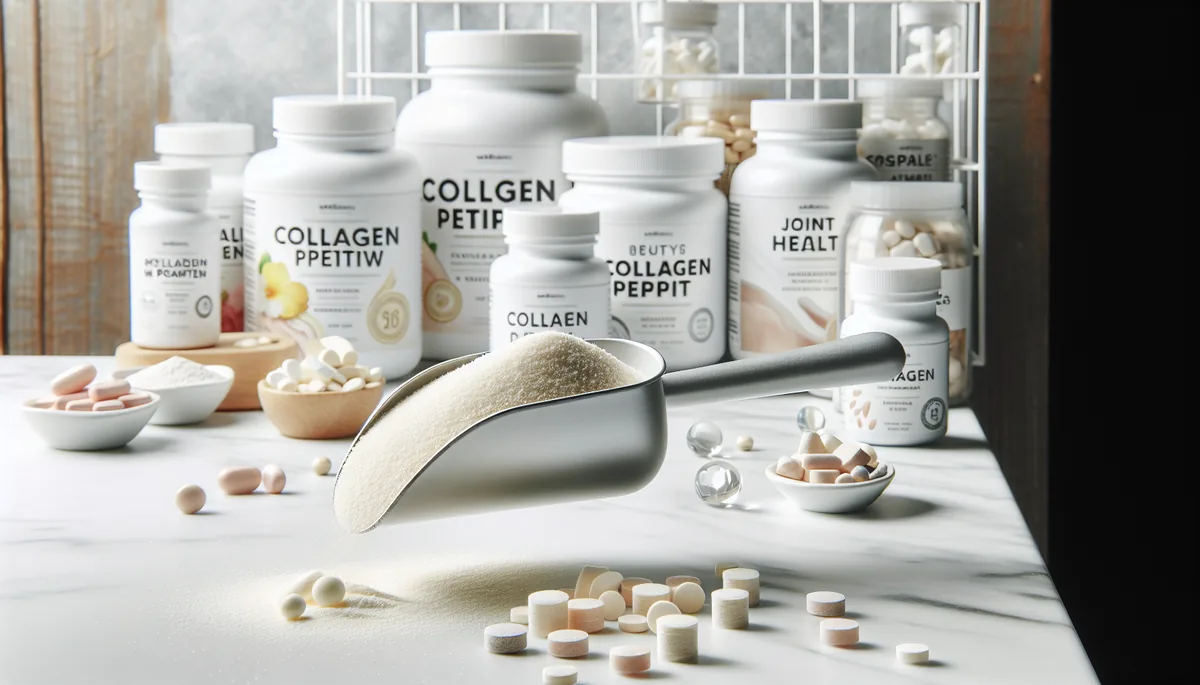
Joint stiffness after 40 is common, even in active people. Years of training, repetitive movement, old injuries, lower muscle mass, and age-related cartilage changes all start to add up. That is why collagen becomes a popular supplement in midlife.
Collagen peptide supplements have modest but credible evidence for joint comfort and mobility, particularly for exercise-related joint discomfort. Studies using undenatured type II collagen (UC-II) and hydrolyzed collagen at 10 grams per day have shown reductions in joint pain and stiffness in some trials. Results are more consistent for activity-related discomfort than for diagnosed osteoarthritis.
- Two distinct collagen types are used for joints: undenatured type II collagen (UC-II, ~40 mg/day) and hydrolyzed collagen peptides (10 g/day); they have different proposed mechanisms.
- UC-II works through oral tolerance mechanisms in the gut; hydrolyzed peptides may stimulate cartilage matrix synthesis.
- Clinical trials show joint pain reduction and improved mobility, but effects are moderate and may take 12 weeks to appear.
- Collagen is not a substitute for established joint treatments in diagnosed osteoarthritis; it is better positioned as a supportive approach for people with activity-related joint discomfort.
- Combining collagen with vitamin C, boron, and a generally anti-inflammatory diet pattern may support better outcomes than collagen alone.
The evidence is promising, but one point matters first: not all collagen supplements are the same for joint health. Hydrolyzed collagen peptides and undenatured type II collagen are both used for joints, but they work differently.

Why Joints Tend to Feel Older After 40
With age, cartilage resilience declines, tendon stiffness changes, and recovery often slows. That does not mean discomfort is inevitable, but it does mean your joints may tolerate training, stairs, or long walks less easily than before.
Joint support after 40 is rarely about one supplement alone. Strength training, body weight, mobility work, and protein intake matter a lot. Still, collagen can be a reasonable add-on.
Best Types of Collagen for Joints
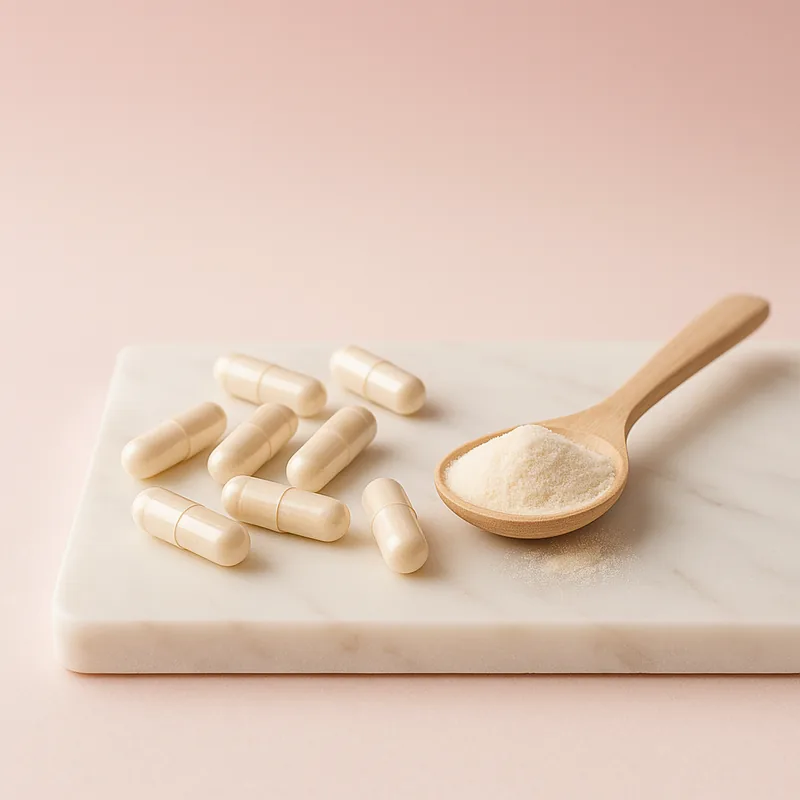
Hydrolyzed collagen peptides
These are usually taken in gram-level doses, often 5 to 15 grams daily. They are used for broad connective tissue support and may be especially useful for:
- active adults with exercise-related joint discomfort
- people wanting support for tendons and ligaments too
- those who prefer a daily powder
A 24-week randomized placebo-controlled trial in athletes with activity-related joint pain found that collagen hydrolysate improved several pain parameters compared with placebo.
Undenatured type II collagen (UC-II)
This is different from collagen peptides. It is usually taken at 40 mg daily and appears to work partly through immune-mediated tolerance mechanisms rather than simply supplying amino acids.
In a 2013 randomized placebo-controlled study, daily UC-II improved knee extension and delayed the onset of exercise-related discomfort in healthy adults. Other trials in osteoarthritis populations have also reported improvements in joint comfort and function.
Which Is Better After 40?
- Choose collagen peptides if you want broad connective tissue support and already like powders
- Choose undenatured type II collagen if your main goal is more targeted knee or cartilage support
- Pick one good formula and use it consistently before layering extras
What Results Are Realistic?
Collagen is not a painkiller and not an instant fix. Most people who respond notice gradual changes.
Typical timeline
8 to 12 weeks
You may notice less stiffness with training, walking, or stairs.
3 to 6 months
This is a more realistic window for judging whether a product is helping joint comfort or mobility.
If you try collagen for only a week or two, that is usually too short.
How to Take Collagen for Joints
A practical approach
Option 1: collagen peptides
Take 5 to 10 grams daily, usually in water, coffee, or a smoothie.
Option 2: UC-II
Take 40 mg daily as directed.
Helpful foundations
- adequate total protein
- resistance training
- walking and mobility work
- vitamin C sufficiency, since vitamin C is required for collagen biosynthesis
Who Might Benefit Most?
Collagen for joints after 40 may make the most sense if you:
- have mild chronic stiffness rather than acute injury
- want a low-risk supplement to trial consistently
- are physically active and want better recovery tolerance
- are using it alongside exercise, not instead of it
It may be less impressive if severe osteoarthritis, inflammatory arthritis, or major structural injury is the main problem. In those cases, collagen can still be adjunctive, but it should not replace medical evaluation.
FAQ
Is collagen good for joints after 40?
It can be. Research suggests collagen peptides and undenatured type II collagen may improve joint comfort and function in some adults.
What type of collagen is best for joints?
For broad connective tissue support, hydrolyzed collagen peptides are a common choice. For more cartilage-focused support, undenatured type II collagen is often more targeted.
How long does collagen take to help joints?
Usually at least 8 to 12 weeks, and often closer to 3 months or more for a fair trial.
Can collagen rebuild cartilage?
That is too strong a claim based on current evidence. Collagen may support symptoms and connective tissue metabolism, but it is not a guaranteed cartilage regenerator.
References
- Lymphatic Regeneration Visualized on Magnetic Resonance Imaging After Placement of Aligned Nanofibrillar Collagen Scaffolds for Treatment of Lymphedema. Annals of plastic surgery. 2025. PMID: 40549898.
- Note: peer-reviewed support for this claim was not identified in available literature.
- Lugo JP, Saiyed ZM, Lane NE. Efficacy and tolerability of an undenatured type II collagen supplement in modulating knee osteoarthritis symptoms: a multicenter randomized, double-blind, placebo-controlled study. Nutr J. 2016;15:14.
- Revankar AG, Bagewadi ZK, Aljaezi I, Alqahtani OS, Bochageri NP, Al Kazman BSM, et al (2026). Optimized collagenase biosynthesis (Bacillus siamensis strain Z1) and its application in collagen hydrolysate-mediated silver and zinc oxide nanoparticles synthesis and characterization with antibacterial, antioxidant and cytotoxic activities. PloS one. PMID: 41838715.
Related Articles
- Women’s Sports Nutrition Supplements in 2026: What Actually Helps Performance?
- Marine Collagen vs Bovine Collagen: Which Is Better for Skin, Joints, and Daily Use?
- Vitamin D and Depression: When Supplementing Actually Helps
- Omega-3 Supplements That Do Not Cause Fish Burps: What Actually Helps
Sources
- Collagen Supplementation for Skin Health: A Mechanistic Systematic Review (2020)
- Collagen Peptides With Vitamins Improve Skin Elasticity and Joint Wellbeing: Clinical Trial (2018)
- Collagen Peptide on Osteoarthritis: Double-Blind Placebo-Controlled RCT (2015)
- Ceramides in Skin Barrier Function (2024)
- Healthy Skin Barrier: Review and Consensus (2023)


Leave a Reply