
5-Amino-1MQ: The Metabolic Compound Targeting Fat Cells at the Enzyme Level
The vast majority of performance-enhancing peptides work on familiar hormonal pathways — growth hormone, IGF-1, GLP-1. 5-Amino-1MQ is different. It targets an enzyme called NNMT (nicotinamide N-methyltransferase) that regulates metabolic activity inside fat cells, using a mechanism distinct from anything else in the peptide space. The early animal data is intriguing. The human data is essentially absent. Here’s what you actually need to know.
Quick Answer: 5-Amino-1MQ is a small molecule (technically not a peptide, though often sold alongside peptides) that inhibits NNMT, an enzyme overexpressed in adipose tissue that reduces cellular energy expenditure. Animal studies show fat mass reduction and metabolic improvements. There are no published human clinical trials. It is sold as a research chemical with no FDA approval and minimal safety data.
What Is 5-Amino-1MQ?
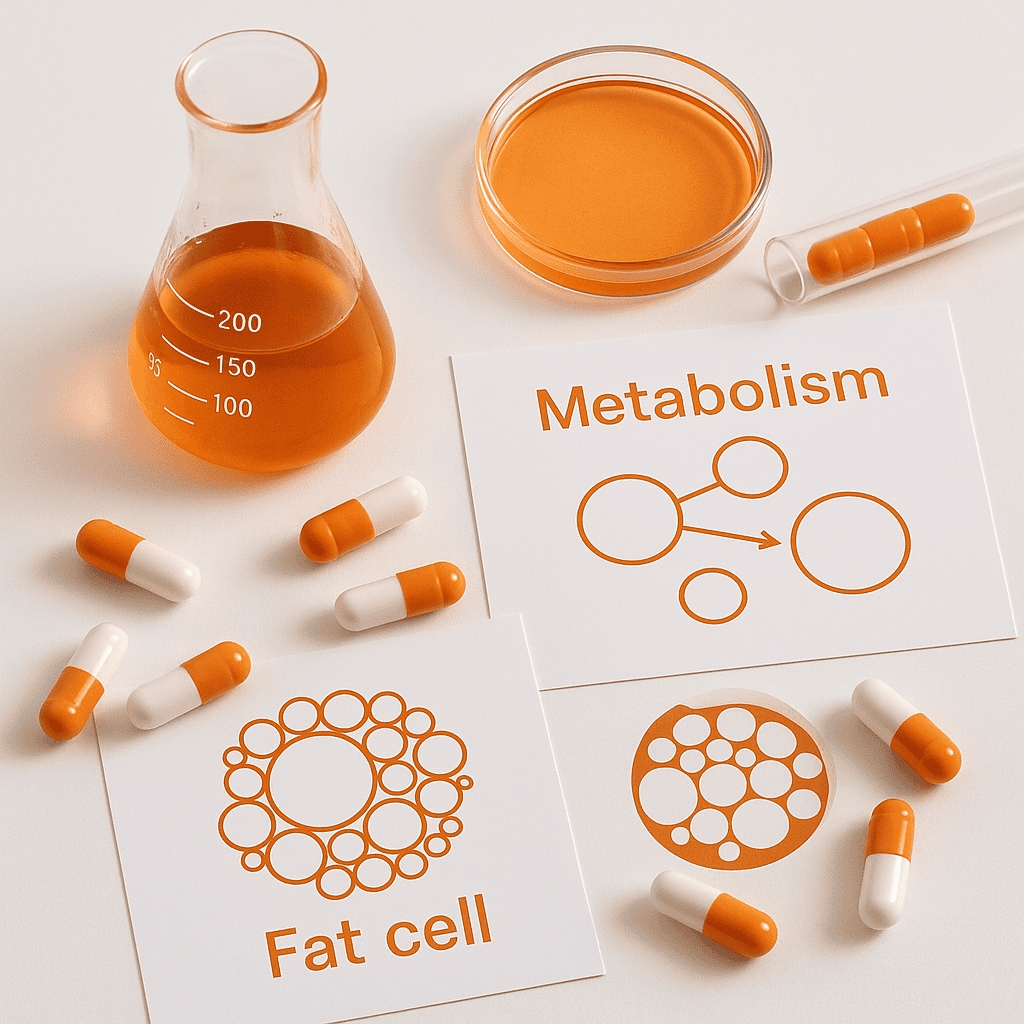
First, a clarification on terminology: 5-Amino-1MQ is not technically a peptide. It is a small molecule — specifically 5-amino-1-methylquinolinium — a quinolinium-based compound. It is often grouped with peptides in the research chemical and gray-market supplement space because it shares the same distribution channels and customer base, but its mechanism of action is fundamentally different from peptide hormones.
5-Amino-1MQ inhibits nicotinamide N-methyltransferase (NNMT), an enzyme that catalyzes the methylation of nicotinamide (a form of vitamin B3) using S-adenosylmethionine (SAM) as a methyl donor. This produces 1-methylnicotinamide as a byproduct.
NNMT is a metabolic regulator. It is overexpressed in the fat tissue of obese individuals and in several cancer types. Its activity in adipose tissue has been shown to reduce the pool of SAM available for other methylation reactions, which in turn affects gene expression through histone methylation (epigenetic mechanisms). High NNMT activity is associated with a hypometabolic state in adipocytes — essentially, fat cells that are less metabolically active and more resistant to mobilization.
The NNMT Research Foundation
The key foundational paper comes from Kraus et al. (Nature Chemical Biology, 2014), who showed that NNMT inhibition in mice produced reduced fat mass, increased energy expenditure, and improved insulin sensitivity without affecting food intake. They used an RNA-based approach (antisense oligonucleotide knockdown) to reduce NNMT expression in adipose tissue.
The mechanism proposed involves NNMT’s role as a “drain” on the SAM pool. SAM is required for methylation reactions throughout the cell, including histone H3K4me3 methylation, which regulates expression of metabolic genes. When NNMT is inhibited, more SAM is available for these reactions, shifting adipocytes toward a more metabolically active state resembling brown-like (beige) adipocytes. This upregulates energy-dissipating pathways including mitochondrial uncoupling activity.
This is genuinely interesting science — it’s a different lever for metabolic regulation than anything involving growth hormone, insulin, or the incretin hormones.
5-Amino-1MQ Specifically
The specific compound 5-Amino-1MQ as an NNMT inhibitor was developed based on the same conceptual framework. Research from the University of Texas Health Science Center (Neelakantan H, Watowich SJ, et al., and related work — see Sources #3) identified small molecule NNMT inhibitors with improved drug-like properties compared to RNA-based approaches.
In diet-induced obese mouse models, 5-Amino-1MQ administration reduced fat mass, improved metabolic parameters, and increased expression of brown adipose tissue (BAT) marker genes without significantly affecting lean mass or causing overt toxicity in the treatment periods studied (Neelakantan et al., Biochemical Pharmacology, 2018).
It’s important to understand the specific nature of these studies: they were conducted in rodents, under controlled dietary and housing conditions, over weeks. The fat mass reduction effects were real in these models. Extrapolating to what the compound does in free-living humans with varied diets and metabolic backgrounds is a significant leap.
The Human Evidence Gap
There are no published randomized controlled trials, case series, or even systematic observational data on 5-Amino-1MQ in humans. The human evidence base is essentially zero.
NNMT inhibition is an interesting biological target, and it’s possible that human trials are underway (companies working in this space include some developing more advanced NNMT inhibitors for diabetes and obesity). But 5-Amino-1MQ itself has not progressed through clinical trial stages that would establish efficacy or safety in humans.
This means the entire basis for its use as a gray-market fat loss compound rests on rodent data and user testimonials — the same evidentiary foundation as many other research chemicals that have failed to translate to human benefit.
Why Translation Might Fail
Several factors could limit translation from rodent success to human effectiveness:
- Species differences in NNMT biology: NNMT’s metabolic role may differ quantitatively between rodents and humans.
- Bioavailability: Oral bioavailability of 5-Amino-1MQ in humans is not established. The compound may be metabolized or poorly absorbed in ways not captured by rodent models.
- Dose scaling: Effective doses in mice, scaled to human equivalents, may be very high or may not scale linearly.
- Context dependency: The metabolic effects seen in high-fat diet rodent models may not generalize to the diverse metabolic presentations in human obesity.
Potential Off-Target Effects
NNMT is not only expressed in fat tissue. It is expressed in liver, kidney, brain, and other tissues. The consequences of NNMT inhibition in these non-adipose tissues are not well characterized.
NNMT is overexpressed in multiple cancer types (melanoma, bladder cancer, lung cancer, and others), where it has been studied as a potential therapeutic target. But the relationship between NNMT and cancer is complex — in some cancer contexts, NNMT supports tumor cell survival, but the consequences of NNMT inhibition on normal tissue biology are not fully understood.
Because NNMT intersects with one-carbon metabolism and SAM availability, which in turn affects epigenetic methylation patterns globally, the downstream consequences of sustained NNMT inhibition are genuinely unknown from a long-term safety perspective.
Current Market Status
5-Amino-1MQ is sold by multiple research peptide vendors in capsule form (typically 50 mg capsules) or as an oral solution. It is relatively recent in the market compared to established peptides, reflecting its more recent appearance in academic literature.
Pricing and availability vary, and the usual caveats about unregulated manufacturing and purity apply. There is no pharmaceutical-grade standard for this compound.
Legal Status
5-Amino-1MQ is not FDA-approved for any use. It is not a scheduled controlled substance. It is sold as a research chemical. It is not currently on the WADA prohibited list, but athletes should check current status and be aware that WADA’s prohibited list can change.
How It Differs From Other Fat-Loss Approaches
5-Amino-1MQ is mechanistically unique in the supplement and research peptide space:
- Unlike GLP-1 agonists (tirzepatide, semaglutide): Works at the level of adipocyte metabolism, not appetite/satiety hormones
- Unlike AOD-9604: Doesn’t target growth hormone pathways; works on epigenetic regulation of adipocyte gene expression
- Unlike caffeine/stimulants: Not an adrenergic mechanism
- Unlike thyroid hormone: Not acting on systemic metabolic rate via thyroid receptors
The metabolic shift toward beige/brown adipocyte characteristics is the proposed mechanism — making fat cells burn more energy rather than suppressing appetite or accelerating lipolysis through hormonal pathways.
Frequently Asked Questions
Is 5-Amino-1MQ safe?
Short-term rodent studies did not show obvious toxicity at effective doses. There is no human safety data. Given its effects on one-carbon metabolism and epigenetic methylation, long-term safety is genuinely unknown. “No obvious acute rodent toxicity” is a minimal safety bar.
Can 5-Amino-1MQ be taken orally?
It is sold in capsule and oral solution form, and the animal studies used it orally or in drinking water. Whether oral bioavailability is adequate in humans is not established. If it is poorly absorbed orally in humans, the entire premise of the dosing protocols breaks down.
How is 5-Amino-1MQ different from NAD+ precursors like NMN or NR?
This is a related-but-different area. NMN (nicotinamide mononucleotide) and NR (nicotinamide riboside) are NAD+ precursors that boost cellular NAD+ levels — increasing energy metabolism through SIRT1/NAD+ pathways. NNMT is a “drain” on NAD precursors (nicotinamide) — inhibiting it conserves nicotinamide and indirectly supports NAD+ synthesis while also affecting SAM-dependent methylation. There is some conceptual overlap but these are distinct mechanisms.
What results have people reported with 5-Amino-1MQ?
Community reports describe modest improvements in body composition, particularly subcutaneous fat reduction over weeks to months, without significant appetite changes (distinguishing it from GLP-1 agonists). These are uncontrolled self-reports and should not be interpreted as evidence of efficacy. Placebo effects, confounding lifestyle changes, and the lack of objective measurements make anecdotes unreliable.
Is 5-Amino-1MQ worth trying?
This is a personal decision requiring honest risk-benefit consideration. The animal data is scientifically interesting and mechanistically distinct. The human evidence is zero. The safety profile is undefined. For someone seeking fat loss with documented efficacy, interventions with actual human evidence (dietary interventions, exercise, FDA-approved medications) have a far stronger basis. 5-Amino-1MQ is genuinely experimental.
Sources
- Jones CL et al. (2018). Inhibition of Amino Acid Metabolism Selectively Targets Human Leukemia Stem Cells. Cancer cell. PMID: 30423294.
- Hong, S., Moreno-Navarrete, J.M., Wei, X., et al. (2015). Nicotinamide N-methyltransferase regulates hepatic nutrient metabolism through Sirt1 protein stabilization. Nature Medicine, 21(8), 887–894.
- Neelakantan, H., Vance, V., Wetzel, M.D., et al. (2018). Selective and membrane-permeable small molecule inhibitors of nicotinamide N-methyltransferase reverse high fat diet-induced obesity in mice. Biochemical Pharmacology, 147, 141–152.
- Pissios, P. (2017). Nicotinamide N-Methyltransferase: More Than a Vitamin B3 Clearance Enzyme. Trends in Endocrinology & Metabolism, 28(5), 340–353.
- Schmeisser, K., Parker, J.A. (2018). Nicotinamide-N-methyltransferase controls behavior, neurodegeneration and lifespan by regulating neuronal autophagy. PLOS Genetics, 14(9), e1007561.



Leave a Reply