Thymosin Alpha-1: The Immune Peptide Used Worldwide (2026 Guide)
Quick Answer: Thymosin Alpha-1 (TA1) is a 28-amino-acid peptide naturally produced by the thymus gland that regulates and amplifies immune function. Approved as the drug Zadaxin in 35+ countries for hepatitis B and C treatment, it is not FDA-approved in the US. Research supports its role in T-cell maturation, antiviral defense, cancer adjunct therapy, and age-related immune decline. In the US, it is available only as a research chemical or via compounding pharmacy with a prescription.
What Is Thymosin Alpha-1?
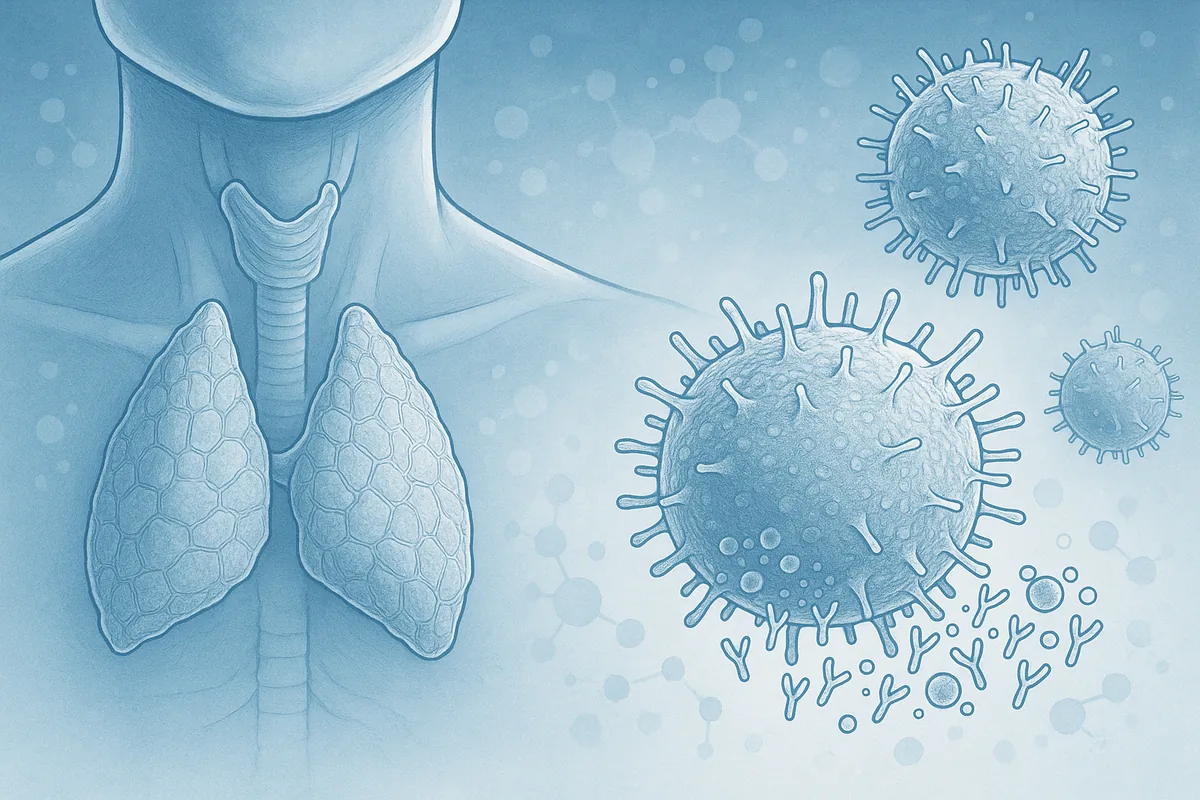
Thymosin Alpha-1 is a naturally occurring peptide that was first isolated in the 1970s by immunologist Allan Goldstein and his team at George Washington University. Goldstein was studying extracts of the thymus gland — the small organ tucked behind your breastbone that serves as the master training ground for T-cells — when he discovered a family of peptides responsible for immune signaling. Thymosin Alpha-1, or TA1, emerged as the most biologically active fraction.
The peptide consists of 28 amino acids and is derived from a larger precursor protein called prothymosin alpha. Under normal conditions, the thymus secretes TA1 into the bloodstream where it acts as a hormone-like messenger, tuning the immune system’s responses. The problem is that the thymus begins to shrink and lose function after puberty in a process called thymic involution, and by middle age, circulating TA1 levels have dropped substantially. This is one reason the immune system becomes less adaptive with age.
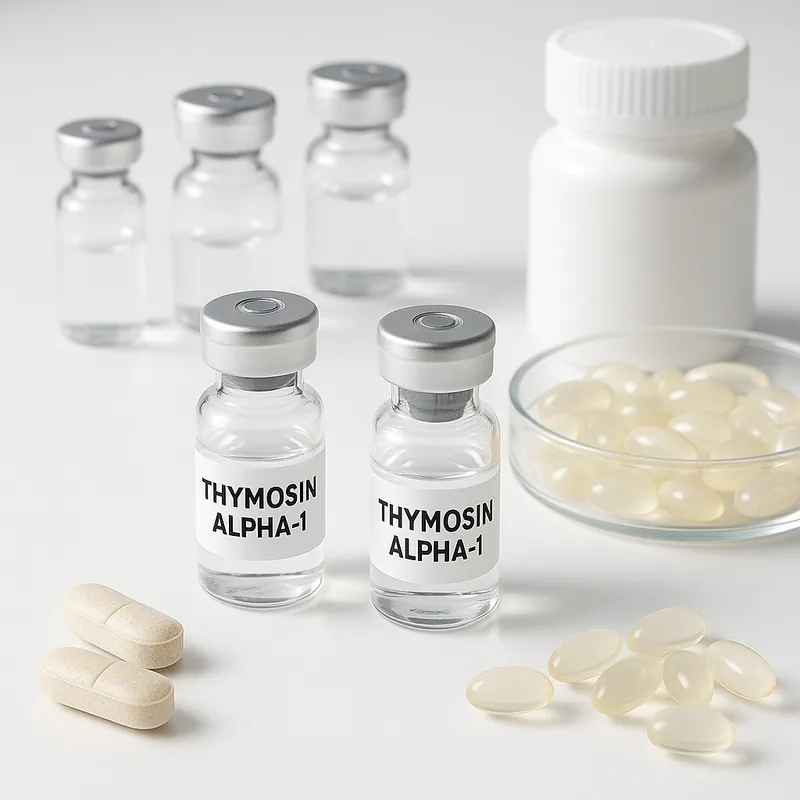
Synthetic TA1, manufactured identically to the naturally occurring peptide, is the active ingredient in the pharmaceutical product Zadaxin (thymalfasin), developed by SciClone Pharmaceuticals.
How Thymosin Alpha-1 Works: The Mechanisms
TA1 does not function like a blunt immune stimulant that simply cranks everything up. It is an immune modulator — it selectively activates and calibrates the immune response. Here is what the research shows it does:
T-Cell Maturation and Differentiation
The thymus trains immature T-cells (thymocytes) to recognize self from non-self. TA1 accelerates this maturation process, helping produce functional CD4+ helper T-cells and CD8+ cytotoxic T-cells — the two main arms of adaptive immunity. In aging individuals or those with immunodeficiency, this process is sluggish; TA1 effectively re-trains the thymic output.
Dendritic Cell Activation
Dendritic cells are the sentinels of the immune system — they patrol for pathogens and present antigens to T-cells to trigger a targeted response. TA1 has been shown to enhance dendritic cell maturation and antigen-presenting function, which amplifies downstream T-cell activation.
Toll-Like Receptor (TLR) Signaling
One of the more fascinating mechanisms discovered in recent research involves toll-like receptors, the pattern-recognition receptors that serve as the immune system’s early-warning sensors for pathogens. TA1 activates TLR-2 and TLR-9 signaling pathways, triggering innate immune responses that form the first line of defense against bacteria, viruses, and fungi. This TLR activation is believed to explain much of TA1’s antiviral activity.
Cytokine Regulation and Anti-Inflammation
TA1 modulates the production of pro-inflammatory cytokines, including TNF-α, IL-6, and IL-12, and promotes Th1-dominant immune responses (which are critical for fighting intracellular pathogens like viruses). At the same time, it reduces pathological inflammation by suppressing excessive cytokine production — the “cytokine storm” dynamic that makes some infections (and COVID-19) especially dangerous.
Zadaxin: The Approved Drug That Americans Can’t Easily Get
The commercial form of Thymosin Alpha-1, Zadaxin (thymalfasin), has been approved for clinical use in over 35 countries, including China, Italy, Philippines, Singapore, and across much of Asia, Latin America, and the Middle East. Its primary approved indications are:
Chronic hepatitis B (as an immunomodulatory treatment)
Chronic hepatitis C (as an adjunct to interferon therapy)
Cancer (as an adjunct to chemotherapy in some markets)
Immunodeficiency states (approved in select jurisdictions)
Despite this broad international track record spanning decades, Zadaxin has never received FDA approval in the United States. SciClone pursued FDA approval but the regulatory path proved difficult. The compound exists in a peculiar limbo: well-studied, widely used internationally, generally safe — but not cleared for sale in the US as a prescription drug. Compounding pharmacies can legally manufacture it for patients with a valid prescription, and it circulates as a research chemical, but there is no FDA-approved product.
This regulatory gap frustrates both clinicians interested in its immune-modulating properties and patients who have experienced it abroad.
Clinical Evidence: What the Research Actually Shows
Hepatitis B: Phase III Data
The hepatitis B evidence for TA1 is the most mature. Multiple randomized controlled trials have been conducted, including large trials in China and Italy.
A landmark Italian multicenter study (Thymosin Alpha-1 Study Group) demonstrated that TA1 significantly increased sustained response rates in patients with chronic hepatitis B versus placebo. A 2014 meta-analysis published in Antiviral Research pooled data from multiple RCTs and found that TA1 treatment was associated with significantly higher rates of HBeAg seroconversion and HBV DNA suppression compared to controls, particularly when used in combination with interferon-alpha.
Hepatitis C: Phase III Data
For hepatitis C, TA1 was studied primarily as an adjunct to pegylated interferon and ribavirin — the standard of care before direct-acting antivirals revolutionized HCV treatment. Multiple Phase III trials showed that adding TA1 to the interferon backbone improved sustained virological response (SVR) rates, particularly in genotype 1 patients who are historically harder to treat.
A trial published in Hepatology involving over 400 patients found meaningfully improved SVR rates in the TA1 + interferon arm versus interferon alone. With the advent of modern HCV antivirals, this indication is less pressing clinically — but the data established TA1’s antiviral credentials.
Cancer: Immunotherapy Adjunct Research
TA1 has been investigated as an adjunct in cancer treatment for several decades, primarily for its ability to counteract the immune suppression caused by chemotherapy and radiation. Studies have looked at non-small cell lung cancer, hepatocellular carcinoma, and melanoma.
A 2018 systematic review in Cancer Medicine evaluated TA1 in cancer patients receiving chemotherapy and found it reduced rates of infection-related complications, improved immune markers (CD4+/CD8+ ratios), and in some studies modestly improved overall survival. The mechanism is straightforward: chemotherapy devastates the immune system; TA1 helps rebuild it faster.
Interest has grown in combining TA1 with checkpoint inhibitors (anti-PD-1/PD-L1 drugs) since TA1 activates T-cells — the same cells checkpoint inhibitors unleash. Early preclinical and clinical data are promising, though large RCTs in this space are still in progress.
COVID-19: The Controversial Evidence
When COVID-19 emerged, Chinese researchers rapidly studied TA1 as a potential treatment, building on decades of experience using it in China. Several observational studies and some controlled trials were published in 2020-2021.
A study in Journal of Infectious Diseases (Zhang et al., 2020) reported that TA1 treatment in severe COVID-19 patients was associated with reduced 28-day mortality, with the benefit most pronounced in patients with lymphopenia (low lymphocyte counts — a hallmark of severe COVID).
However, the COVID-19 evidence is mixed and methodologically uneven. Many studies were small, observational, or conducted under emergency conditions with variable treatment protocols. No large, rigorous RCT has established definitive benefit for COVID-19. Some researchers argue TA1’s immunomodulatory properties could help prevent the cytokine storm; others caution that amplifying immune activity in an already inflamed patient could theoretically be harmful. The evidence here should be read with appropriate skepticism, even if it is biologically plausible.
Thymic Involution and Longevity: Why Aging Researchers Are Interested
This is where TA1 intersects with the booming longevity science space.
After puberty, the thymus undergoes progressive involution — the functional tissue is gradually replaced by fat. By age 40, most people have lost 70% or more of thymic functional volume. By age 70, the thymus is largely vestigial. This shrinkage tracks closely with the age-related immune decline known as immunosenescence: slower vaccination responses, reduced ability to fight novel pathogens, and rising vulnerability to infection, cancer, and autoimmunity.
TA1 cannot reverse thymic atrophy — it cannot regrow the organ. But it can partially compensate for the organ’s reduced output by providing the signaling peptide the thymus is no longer making in sufficient quantities. This is why longevity researchers view TA1 as a potential tool for thymic supplementation — not a cure for aging, but a targeted correction of one of its downstream effects.
The TRIIM trial (Thymus Regeneration, Immunorestoration, and Insulin Mitigation), published in Aging Cell in 2019, showed that a combination of growth hormone, DHEA, and metformin could partially regenerate thymic tissue and reverse epigenetic aging markers. TA1 was not part of TRIIM, but the study reignited interest in thymic function as an aging intervention. TA1 represents a simpler, safer approach to the same downstream goal: preserving T-cell output in aging immune systems.
Thymosin Alpha-1 vs. Thymosin Beta-4 (TB-500): They Are Not the Same
There is persistent confusion online conflating TA1 with Thymosin Beta-4 (TB-4), sometimes called TB-500. These are entirely different peptides with different structures, different mechanisms, and different research applications.
Feature
Thymosin Alpha-1
Thymosin Beta-4 (TB-500)
Amino acids
28
43
Primary function
Immune modulation
Tissue repair, angiogenesis
Clinical data
Extensive (hepatitis, cancer)
Limited human trials
Approved drug form
Zadaxin (35+ countries)
None
Main interest
Antiviral, immune aging
Wound healing, injury recovery
Both come from thymosin research lineage, but TA1 is the immunology peptide and TB-4 is the tissue repair peptide. Do not conflate them.
Availability and How People Use It
Outside the US: In countries where Zadaxin is approved (China, Italy, Philippines, and others), it is available by prescription and administered as a subcutaneous injection, typically 1.6 mg twice weekly.
In the US: TA1 occupies a gray zone:
No FDA-approved product exists.
Compounding pharmacies can legally produce it with a physician’s prescription. Some integrative medicine and longevity-focused physicians do prescribe it.
It is sold as a research chemical by various peptide suppliers. These products are not pharmaceutical-grade, are not intended for human use, and vary widely in purity and quality.
Typical research protocols (based on clinical trial dosing) range from 1.6 mg subcutaneously two to three times per week for immune stimulation, to daily dosing during acute illness. Some longevity protocols use lower-dose maintenance injections.
Safety Profile
TA1 has an impressive safety record accumulated across decades of clinical use in tens of thousands of patients worldwide.
No serious adverse events have been attributed to TA1 in published clinical trials.
The most commonly reported effects are mild local injection site reactions (redness, minor discomfort).
There are no known organ toxicities.
It does not suppress the immune system — it modulates it. However, in autoimmune conditions, amplifying T-cell activity could theoretically worsen inflammation. Caution is warranted in active autoimmune disease.
Drug interactions are not well-characterized, though concurrent use with potent immunosuppressants (such as transplant drugs) should involve physician oversight.
The caveat: Most of the safety data comes from the pharmaceutical-grade Zadaxin product. Research chemical TA1 from unverified suppliers carries unknown risks due to uncertain purity.
Cost
Zadaxin (when obtained through international pharmacies or import): $200–$500+ per month depending on dosing and source.
Compounded TA1 (US compounding pharmacy with prescription): $100–$300+ per month depending on the pharmacy and dose.
Research chemical TA1 (peptide suppliers): $30–$100 per vial (typically 5–10 mg), making it significantly cheaper but with quality/purity uncertainty.
Sources
Note: peer-reviewed support for this claim was not identified in available literature.
This article is for informational purposes only and does not constitute medical advice. Thymosin Alpha-1 is not FDA-approved in the United States, and its use outside of approved clinical contexts carries regulatory and safety considerations. Always consult a qualified healthcare provider before beginning any peptide or supplement protocol.





Leave a Reply