TB-500 Peptide Guide 2026: What the Research Actually Says About Thymosin Beta-4
Quick Answer: TB-500 is a synthetic peptide derived from a fragment of Thymosin Beta-4, a naturally occurring protein involved in cell migration, tissue repair, and inflammation regulation. Animal studies show impressive results for wound healing, tendon recovery, and cardiac repair — but human clinical data remains extremely limited. It is classified as a research chemical, is banned by WADA, and is not approved by the FDA for human use.
TB-500 has been circulating in research and athletic communities for years, often mentioned in the same breath as BPC-157 as one of the most talked-about peptides for recovery and regeneration. The claims are bold: faster healing, reduced inflammation, improved flexibility, even cardiac repair. But how much of that is backed by science — and how much is forum lore?
This guide cuts through the hype to give you an honest look at what TB-500 is, how it works, what the research shows, and what you need to know before forming any opinion about it.
What Is TB-500?
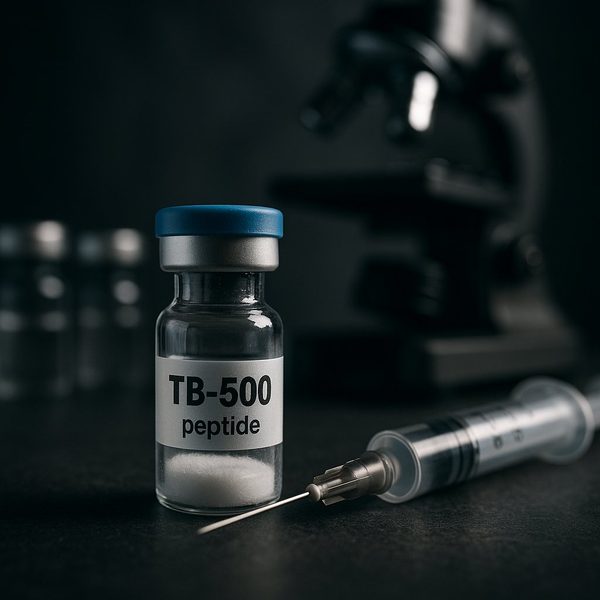
TB-500 is a synthetic analogue of Thymosin Beta-4 (Tβ4), a naturally occurring 43-amino-acid protein found in virtually all human and animal cells. Rather than being the full protein, TB-500 corresponds specifically to the actin-binding domain of Tβ4 — roughly amino acids 17–23 — which is believed to be responsible for much of the protein’s biological activity.
Thymosin Beta-4 was first isolated from calf thymus tissue in the early 1980s. It belongs to a family of thymic peptides originally studied for immune function, but researchers quickly realized Tβ4 played a broader role in cellular biology — particularly in the regulation of actin, a structural protein essential for cell movement and tissue formation.
In the body, Tβ4 is present in platelets, white blood cells, and wound fluid. When tissue is damaged, local concentrations spike, suggesting the protein plays an active role in the healing response. TB-500 is designed to mimic this effect in a more targeted, deliverable format.
It’s important to be clear: TB-500 is not Thymosin Beta-4. It is a fragment — a smaller synthetic peptide that shares the active region of the parent protein. Some researchers argue this makes it more potent on a per-molecule basis; others note that the full protein may have additional regulatory functions the fragment lacks.
How TB-500 Works: Mechanism of Action
Understanding TB-500 requires understanding its three main biological roles:
1. Actin Regulation and Cell Migration
The primary mechanism of TB-500 involves its interaction with G-actin (globular actin), which it sequesters and regulates. Actin is the scaffolding protein that allows cells to move, divide, and reorganize. By modulating actin dynamics, TB-500 facilitates faster and more organized cell migration — a critical step in wound closure and tissue repair.
When tissue is injured, cells at the wound margin need to migrate inward to close the gap. TB-500 appears to accelerate this process by upregulating the cellular machinery needed for directed movement.
2. Angiogenesis
TB-500 promotes angiogenesis — the formation of new blood vessels. This is a crucial part of tissue repair: new capillaries must grow into damaged areas to deliver oxygen, nutrients, and immune cells. Studies in animal models have shown that Tβ4 and its analogues stimulate endothelial cell migration and tube formation, laying the foundation for new vascular networks.
This angiogenic effect is one reason TB-500 has drawn interest in cardiac research. Following a heart attack, the ability to re-vascularize damaged myocardial tissue could, in theory, significantly affect recovery outcomes.
3. Anti-Inflammatory Effects
TB-500 appears to modulate the inflammatory cascade, reducing the expression of pro-inflammatory cytokines. Chronic inflammation impairs healing — it degrades collagen, disrupts cell signaling, and keeps tissue in a perpetual state of low-grade damage. By dampening excessive inflammation while still supporting the initial healing response, TB-500 may help shift damaged tissue toward genuine repair rather than fibrosis (scar formation).
What the Research Shows
Wound Healing
The strongest body of evidence for TB-500 comes from wound healing studies, primarily in animal models. Research published in the Annals of the New York Academy of Sciences demonstrated that Tβ4 accelerated corneal wound healing in rats. Separately, skin wound studies in mice showed faster re-epithelialization and reduced inflammatory infiltration in Tβ4-treated animals.
A notable 2010 pilot study (Journal of Investigative Dermatology) looked at the use of Tβ4 in human dermal wound healing and found some promising signals, though the sample size was small and the results preliminary. It remains one of the few human-oriented papers in this space.
Cardiac Repair
Some of the most compelling — and widely cited — animal research involves cardiac applications. Studies in rodent models of myocardial infarction found that Tβ4 treatment:
Reduced cardiomyocyte apoptosis (cell death)
Promoted migration of epicardial progenitor cells
Improved cardiac function metrics post-infarction
Research from the MRC Clinical Sciences Centre in London identified Tβ4 as a key signaling molecule in cardiac progenitor cell activation, suggesting it may play a role not just in repair but in reactivating dormant regenerative capacity in the heart. This work generated real scientific excitement — though it remains confined to animal models and early mechanistic studies.
Tendon and Musculoskeletal Recovery
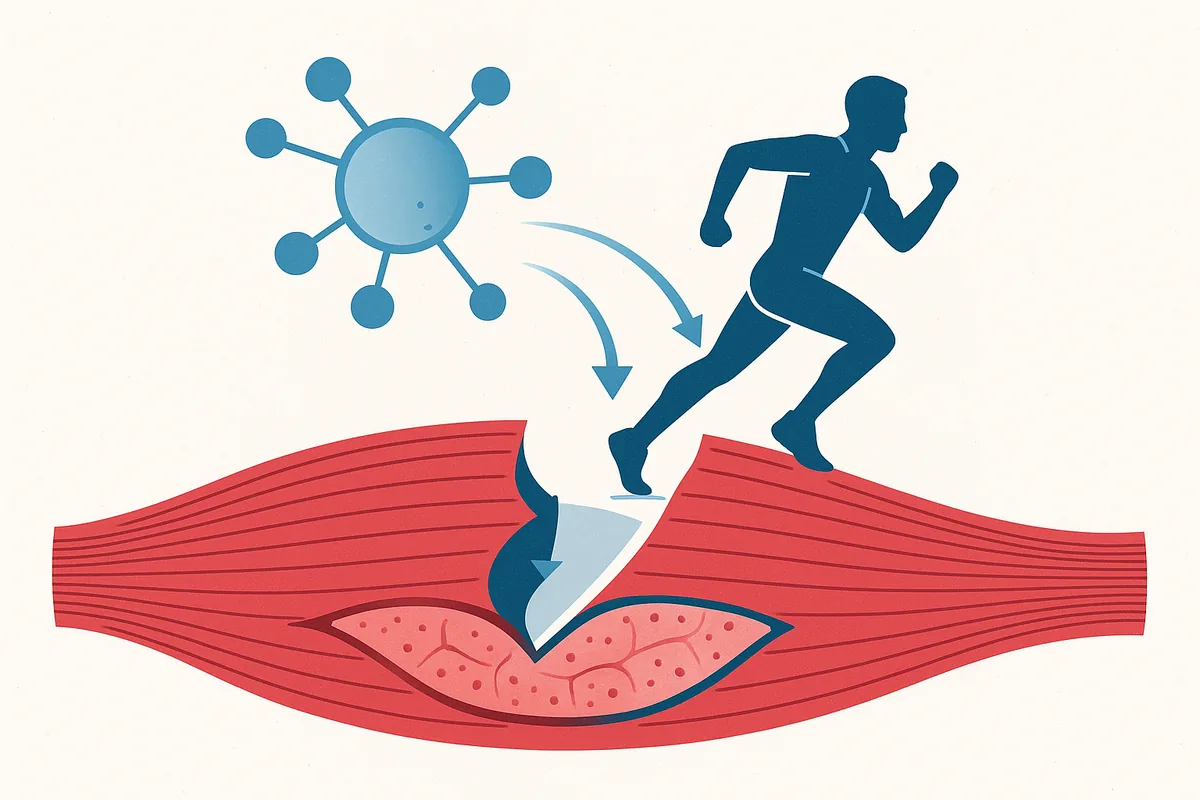
TB-500 has attracted the most anecdotal attention in athletic and fitness communities for its reported effects on tendons, ligaments, and muscle tissue. Animal studies have shown accelerated healing of Achilles tendon injuries and improved collagen organization in repair tissue.
The mechanistic rationale is sound: tendons are notoriously slow to heal due to poor blood supply, and TB-500’s combined angiogenic and cell migration effects could theoretically address both problems. However, the leap from rat Achilles tendons to human clinical outcomes is enormous — and no controlled human trials on tendon healing with TB-500 have been published.
Neurological Research
More recent work has explored Tβ4’s role in the central nervous system. Studies in animal models of stroke and traumatic brain injury have observed neuroprotective effects and improved functional recovery. The proposed mechanism involves both anti-inflammatory action and promotion of neural progenitor cell migration.
This is early-stage science, but it adds to the picture of Tβ4 as a pleiotropic molecule with effects across multiple tissue types.
The Animal-to-Human Evidence Gap
Here is where intellectual honesty requires a hard stop.
The overwhelming majority of TB-500 research has been conducted in rodents, with some work in larger animals like horses. The jump from animal models to human physiology is never guaranteed, and in the peptide space it is routinely exaggerated.
Several important caveats:
Dose translation is uncertain. Effective doses in rodents don’t directly scale to humans. The mg/kg doses used in mouse studies don’t translate cleanly to human equivalents.
Route of administration varies. Many animal studies use subcutaneous or intraperitoneal injection under controlled conditions. The purity, sterility, and exact peptide used in research settings is not the same as what circulates in gray-market research chemical channels.
Publication bias exists. Positive results are far more likely to be published and cited. Negative or null findings — if they exist — are underrepresented.
No Phase II or III human trials. As of early 2026, there are no large-scale randomized controlled trials of TB-500 (or full Tβ4) in human subjects for the applications most commonly discussed in the fitness and recovery community.
One company, RegeneRx Biopharmaceuticals, conducted Phase I and early Phase II clinical trials of full-length Thymosin Beta-4 for wound healing and cardiac applications. Results were modest and mixed. The trials did not advance to Phase III, and the company ceased operations. This is the closest approximation of “human data” that exists — and it was for a different molecule (the full protein, not the TB-500 fragment).
TB-500 vs. BPC-157: A Comparison
TB-500 is frequently mentioned alongside BPC-157 (Body Protective Compound-157), another research peptide with a following in recovery circles. The two are sometimes stacked together. Here’s how they compare:
Feature
TB-500
BPC-157
Origin
Thymosin Beta-4 fragment
Gastric juice protein fragment
Primary mechanism
Actin regulation, angiogenesis
Nitric oxide pathway, growth factor upregulation
Strongest animal evidence
Cardiac repair, wound healing
Gut healing, tendon/ligament
Human trials
Very limited (full protein only)
None published in peer-reviewed journals
Oral bioavailability
Poor (injection typically used)
Possibly better oral stability
Legal status
Research chemical, WADA banned
Research chemical, not WADA listed (as of 2026)
On stacking: Some researchers and athletes report combining TB-500 and BPC-157 on the theory that their mechanisms are complementary — TB-500 promoting angiogenesis and cell migration while BPC-157 addresses tendon/ligament integrity and gut health. There is no published research on this combination in humans. Any discussion of stacking these compounds remains purely speculative and is outside the realm of established science.
Dosing Protocols in the Research Community
Because TB-500 has no FDA-approved dosing guidelines for humans, any dosing information represents what circulates in research and athletic communities — not medical recommendations.
Typical protocols observed in the research/gray-market space:
Loading phase: 2–2.5 mg, 2x per week, for 4–6 weeks
TB-500 is typically reconstituted from lyophilized (freeze-dried) powder using bacteriostatic water. Standard research vials are sold in 2 mg or 5 mg quantities.
Critical warning: These protocols are not medically validated. Self-administration of peptides carries real risks including infection, immune reactions, dosing errors, and unknown long-term effects. No qualified physician can currently prescribe TB-500 for human use in the United States.
Safety Profile and Known Risks
TB-500’s safety data in humans is minimal. What is known:
Short-term animal studies have not revealed significant organ toxicity or severe adverse effects at research doses.
RegeneRx Phase I trials with full Tβ4 found the molecule was generally well-tolerated in the small number of participants studied.
Theoretical oncological concern: Because Tβ4 promotes angiogenesis and cell migration, some researchers have flagged the theoretical risk that exogenous TB-500 could promote tumor growth or metastasis in individuals with existing malignancies. This has not been conclusively demonstrated, but it is a legitimate mechanistic concern that should not be dismissed.
Injection site reactions: Minor irritation, bruising, or discomfort are commonly reported.
Sourcing risk: Gray-market peptide quality is highly variable. Contamination, mislabeling, and incorrect concentrations are documented problems in research chemical markets.
No long-term human safety data exists. Anyone claiming TB-500 is “proven safe” for human use is overstating the evidence.
Legal Status and WADA Ban
United States: TB-500 is not an FDA-approved drug. It is legal to sell as a research chemical “not for human consumption,” but it exists in a regulatory gray zone. Selling it as a dietary supplement or with health claims for humans would violate FDA regulations.
WADA (World Anti-Doping Agency): TB-500 is explicitly listed on the WADA Prohibited List under Peptide Hormones, Growth Factors, Related Substances and Mimetics (S2). Athletes subject to anti-doping rules — including most competitive sports at national and international levels — are prohibited from using it. Detection methods exist and have been used in sanctioned sport.
Other jurisdictions: Regulations vary significantly by country. In some countries, peptides like TB-500 may be available through compounding pharmacies or under different legal frameworks. Always verify local regulations.
Evaluating Quality in the Research Chemical Market
If TB-500 is being obtained for legitimate research purposes, quality evaluation matters. Key considerations:
Third-party COA (Certificate of Analysis): Reputable suppliers provide independent lab verification of purity and identity, typically via HPLC and mass spectrometry. Request and verify these.
Sequence verification: The peptide sequence should match the known TB-500 sequence (Ac-LKKTETQ — the core actin-binding fragment).
Sterility testing: For injectables, sterility is non-negotiable. Contaminated research peptides have caused serious infections in the past.
Reputation and transparency: Established suppliers who publish third-party testing and have verifiable track records are preferable to anonymous vendors.
This is not a product category where price-shopping on quality is wise. Cheap peptides from unverified sources carry disproportionate risk.
The Bottom Line
TB-500 is a genuinely interesting molecule with a solid mechanistic rationale and compelling animal data. The underlying biology of Thymosin Beta-4 is real, and the research — particularly in wound healing and cardiac repair — is worth taking seriously as early-stage science.
But early-stage science is not the same as proven human therapy. The gap between promising rodent data and validated human treatment is wide, and the peptide research community has a tendency to collapse that gap prematurely. Until adequately powered, controlled human trials are conducted and published, TB-500 remains an experimental compound with an unestablished human efficacy and safety profile.
For anyone considering it: know what you’re dealing with, understand the legal implications, and approach the evidence with appropriate skepticism. The science deserves better than hype — and so do you.
Sources
Bock-Marquette I, et al. “Thymosin beta4 activates integrin-linked kinase and promotes cardiac cell migration, survival and cardiac repair.” Nature. 2004;432(7016):466-472. PubMed
Sosne G, et al. “Thymosin beta4 promotes corneal wound healing and decreases inflammation in vivo following alkali injury.” Exp Eye Res. 2002;74(2):293-299. PubMed
Philp D, et al. “Thymosin beta4 increases hair growth by activation of hair follicle stem cells.” FASEB J. 2004;18(2):385-387. PubMed
Smart N, et al. “Thymosin β4 induces adult epicardial progenitor mobilization and neovascularization.” Nature. 2007;445(7124):177-182. PubMed
Huff T, et al. “Beta-thymosins, small acidic peptides with multiple functions.” Int J Biochem Cell Biol. 2001;33(3):205-220. PubMed
This article is for informational and educational purposes only. TB-500 is not an FDA-approved drug and is not intended for human use. Nothing in this article constitutes medical advice, and it should not be construed as a recommendation to use, purchase, or administer any peptide or research chemical. Always consult a licensed healthcare professional before making decisions about your health. The authors and publishers of this content accept no liability for actions taken based on the information presented here.




Leave a Reply