
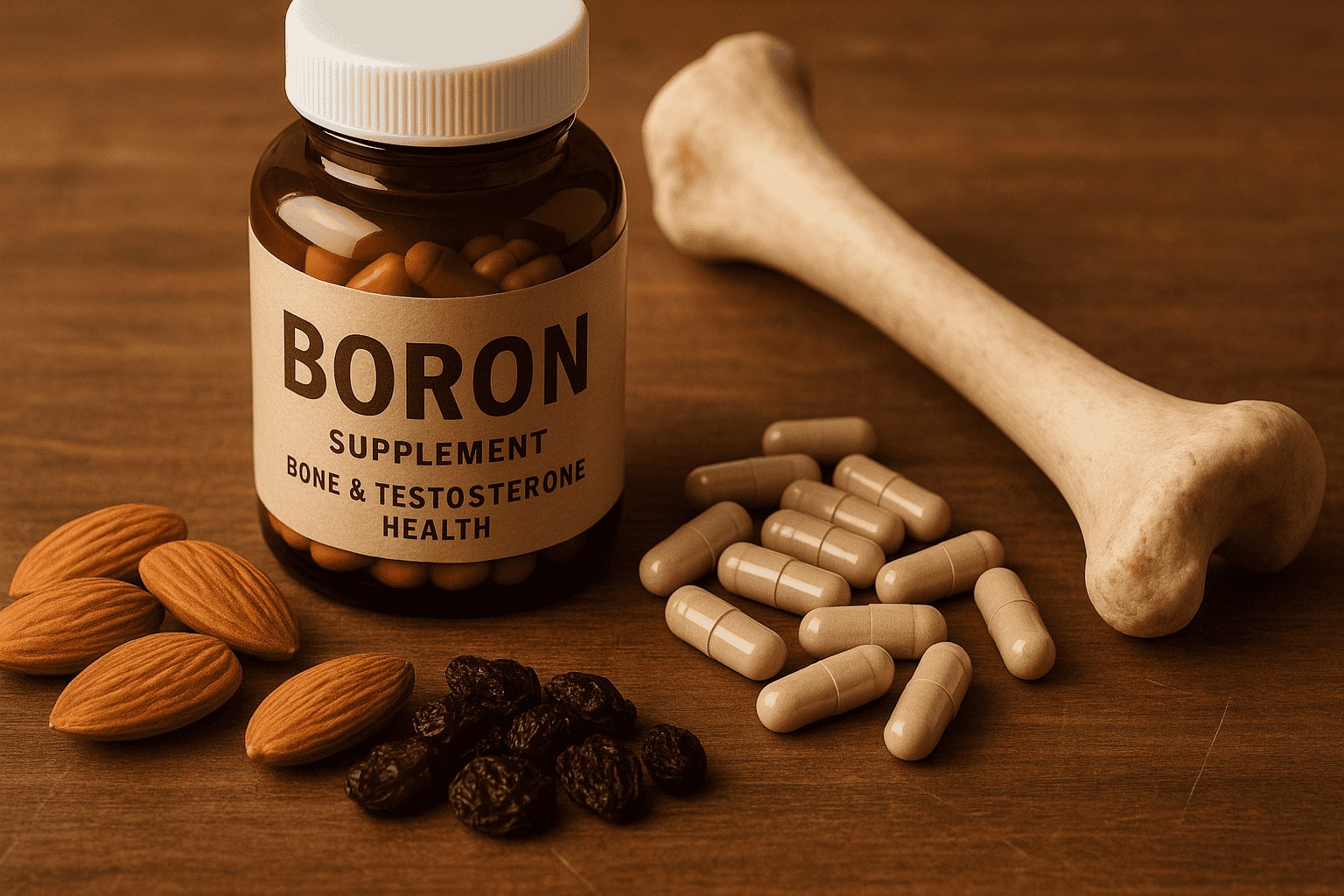
Boron Supplements: Bones, Testosterone, Dosing
Quick Answer: Boron is an underappreciated trace mineral that supports bone health, modestly influences sex hormones (testosterone and estrogen), reduces inflammatory arthritis markers, and enhances vitamin D activity. Most people get 1–3 mg/day from diet; supplements at 3–10 mg/day are generally safe and may offer meaningful benefits.
Boron occupies a peculiar position in nutritional science: it’s neither classified as an essential nutrient (no established RDA exists) nor is it considered nonessential — we simply know too little about its biochemistry despite compelling evidence that it affects multiple biological systems simultaneously. Research in the past two decades has positioned boron as a trace mineral with surprisingly broad physiological effects, from bone mineral density to inflammatory signaling to hormone metabolism.
This guide covers what boron does, who benefits from supplementation, the evidence base, and how to use it practically.
What Boron Does in the Body
Boron was long considered a plant nutrient with no clear role in mammals. That view has shifted significantly. Current research identifies boron as influencing:
Mineral metabolism: Boron appears to reduce urinary excretion of calcium, magnesium, and phosphorus — the minerals most important for bone mineralization. In a landmark 1987 study, postmenopausal women given 3 mg/day of boron showed markedly reduced calcium and magnesium losses in urine, and elevated estrogen and testosterone levels.
Vitamin D metabolism: Boron appears to inhibit 24-hydroxylase, the enzyme that degrades active vitamin D (1,25-dihydroxyvitamin D3). This effectively extends the half-life and activity of vitamin D. Animal studies confirm lower boron increases vitamin D turnover; higher boron preserves it.
Sex hormone modulation: Multiple studies show boron supplementation raises free testosterone and estrogen levels. The mechanism may involve reducing sex hormone binding globulin (SHBG) or directly affecting steroid hormone metabolism.
Anti-inflammatory effects: Boron reduces levels of inflammatory cytokines including TNF-α, IL-6, and hs-CRP in multiple studies. This may explain its observed benefits in inflammatory arthritis.
Cognitive function: Boron deficiency has been associated with impaired cognitive performance in EEG and psychomotor studies (Penland, 1994). The mechanism is unclear but may relate to mineral metabolism effects on neuronal function.
Boron and Bone Health
The bone health evidence for boron is among the strongest in its profile:
Calcium conservation: Boron significantly reduces urinary calcium excretion. This is clinically meaningful — calcium lost in urine can’t contribute to bone mineral density. By conserving calcium, boron effectively increases the available calcium for bone formation.
Magnesium retention: Similar urinary magnesium retention has been observed. Magnesium is required for proper calcium crystallization in bone matrix.
Vitamin D amplification: By extending vitamin D half-life, boron enhances calcium absorption from the gut — a second mechanism supporting bone density.
Clinical data:
- Nielsen et al. (1987) in FASEB Journal showed postmenopausal women supplemented with 3 mg/day boron had significantly elevated estradiol and testosterone levels and reduced urinary calcium/magnesium loss
- Epidemiological data from boron-deficient regions (parts of Israel and Transvaal) shows elevated arthritis and osteoporosis rates compared to boron-adequate regions
- A 2020 review in Integrative Medicine concluded boron supplementation is beneficial for bone health through multiple mechanisms, though large-scale RCT data is limited
Boron and Testosterone
This is the most popular reason for boron supplementation among men, particularly in fitness communities.
Evidence:
- A 2011 study in Journal of Trace Elements in Medicine and Biology found that 10 mg/day boron supplementation for one week increased free testosterone by 28.3%, decreased estrogen (estradiol) by 39%, reduced SHBG, and reduced inflammatory markers
- A 2010 study found similar testosterone elevations in male athletes supplementing with boron
- The mechanism appears to involve boron’s effects on sex hormone metabolism, SHBG binding capacity, or direct enzyme interactions in steroid synthesis pathways
Important context: These studies are small (6–8 participants in some cases). The testosterone increases are real but modest relative to exogenous testosterone therapies. Boron is not a dramatic testosterone booster — it’s a trace mineral correction that may bring hormone levels toward physiological optimum, particularly in people who are boron-deficient. Men with low-normal testosterone who are otherwise healthy may see modest improvements.
Relative to other testosterone-supporting supplements: Tongkat Ali and ashwagandha have more clinical trials behind their testosterone effects, but boron at 6–10 mg/day is a low-cost, low-risk complement.
Boron and Arthritis
Traditional medicine in boron-rich regions has used borax and boron compounds for arthritis for over a century. Modern research has examined this:
Rex Newnham’s work: A pioneer in boron-arthritis research, Newnham’s uncontrolled and controlled observations found that arthritis patients in boron-poor areas had higher disease rates, and that boron supplementation (6–9 mg/day as sodium tetraborate) reduced arthritis symptoms in a small double-blind trial.
Anti-inflammatory mechanism: Boron inhibits serine protease enzymes involved in inflammatory cascades. It also reduces production of reactive oxygen species and directly inhibits NF-κB-dependent inflammation in some models.
CRP and inflammation markers: Multiple human studies show boron supplementation reduces hs-CRP, IL-6, and TNF-α — relevant in both osteoarthritis and inflammatory arthritis.
Practical reality: The evidence is compelling but limited by study size. Boron isn’t arthritis treatment — it’s a supportive nutrient that may reduce inflammatory burden alongside standard treatment.
Boron and Brain Function
James Penland’s studies at USDA (1994) found that men and women on low-boron diets showed:
- Poorer performance on cognitive tasks (attention, memory)
- Altered EEG patterns (increased delta and theta, decreased alpha and beta) suggesting cognitive slowing
- Response to boron repletion with normalized EEG patterns
This doesn’t mean boron supplements make you smarter — it means adequate boron is needed for normal cognitive function, and deficiency may impair it. For those eating diets low in boron-containing foods (fruits, vegetables, nuts, legumes), supplementation may help maintain cognitive performance.
Dietary Sources and Deficiency
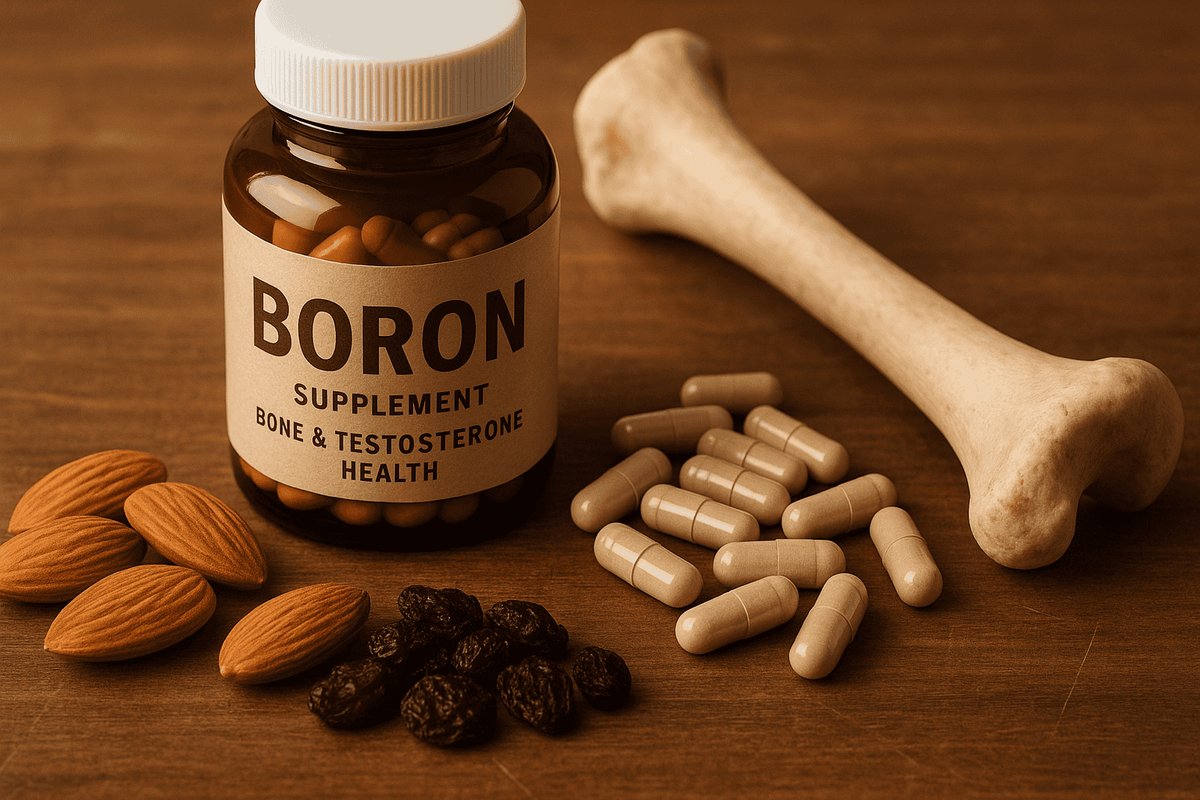
Boron is concentrated in plant foods:
| Source | Boron content |
|---|---|
| Prunes, ½ cup | 1.4 mg |
| Raisins, ½ cup | 1.1 mg |
| Almonds, 1 oz | 0.7 mg |
| Peanut butter, 2 tbsp | 0.5 mg |
| Red wine, 3.5 oz | 0.4 mg |
| Avocado, ½ | 0.7 mg |
| Chickpeas, ½ cup | 0.4 mg |
Typical dietary intake: 1–3 mg/day for those eating fruits, vegetables, and nuts regularly. People consuming low amounts of these foods may have intake at the lower end (0.5–1 mg/day).
No established RDA exists, but the USDA tentatively suggests 1–13 mg/day as a safe and adequate range based on available data.
Dosing and Safety
Typical supplement doses: 3–10 mg/day as boron citrate, boron glycinate, or calcium fructoborate (a naturally occurring form found in fruits)
Calcium fructoborate: This naturally occurring plant boron complex (found in plums and apples) has some evidence suggesting superior bioavailability compared to inorganic forms and has been specifically studied for arthritis and inflammation.
Safety: Boron has low toxicity at supplemental doses. The established Tolerable Upper Limit (UL) is 20 mg/day for adults. No significant adverse effects have been reported at supplement doses of 3–10 mg/day in clinical trials.
Who shouldn’t supplement: Those with hormonally-sensitive cancers should exercise caution with boron given its effects on sex hormone levels (consult oncologist). Kidney disease (boron is renally excreted).
Key Takeaways
- Boron is a trace mineral that reduces urinary calcium and magnesium loss, extends vitamin D activity, modulates sex hormones, and reduces inflammatory markers
- Evidence is strongest for bone health (mineral conservation + vitamin D) and modest testosterone/hormone effects in men
- Anti-inflammatory effects may benefit both osteoarthritis and inflammatory joint conditions
- Typical dietary intake is 1–3 mg/day from plant foods; supplementation at 3–10 mg/day is safe and may fill gaps
- Calcium fructoborate is the form with most specific arthritis research; boron glycinate or citrate are acceptable general forms
- No established RDA exists; UL is 20 mg/day; supplement doses of 3–10 mg are well within safe ranges
- Works synergistically with vitamin D, magnesium, and calcium for bone health
Frequently Asked Questions
Can boron raise testosterone significantly?
Modest increases in free testosterone (15–30%) have been documented in small studies at 6–10 mg/day. This is a real but limited effect, not comparable to pharmaceutical testosterone therapy. The most benefit is likely in men with low dietary boron intake. Think of it as correcting a nutritional gap rather than a testosterone booster per se.
Should I take boron with my vitamin D supplement?
Yes — this is one of the more evidence-supported combinations. Boron appears to extend vitamin D’s half-life by inhibiting its degradation enzyme. If you’re taking vitamin D and want to maximize its activity, boron at 3–6 mg/day is a reasonable complementary addition.
How long before boron shows effects?
Hormone effects have been observed within 1–2 weeks in some studies. Bone density changes require months to years to assess meaningfully. Anti-inflammatory effects may be apparent within 4–8 weeks.
Can women take boron supplements?
Yes — the research on bone health in postmenopausal women is particularly relevant. Boron’s estrogen-supporting effects are notable for postmenopausal women where estrogen decline accelerates bone loss. At 3–6 mg/day, it’s well-tolerated with no reported adverse effects in women.
Is boron the same as borax?
Borax (sodium tetraborate decahydrate) is a form of boron used historically and in some traditional medicine applications. Modern supplements use food-grade forms (calcium fructoborate, boron glycinate, boron citrate) that are safer and better characterized. Household borax is not a food supplement.
Does boron interact with medications?
No major drug interactions are established. Given its mild effects on sex hormone levels, those on hormone therapies should be aware of the theoretical interaction. Boron is renally excreted, so renal insufficiency warrants caution.
Sources
- Note: peer-reviewed support for this claim was not identified in available literature.
- Pizzorno L. “Nothing Boring About Boron.” Integrative Medicine: A Clinician’s Journal. 2015. https://pubmed.ncbi.nlm.nih.gov/26770156/
- Sacks D, Baxter B, Campbell BCV, Carpenter JS, Cognard C, et al (2018). Multisociety Consensus Quality Improvement Revised Consensus Statement for Endovascular Therapy of Acute Ischemic Stroke. International journal of stroke : official journal of the International Stroke Society. PMID: 29786478.
- Penland JG. “Dietary boron, brain function, and cognitive performance.” Environmental Health Perspectives. 1994. https://pubmed.ncbi.nlm.nih.gov/7889880/
- Scorei R, Rotaru P. “Calcium fructoborate—potential anti-inflammatory agent.” Biological Trace Element Research. 2011. https://pubmed.ncbi.nlm.nih.gov/21559810/


Leave a Reply