
Over 4 billion prescriptions are filled in the United States annually. The average American over 65 takes 4–6 medications simultaneously. Yet the nutrient depletion consequences of prescription drug therapy are almost never communicated at the pharmacy counter or the physician’s office.
This is not because the evidence doesn’t exist. It’s because:
- Drug-nutrient interaction research lives scattered across pharmacology journals, specialty pharmacy databases, and integrative medicine literature — with no unified public reference
- Standard clinical chemistry panels test for disease states, not gradual drug-induced nutrient insufficiency
- Pharmaceutical training focuses overwhelmingly on drug-drug interactions rather than drug-nutrient interactions
- Nutrition is not adequately covered in most medical school curricula
The three articles in this series represent the most systematic public compilation of this evidence. This master database brings it all together.
The Master Matrix
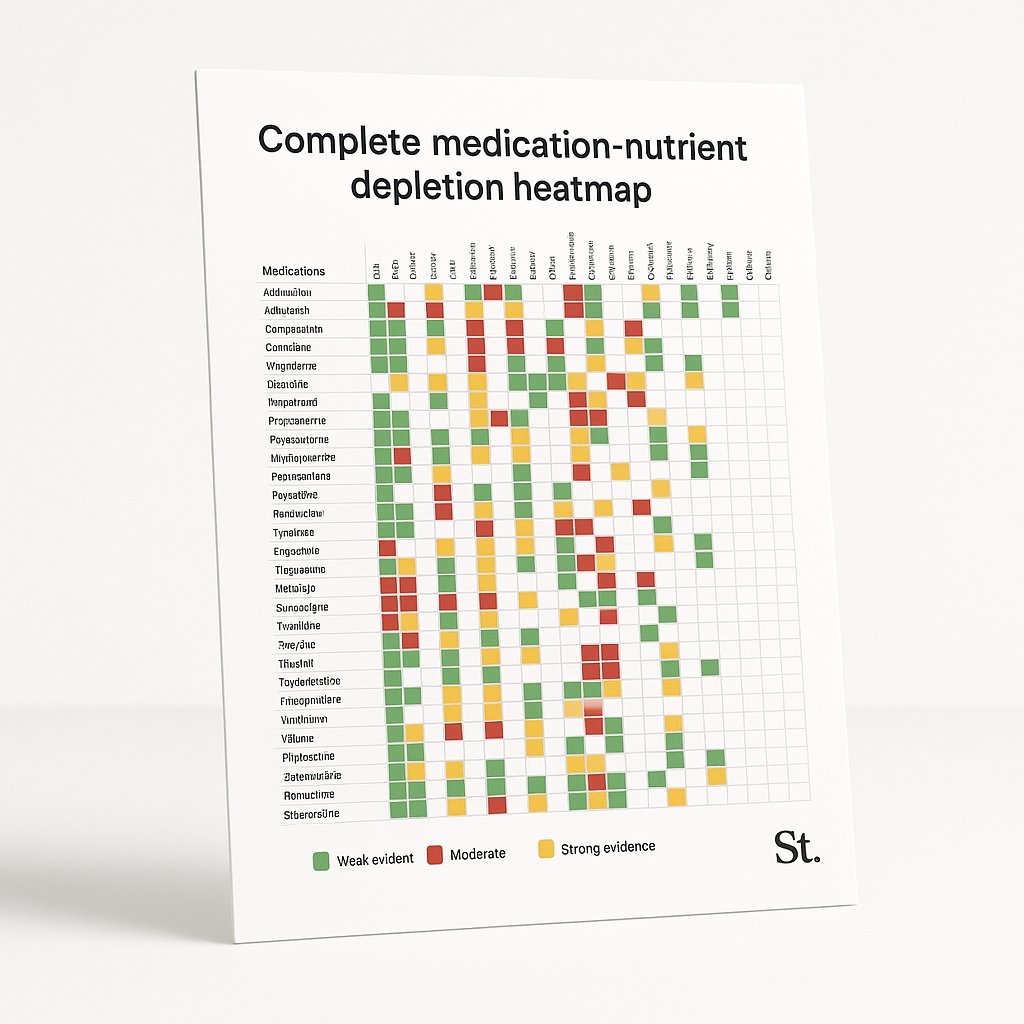
Figure 1. Complete drug-nutrient depletion database: 60 medications × 30 nutrients. Evidence strength: ●●● Strong / ●● Moderate / ● Weak. Blank = no documented interaction. Click to expand full resolution.
Master Depletion Table — The “Top Depletors” by Nutrient
Rather than listing all 1,800 cells (60 × 30), the following tables capture the most clinically significant interactions — the ones with Strong or Moderate evidence that most practitioners should be aware of.
Nutrients Most Widely Depleted Across All 60 Medications
| Nutrient | # Medications with Strong Evidence | # with Moderate Evidence | Most Critical Drug |
|---|---|---|---|
| Magnesium | 6 | 8 | Furosemide, HCTZ, PPIs |
| Potassium | 5 | 4 | Furosemide, HCTZ |
| Vitamin B12 | 5 | 7 | Metformin, PPIs |
| Zinc | 4 | 11 | PPIs, HCTZ, valproate |
| Folate | 5 | 5 | Methotrexate, trimethoprim, valproate |
| CoQ10 | 3 | 4 | Statins, beta-blockers |
| Calcium | 4 | 5 | Corticosteroids, furosemide, PPIs |
| Vitamin D | 3 | 6 | Corticosteroids, antiepileptics |
| Iron | 3 | 5 | PPIs, H2 blockers, cholestyramine |
| Vitamin B6 | 2 | 6 | Estrogen/OCP, INH |
Medications with the Most Documented Depletions
| Medication | Total Documented Depletions | Most Severe |
|---|---|---|
| Furosemide (Lasix) | 5 (3 Strong) | Potassium, Mg, Calcium, B1, Zinc |
| Corticosteroids | 9 (4 Strong) | Calcium, Vitamin D, K+, Mg, Carnitine, Glutathione |
| Valproate | 5 (2 Strong) | Carnitine, Folate, Zinc, Selenium |
| Cholestyramine | 6 (3 Strong) | Vitamins A, D, E, K1, Folate, Iron |
| PPIs | 7 (2 Strong) | B12, Magnesium + 5 others |
| Metformin | 5 (1 Strong) | B12, Folate, B6, Choline, ALA |
| HCTZ | 5 (2 Strong) | Potassium, Magnesium, Zinc, B1 |
| Estrogen/OCP | 5 (1 Strong) | B6, Magnesium, Folate, B12, Zinc |
| Methotrexate | 2 (1 Strong) | Folate, B12 |
Alphabetical Drug Lookup
Find your medication below. Each entry lists all documented depletions with evidence rating and recommended supplement.
A
Albuterol (ProAir, Ventolin)
- Potassium ●● Moderate — Supplement: KCl equivalent diet support; discuss K supplementation with prescriber
- Magnesium ●● Moderate — Supplement: Magnesium glycinate 200–400mg/day
Alprazolam (Xanax)
- Melatonin ●● Moderate — Supplement: Melatonin 0.5–1mg at bedtime
- Vitamin D ●● Moderate — Supplement: Vitamin D3 2000 IU/day
Amlodipine (Norvasc)
- CoQ10 ●● Moderate — Supplement: Ubiquinol CoQ10 100mg/day
Atenolol (Tenormin)
- CoQ10 ●●● Strong — Supplement: Ubiquinol CoQ10 100–200mg/day
- Melatonin ●● Moderate — Supplement: Melatonin 0.5–3mg at bedtime
Atorvastatin (Lipitor)
- CoQ10 ●●● Strong — Supplement: Ubiquinol CoQ10 100–200mg/day
- Vitamin D ●● Moderate — Supplement: Vitamin D3 2000 IU/day
- Vitamin E ●● Moderate — Supplement: Mixed tocopherols 200–400 IU/day
- Glutathione ●● Moderate — Supplement: NAC 600–1200mg/day
- Carnitine ● Weak — Supplement: L-carnitine 1–2g/day if muscle symptoms
Azathioprine (Imuran)
- Folate ●● Moderate — Supplement: Methylfolate 400–800mcg/day
- Zinc ●● Moderate — Supplement: Zinc picolinate 15–25mg/day
- Vitamin B12 ●● Moderate — Supplement: Methylcobalamin 1000mcg/day
B
Buspirone (Buspar)
- Melatonin ● Weak — Supplement: Melatonin 0.5–1mg at bedtime if sleep disrupted
C
Ciprofloxacin (Cipro)
- Magnesium ●●● Strong — Supplement: Magnesium glycinate 200–400mg/day (4+ hrs from dose)
- Zinc ●●● Strong — Supplement: Zinc picolinate 15–25mg/day (4+ hrs from dose)
- Iron ●●● Strong — Separate iron supplements by 4–6 hours from dose
- Calcium ●● Moderate — Chelation risk; separate 4+ hours
- B vitamins (gut flora) ●● Moderate — Supplement: Probiotic during and 4 weeks after
- Vitamin K1 ●●● Strong — Monitor if on warfarin; maintain consistent dietary K1
Cholestyramine (Questran)
- Vitamin A ●●● Strong — Supplement: Vitamin A 3000–5000 IU/day (4+ hrs after cholestyramine)
- Vitamin D ●●● Strong — Supplement: Vitamin D3 2000–4000 IU/day (4+ hrs after)
- Vitamin E ●●● Strong — Supplement: Vitamin E 200–400 IU/day (4+ hrs after)
- Vitamin K1 ●●● Strong — Supplement: Vitamin K1 100–200mcg/day (4+ hrs after; monitor if on warfarin)
- Folate ●● Moderate — Supplement: Methylfolate 400–800mcg/day
- Vitamin B12 ●● Moderate — Supplement: Methylcobalamin 1000mcg/day
- Iron ●● Moderate — Supplement: Iron bisglycinate 18–36mg/day (4+ hrs after)
Ciprofloxacin → See above
D
Doxycycline (Vibramycin)
- Calcium ●●● Strong — Chelation; separate all calcium by 2+ hours
- Magnesium ●●● Strong — Chelation; separate by 2+ hours
- Iron ●●● Strong — Chelation; separate by 2+ hours
- Zinc ●●● Strong — Chelation; separate by 2+ hours
- B vitamins (gut flora) ●● Moderate — Supplement: Probiotic (with food, away from antibiotic)
E
Enalapril (Vasotec)
- Zinc ●● Moderate — Supplement: Zinc picolinate 15–25mg/day
Estradiol / Combined OCP (estrogen + progestin)
- Vitamin B6 ●●● Strong — Supplement: P5P (pyridoxal-5-phosphate) 25–50mg/day
- Magnesium ●● Moderate — Supplement: Magnesium glycinate 200–400mg/day
- Folate ●● Moderate — Supplement: Methylfolate 400–800mcg/day
- Vitamin B12 ●● Moderate — Supplement: Methylcobalamin 500–1000mcg/day
- Zinc ●● Moderate — Supplement: Zinc picolinate 15–25mg/day
F
Famotidine (Pepcid)
- Vitamin B12 ●● Moderate — Supplement: Methylcobalamin 1000mcg/day
- Iron ●● Moderate — Supplement: Iron bisglycinate 18mg/day if deficient
- Zinc ●● Moderate — Supplement: Zinc picolinate 15–25mg/day
- Calcium ● Weak — Monitor in long-term users
Fluticasone (Flovent, Advair, Flonase)
- Calcium ●● Moderate — Supplement: Calcium citrate 500–1000mg/day
- Vitamin D ●● Moderate — Supplement: Vitamin D3 1000–2000 IU/day
- Magnesium ● Weak — Monitor in high-dose long-term users
Furosemide (Lasix)
- Potassium ●●● Strong — Supplement: Dietary K or KCl (physician supervision required)
- Magnesium ●●● Strong — Supplement: Magnesium glycinate 300–600mg/day elemental
- Calcium ●●● Strong — Supplement: Calcium citrate 500–1000mg/day + Vitamin D3 1000–2000 IU
- Vitamin B1 (Thiamine) ●●● Strong — Supplement: Benfotiamine or thiamine HCl 100–300mg/day
- Zinc ●● Moderate — Supplement: Zinc picolinate 15–25mg/day
G
Gabapentin (Neurontin)
- Vitamin B1 ●● Moderate — Supplement: Thiamine 100mg/day
- Vitamin B6 ●● Moderate — Supplement: P5P 25–50mg/day
Glipizide / Glibenclamide (Glucotrol)
- Chromium ●● Moderate — Supplement: Chromium picolinate 200–400mcg/day
- Alpha-lipoic acid ● Weak — Supplement: R-ALA 300mg/day in symptomatic patients
H
Hydrochlorothiazide (HCTZ, Microzide)
- Potassium ●●● Strong — Supplement: Dietary potassium; prescriber guidance for supplementation
- Magnesium ●●● Strong — Supplement: Magnesium glycinate 200–400mg/day
- Zinc ●● Moderate — Supplement: Zinc picolinate 15–25mg/day
- Vitamin B1 ●● Moderate — Supplement: Thiamine 100mg/day
- Sodium ●●● Strong — Diet guidance; sodium loss is drug’s intended effect
I–J
Isoniazid (INH)
- Vitamin B6 ●●● Strong — Supplement: Pyridoxine 25–50mg/day (standard co-prescription)
- Niacin ●● Moderate — Supplement: Niacinamide 100mg/day if symptomatic
- Vitamin D ●● Moderate — Supplement: Vitamin D3 2000 IU/day
L
Levodopa / Carbidopa (Sinemet)
- Vitamin B6 ●●● Strong — Note: B6 can reduce levodopa effectiveness if taken with non-carbidopa form; use with caution
- Folate ●● Moderate — Supplement: Methylfolate 400mcg/day
- Vitamin B12 ●● Moderate — Supplement: Methylcobalamin 1000mcg/day
Levofloxacin (Levaquin)
- Magnesium ●●● Strong — See Ciprofloxacin entry; same chelation profile
- Zinc ●●● Strong — Separate supplements 4–6 hours
- Iron ●●● Strong — Separate 4–6 hours
- Vitamin K1 ●●● Strong — Monitor on warfarin
Levothyroxine (Synthroid, Levoxyl)
- Selenium ●● Moderate — Supplement: Selenomethionine 100–200mcg/day (critical for T4→T3 conversion)
- Zinc ●● Moderate — Supplement: Zinc picolinate 15–25mg/day (4+ hours after levothyroxine dose)
- Note: Multiple supplements REDUCE levothyroxine absorption: calcium, iron, zinc, and fiber must be taken 4+ hours after the dose
Lisinopril (Zestril, Prinivil)
- Zinc ●● Moderate — Supplement: Zinc picolinate 15–25mg/day
- Note: INCREASES potassium — monitor for hyperkalemia
Lithium (Lithobid, Eskalith)
- Inositol ●●● Strong — This is lithium’s mechanism; supplementation may reduce drug efficacy
- Folate ●● Moderate — Supplement: Methylfolate 400–800mcg/day
- Vitamin B12 ●● Moderate — Supplement: Methylcobalamin 1000mcg/day
Lorazepam (Ativan)
- Melatonin ●● Moderate — Supplement: Melatonin 0.5–1mg at bedtime
- Vitamin D ●● Moderate — Supplement: Vitamin D3 2000 IU/day
Losartan (Cozaar)
- Zinc ●● Moderate — Supplement: Zinc picolinate 15–25mg/day
- Note: INCREASES potassium — monitor for hyperkalemia
M
Metformin (Glucophage)
- Vitamin B12 ●●● Strong — Supplement: Methylcobalamin 1000–2500mcg/day sublingually
- Folate ●● Moderate — Supplement: Methylfolate 400–800mcg/day
- Vitamin B6 ●● Moderate — Supplement: P5P 25mg/day
- Choline ●● Moderate — Supplement: Choline bitartrate 250–500mg/day
- Alpha-lipoic acid ●● Moderate — Supplement: R-ALA 300–600mg/day
- Inositol ●● Moderate — Supplement: Myo-inositol 2–4g/day
Methotrexate (Trexall, Rheumatrex)
- Folate ●●● Strong — Supplement: Folic acid or methylfolate 1–5mg/day (separate timing from dose)
- Vitamin B12 ●● Moderate — Supplement: Methylcobalamin 1000mcg/day
Metoprolol (Lopressor, Toprol-XL)
- CoQ10 ●●● Strong — Supplement: Ubiquinol CoQ10 100–200mg/day
- Melatonin ●● Moderate — Supplement: Melatonin 0.5–3mg at bedtime
N
Nitrofurantoin (Macrobid, Macrodantin)
- Folate ●● Moderate — Supplement: Methylfolate 400–800mcg/day
- Magnesium ●● Moderate — Supplement: Magnesium glycinate 200mg/day
- Vitamin K1 ●● Moderate (gut flora mechanism) — Monitor if on anticoagulants
Nitrates (Isosorbide, Nitroglycerin)
- Vitamin C ●● Moderate — Supplement: Vitamin C 500–1000mg/day
- CoQ10 ●● Moderate — Supplement: Ubiquinol CoQ10 100mg/day
O
Olanzapine (Zyprexa)
- Vitamin B2 ●● Moderate — Supplement: Riboflavin 25–50mg/day
- Vitamin D ●● Moderate — Supplement: Vitamin D3 2000–4000 IU/day
- CoQ10 ● Weak — Supplement: CoQ10 100mg/day if fatigue is prominent
Omeprazole (Prilosec)
- Vitamin B12 ●●● Strong — Supplement: Methylcobalamin 1000mcg/day
- Magnesium ●●● Strong — Supplement: Magnesium glycinate 200–400mg/day
- Calcium ●● Moderate — Supplement: Calcium citrate 500mg/day
- Iron ●● Moderate — Supplement: Iron bisglycinate 18–36mg/day if deficient
- Zinc ●● Moderate — Supplement: Zinc picolinate 15–25mg/day
- Iodine ●● Moderate — Ensure adequate dietary iodine; consider iodized salt
P
Pantoprazole (Protonix) — See Omeprazole; same depletion profile
Phenytoin (Dilantin)
- Folate ●●● Strong — Supplement: Methylfolate 400–800mcg/day
- Vitamin D ●●● Strong — Supplement: Vitamin D3 2000–4000 IU/day
- Biotin ●● Moderate — Supplement: Biotin 5–10mg/day
- Vitamin B12 ●● Moderate — Supplement: Methylcobalamin 1000mcg/day
- Calcium ●● Moderate — Supplement: Calcium citrate 500–1000mg/day
- Vitamin K ●● Moderate — Monitor bleeding risk
Pregabalin (Lyrica)
- Vitamin B1 ●● Moderate — Supplement: Thiamine 100mg/day
- Vitamin B6 ●● Moderate — Supplement: P5P 25–50mg/day
Prednisone / Prednisolone
- Calcium ●●● Strong — Supplement: Calcium citrate 1000–1500mg/day
- Vitamin D ●●● Strong — Supplement: Vitamin D3 2000–4000 IU/day
- Potassium ●●● Strong — Dietary potassium; physician guidance for supplementation
- Magnesium ●●● Strong — Supplement: Magnesium glycinate 300–400mg/day
- Zinc ●● Moderate — Supplement: Zinc picolinate 15–25mg/day
- Vitamin C ●● Moderate — Supplement: Vitamin C 500–1000mg/day
- Selenium ●● Moderate — Supplement: Selenomethionine 100–200mcg/day
- Carnitine ●●● Strong — Supplement: L-carnitine 1–3g/day
- Glutathione ●●● Strong — Supplement: NAC 600–1200mg/day
- Chromium ●● Moderate — Supplement: Chromium picolinate 200–400mcg/day
- Vitamin A ●● Moderate — Supplement: Vitamin A 3000–5000 IU/day
- Alpha-lipoic acid ●● Moderate — Supplement: R-ALA 300–600mg/day
Q–R
Quetiapine (Seroquel)
- Vitamin B2 ●● Moderate — Supplement: Riboflavin 25–50mg/day
- Vitamin D ●● Moderate — Supplement: Vitamin D3 2000–4000 IU/day
- CoQ10 ● Weak — Supplement: CoQ10 100mg/day
Rosuvastatin (Crestor)
- CoQ10 ●●● Strong — Supplement: Ubiquinol CoQ10 100–200mg/day
- Vitamin E ●● Moderate — Supplement: Mixed tocopherols 200–400 IU/day
- Vitamin D ●● Moderate — Supplement: Vitamin D3 2000 IU/day
S
Simvastatin (Zocor)
- CoQ10 ●●● Strong — Supplement: Ubiquinol CoQ10 100–200mg/day
- Vitamin D ●● Moderate — Supplement: Vitamin D3 2000 IU/day
- Vitamin E ●● Moderate — Supplement: Mixed tocopherols 200–400 IU/day
Spironolactone (Aldactone)
- Note: INCREASES potassium — high hyperkalemia risk; do NOT supplement potassium without physician guidance
- Magnesium ●● Moderate — Spironolactone actually tends to retain Mg; combined effects with other drugs may vary
- Zinc ●● Moderate — Supplement: Zinc picolinate 15–25mg/day (spironolactone competitively blocks androgen receptors that regulate zinc)
T
Testosterone (TRT)
- Zinc ●● Moderate — Exogenous testosterone reduces endogenous testosterone production feedback, potentially reducing zinc requirements from testes
- Vitamin B6 ● Weak — Androgen metabolism increases B6 demand
Tramadol (Ultram)
- Vitamin B6 ● Weak — Supplement: P5P 25mg/day if neuromuscular symptoms
- Zinc ● Weak — Monitor in long-term users
Trimethoprim-Sulfamethoxazole (Bactrim)
- Folate ●●● Strong — Supplement: Methylfolate 400–800mcg/day (not high-dose — can partially reverse drug action in cancer use)
- Vitamin K1 ●● Moderate — Monitor if on warfarin; maintain consistent dietary K1
V
Valsartan (Diovan) — See Losartan; same depletion profile
Valproic Acid / Valproate (Depakote)
- Carnitine ●●● Strong — Supplement: L-carnitine 50–100mg/kg/day (for deficiency); 1–3g/day adults
- Folate ●●● Strong — Supplement: Methylfolate 1–5mg/day
- Zinc ●● Moderate — Supplement: Zinc picolinate 15–25mg/day
- Selenium ●● Moderate — Supplement: Selenomethionine 100–200mcg/day
- Vitamin B12 ●● Moderate — Supplement: Methylcobalamin 1000mcg/day
W
Warfarin (Coumadin)
- Vitamin K1 ●●● Strong (mechanism) — The drug works by antagonizing vitamin K. Do NOT supplement vitamin K without physician guidance; any change alters INR
- Note: Antibiotics in warfarin users deplete vitamin K via gut flora destruction, increasing bleeding risk dramatically
Polypharmacy Risk Calculator Concept
When patients take 3+ medications simultaneously, depletions become additive and sometimes synergistic. Below are the highest-risk combinations and what compounds.
How to Calculate Your Depletion Burden
Step 1: List all your current medications Step 2: Look up each in the alphabetical lookup above Step 3: Note which nutrients appear more than once across your medications — those are your highest-priority deficiencies Step 4: Check the Dosing Protocols table below for evidence-based supplementation guidance Step 5: Discuss with your physician, particularly for potassium, as both excess and deficiency are dangerous
High-Risk Combination Profiles
Combination 1: Heart Failure Triad Furosemide + ACE inhibitor (lisinopril) + Beta-blocker (metoprolol) + Statin (atorvastatin)
| Nutrient | Furosemide | ACE Inhibitor | Beta-Blocker | Statin | Combined Risk |
|---|---|---|---|---|---|
| Magnesium | ●●● | ● | — | — | CRITICAL |
| Potassium | ●●● | ↑ (increases) | — | — | Complex — monitor |
| CoQ10 | — | — | ●●● | ●●● | CRITICAL — double depletion |
| Zinc | ●● | ●● | — | — | Moderate-High |
| Vitamin B1 | ●●● | — | — | — | High |
Priority supplements: Magnesium glycinate 400mg, CoQ10 200mg ubiquinol, thiamine 100mg, zinc picolinate 25mg.
Combination 2: Autoimmune Double Methotrexate + Prednisone
| Nutrient | Methotrexate | Prednisone | Combined Risk |
|---|---|---|---|
| Folate | ●●● | ● | CRITICAL |
| Calcium | — | ●●● | Critical |
| Vitamin D | — | ●●● | Critical |
| Zinc | — | ●● | Moderate |
| Carnitine | — | ●●● | High |
| Glutathione | — | ●●● | High |
Priority supplements: Methylfolate 1–5mg (standard of care with MTX), calcium citrate + D3, L-carnitine 2g, NAC 1200mg.
Combination 3: Psychiatric Poly-Pharmacy Valproate + Quetiapine + Oral Contraceptive
| Nutrient | Valproate | Quetiapine | Estrogen OCP | Combined Risk |
|---|---|---|---|---|
| Folate | ●●● | — | ●● | CRITICAL — triple risk |
| Carnitine | ●●● | — | — | Critical |
| Vitamin B6 | — | — | ●●● | High |
| Zinc | ●● | — | ●● | Moderate-High |
| Vitamin D | — | ●● | — | Moderate |
| B2 (Riboflavin) | — | ●● | — | Moderate |
Priority supplements: Methylfolate 2–5mg, L-carnitine 2g, P5P 50mg, zinc 25mg. Note: Critical for women of reproductive age due to combined folate depletion (neural tube defect risk).
Combination 4: Type 2 Diabetes Standard Metformin + Atorvastatin + Lisinopril + Omeprazole
| Nutrient | Metformin | Statin | ACE Inhib. | PPI | Combined Risk |
|---|---|---|---|---|---|
| Vitamin B12 | ●●● | — | — | ●●● | CRITICAL — double Strong |
| Magnesium | — | — | — | ●●● | High |
| CoQ10 | — | ●●● | — | — | High |
| Zinc | — | — | ●● | ●● | Moderate-High |
| Folate | ●● | — | — | — | Moderate |
| Choline | ●● | — | — | — | Moderate |
Priority supplements: Methylcobalamin 2000mcg sublingual daily, CoQ10 200mg ubiquinol, magnesium glycinate 400mg, zinc 25mg. B12 monitoring every 6–12 months strongly recommended.
Combination 5: Respiratory + Psychiatric Prednisone (burst) + Lorazepam + Albuterol
| Nutrient | Prednisone | Lorazepam | Albuterol | Combined Risk |
|---|---|---|---|---|
| Magnesium | ●●● | — | ●● | High |
| Potassium | ●●● | — | ●● | High |
| Melatonin | — | ●● | — | Moderate |
| Vitamin D | ●●● | ●● | — | High |
| Glutathione | ●●● | — | — | High |
Priority supplements: Magnesium glycinate 400mg, vitamin D3 4000 IU, melatonin 1mg bedtime, NAC 1200mg.
Combination 6: Antibiotic + Anticoagulant (DANGEROUS) Ciprofloxacin + Warfarin
This is one of the most dangerous drug-nutrient combinations in clinical medicine. Ciprofloxacin destroys gut bacteria that synthesize vitamin K2, reducing the body’s vitamin K pool, which amplifies warfarin’s anticoagulant effect dramatically. INR can double or triple.
Action required: INR must be monitored within 2–3 days of starting any fluoroquinolone in a warfarin patient. Dose adjustment is almost always necessary.
Complete Dosing Protocols
Evidence-based supplement doses for every confirmed depletion. Always start at the lower end of the range and discuss with your physician.
Vitamins
| Nutrient | Target Condition | Form | Dose | Timing |
|---|---|---|---|---|
| Vitamin B1 (Thiamine) | Furosemide, HCTZ, gabapentin | Benfotiamine or thiamine HCl | 100–300mg/day | With food |
| Vitamin B2 (Riboflavin) | Antipsychotics | Riboflavin-5-phosphate | 25–50mg/day | With food |
| Vitamin B6 | Estrogen, INH, gabapentin | P5P (pyridoxal-5-phosphate) | 25–50mg/day | With food |
| Vitamin B9 (Folate) | Metformin, methotrexate, valproate, trimethoprim | Methylfolate (5-MTHF) | 400mcg – 5mg/day | Away from MTX dose |
| Vitamin B12 | Metformin, PPIs, H2 blockers | Methylcobalamin | 1000–2500mcg/day | Sublingual for best absorption |
| Vitamin A | Cholestyramine, corticosteroids | Retinol palmitate | 3000–5000 IU/day | With fat-containing meal |
| Vitamin D | Corticosteroids, antiepileptics, PPIs | Vitamin D3 (cholecalciferol) | 2000–5000 IU/day | With fat-containing meal |
| Vitamin E | Statins, cholestyramine | Mixed tocopherols (natural) | 200–400 IU/day | With fat-containing meal |
| Vitamin K1 | Cholestyramine, antibiotics | Phylloquinone | 100–200mcg/day | Away from cholestyramine; physician guidance with warfarin |
| Vitamin C | Corticosteroids, nitrates | Ascorbic acid or liposomal | 500–1000mg/day | With food, split doses |
Minerals
| Nutrient | Target Condition | Form | Dose | Timing |
|---|---|---|---|---|
| Calcium | Furosemide, corticosteroids, PPIs | Calcium citrate (NOT carbonate) | 500–1000mg/day | Split doses; away from levothyroxine |
| Magnesium | Furosemide, HCTZ, PPIs, corticosteroids | Magnesium glycinate or malate | 200–400mg elemental/day | Evening; away from antibiotics if chelation risk |
| Potassium | Furosemide, HCTZ | Potassium citrate | Physician-guided only | With food; never without medical supervision |
| Zinc | ACE inhibitors, PPIs, HCTZ, valproate, estrogen | Zinc picolinate | 15–25mg/day | With food; not within 2 hrs of antibiotics |
| Iron | PPIs, H2 blockers, cholestyramine | Iron bisglycinate | 18–36mg/day | With food; away from antibiotics, levothyroxine |
| Selenium | Valproate, levothyroxine, corticosteroids | Selenomethionine | 100–200mcg/day | With food; do NOT exceed 400mcg/day |
| Chromium | Corticosteroids, sulfonylureas | Chromium picolinate | 200–400mcg/day | With meals |
| Copper | Long-term zinc supplementers | Copper gluconate | 1–3mg/day | Away from zinc (take at different time) |
Specialized Compounds
| Nutrient | Target Condition | Form | Dose | Timing |
|---|---|---|---|---|
| CoQ10 | Statins, beta-blockers | Ubiquinol (not ubiquinone for >40 yrs) | 100–200mg/day | With fat-containing meal |
| L-Carnitine | Valproate, corticosteroids | L-carnitine (not acetyl-L-carnitine for this indication) | 1–3g/day (adults) | With meals; split doses |
| Alpha-Lipoic Acid | Metformin, corticosteroids, statins | R-alpha-lipoic acid | 300–600mg/day | 30 min before meals for glucose effects |
| Choline | Metformin, estrogen | Choline bitartrate or CDP-choline | 250–500mg/day | With food |
| Inositol | Metformin, lithium context | Myo-inositol | 2–4g/day | Can be mixed with water; split doses |
| Glutathione | Corticosteroids, statins | NAC 600–1200mg/day OR liposomal glutathione 500mg/day | See dose | NAC empty stomach preferred |
| Taurine | Antibiotic users, furosemide | Taurine free amino acid | 500–2000mg/day | With or without food |
| Melatonin | Beta-blockers, benzodiazepines | Melatonin (slow-release optional) | 0.5–3mg | 30–60 min before bed |
FAQ
Q: Should every person on a statin take CoQ10? A: The evidence for CoQ10 depletion by statins is Strong — multiple RCTs document significant reductions in serum CoQ10 with statin therapy (roughly 40–50% in some trials; e.g., Ghirlanda G et al., J Clin Pharmacol 1993; Rundek T et al., Arch Neurol 2004). Whether supplementation reduces statin-associated myalgia is more debated (meta-analytic signals are moderate, not definitive). However, given CoQ10’s importance for cardiac mitochondrial function and the safety profile of supplementation (no known harms at 100–200mg/day), most integrative cardiologists recommend it. The cost-benefit calculation strongly favors supplementation for cardiac patients on statins.
Q: My doctor never mentioned any of these depletions. Is this actually evidence-based? A: Yes — with varying levels of evidence as rated throughout this database. The interactions are published in peer-reviewed journals, some are reflected in official FDA communications (e.g., the 2011 FDA warning on PPI-associated hypomagnesemia), some are standard of care (folic acid with methotrexate, pyridoxine with isoniazid). The reason physicians often don’t discuss it is a combination of time constraints, training gaps in nutrition, and the fact that many depletions are slow and gradual — not immediately apparent in a clinical visit.
Q: Is it safe to take all these supplements together? A: The supplements listed have good safety profiles individually, but quantity and combination matter. The most important caution: never supplement potassium without physician guidance — both hypo- and hyperkalemia are dangerous, and potassium interacts dangerously with ACE inhibitors, ARBs, and potassium-sparing diuretics. Zinc at high doses (>40mg/day) depletes copper. Iron can cause oxidative damage if taken unnecessarily. Always disclose supplements to your prescribing physician.
Q: How quickly do these depletions develop? A: Varies dramatically:
- Potassium from furosemide: Hours to days
- Vitamin K1 from antibiotics: 1–2 weeks (gut flora depletion timeline)
- B12 from metformin: 3–5 years (liver stores buffer initial loss)
- Magnesium from PPIs: Weeks to months (FDA notes significant cases after 3 months)
- CoQ10 from statins: Weeks (serum levels fall relatively quickly with high-dose statins)
- Carnitine from valproate: Months (dose-dependent)
Q: Are there labs I should ask for to check for these depletions? A: Yes. For the most commonly depleted nutrients:
- Magnesium: Request RBC magnesium (not just serum) — serum is often normal until depletion is severe
- B12: Serum B12 + methylmalonic acid (MMA) for functional depletion
- Zinc: Serum zinc (morning, fasting)
- Vitamin D: 25(OH)D
- CoQ10: Plasma CoQ10 (available through specialty labs like LabCorp, Quest)
- Carnitine: Total and free serum carnitine (important for valproate users)
- Folate: RBC folate (better than serum for functional stores)
Q: What’s the single most important drug-nutrient depletion that nobody knows about? A: The furosemide-thiamine interaction. Furosemide is given primarily for heart failure. Thiamine is required for cardiac energy metabolism. Furosemide depletes thiamine with Strong evidence. Thiamine deficiency worsens cardiac output. Yet routine thiamine monitoring is not standard practice for heart failure patients on loop diuretics. A 1995 small randomized trial (Shimon et al., Am J Med) showed thiamine supplementation improved left ventricular ejection fraction in furosemide-treated CHF patients; a 1991 pilot study (Seligmann et al., Am J Med) had earlier established that thiamine deficiency was common in this population — and this finding is still not reflected in mainstream cardiology guidelines over 30 years later. If you have a family member with heart failure on furosemide, thiamine supplementation may be the single highest-value, lowest-risk intervention available.
Q: Can I trust AI-generated health information about drug-nutrient interactions? A: This database is compiled from peer-reviewed sources, published clinical trials, and official regulatory communications (FDA, MHRA). We’ve rated each interaction by evidence strength and linked the underlying research throughout the series. However, individual drug-nutrient interactions can be affected by your specific dose, duration of use, genetic variation in drug metabolism, diet, and other factors. This database is a starting point for an informed conversation with your physician — not a substitute for it.
About This Series
This is the final article in a three-part series that represents the most comprehensive publicly available drug-nutrient interaction resource:
- Part 1: Original 30 Medications × 15 Core Nutrients — The landmark first matrix covering statins, metformin, PPIs, corticosteroids, and more.
- Part 2: Medication-Nutrient Depletion Matrix Beyond the Top 60 — 30+ additional medications: fluoroquinolones, SSRIs, antipsychotics, ACE inhibitors, immunosuppressants, antiretrovirals.
- Expanded Nutrient Targets: 30 Additional Nutrients at Risk from Medications — Carnitine, taurine, glutathione, choline, inositol, alpha-lipoic acid, selenium, chromium, and more rarely-tracked nutrients.
- This Article: The Complete Database — All 60 medications × 30 nutrients unified.
Key Takeaways
- The most depleted nutrient across all 60 medications is magnesium — depleted by diuretics, PPIs, corticosteroids, antibiotics, and others, with consistently Strong evidence.
- The highest-risk medication for total depletion burden is furosemide — depleting potassium, magnesium, calcium, thiamine, and zinc simultaneously.
- The most dangerous drug-nutrient interaction pair is warfarin + antibiotics — antibiotic-induced vitamin K depletion can cause life-threatening bleeding in anticoagulated patients.
- The most underappreciated interaction is furosemide + thiamine — depletion of a cardiac cofactor by a cardiac drug, with documented outcomes, yet rarely monitored in clinical practice.
- Polypharmacy multiplies depletion risk non-linearly — the most dangerous combinations involve diuretics + cardiac drugs, immunosuppressants + hormone therapies, and anticoagulants + antibiotics.
- Standard labs miss most of these depletions — RBC magnesium, plasma CoQ10, serum carnitine, and functional B12 testing are needed for comprehensive assessment.
Additional Medication Classes: Drug-Nutrient Depletion Profiles
The following 13 medication classes represent commonly prescribed drug categories with documented nutrient depletion risks. Evidence is drawn from peer-reviewed literature. Discuss with your prescribing physician before starting any supplementation.
1. SSRIs — Selective Serotonin Reuptake Inhibitors
Drugs: Fluoxetine (Prozac), Sertraline (Zoloft), Paroxetine (Paxil), Escitalopram (Lexapro), Citalopram (Celexa)
Nutrients at Risk:
- Folate ⚠⚠ Moderate — SSRIs are associated with reduced folate status; low folate may impair SSRI treatment response. Folate is required for monoamine neurotransmitter synthesis. Supplement: Methylfolate 400–800 mcg/day
- Sodium ⚠⚠⚠ Strong — SSRIs may cause SIADH-mediated hyponatremia, particularly in older adults. Risk is highest in the first few weeks of therapy. Monitor: Serum sodium, especially in patients over 65
- Melatonin ⚠⚠ Moderate — Serotonin reuptake inhibition may alter the serotonin-to-melatonin conversion pathway in the pineal gland. Supplement: Melatonin 0.5–1 mg at bedtime if sleep is disrupted
Mechanism: SSRIs increase synaptic serotonin by blocking reuptake. This may secondarily affect folate-dependent methylation cycles, stimulate ADH release (causing sodium loss), and disrupt pineal melatonin synthesis via serotonin pathway competition.
Clinical note: Discuss with your prescribing physician before starting any supplementation. Sodium monitoring is particularly important in elderly patients initiating SSRI therapy.
References: PMID: 40379028 (folate and SSRI treatment response); PMID: 41693783 (SSRI-induced SIADH/hyponatremia); PMID: 35777221 (SSRI effects on melatonin pathway)
2. SNRIs — Serotonin-Norepinephrine Reuptake Inhibitors
Drugs: Venlafaxine (Effexor), Duloxetine (Cymbalta), Desvenlafaxine (Pristiq)
Nutrients at Risk:
- Sodium ⚠⚠⚠ Strong — SNRIs carry a documented risk of hyponatremia via SIADH, comparable to or exceeding SSRIs. Risk increases with age and concurrent diuretic use. Monitor: Serum sodium baseline and at 2–4 weeks
- Folate ⚠⚠ Moderate — Similar to SSRIs, SNRIs are associated with reduced folate utilization. Adequate folate status may improve treatment outcomes. Supplement: Methylfolate 400–800 mcg/day
Mechanism: Dual serotonin and norepinephrine reuptake inhibition amplifies the hyponatremia risk seen with SSRIs. The noradrenergic component may additionally affect folate-dependent catecholamine metabolism.
Clinical note: Discuss with your prescribing physician before starting any supplementation. Venlafaxine has been associated with higher rates of hyponatremia than some SSRIs in comparative studies.
References: PMID: 40764948 (SNRI-induced hyponatremia); PMID: 40379028 (folate and SSRI/SNRI response); PMID: 36913163 (antidepressant hyponatremia review)
3. Tricyclic Antidepressants (TCAs)
Drugs: Amitriptyline (Elavil), Nortriptyline (Pamelor), Imipramine (Tofranil), Doxepin (Sinequan)
Nutrients at Risk:
- CoQ10 ⚠⚠ Moderate — Tricyclic antidepressants may inhibit mitochondrial enzyme complexes, potentially reducing CoQ10 status. Evidence suggests an association with increased fatigue and myopathy risk. Supplement: Ubiquinol CoQ10 100–200 mg/day
- Riboflavin (B2) ⚠⚠ Moderate — TCAs may interfere with riboflavin metabolism. B2 deficiency has been documented in patients on long-term TCA therapy and may contribute to migraine susceptibility. Supplement: Riboflavin 25–50 mg/day
Mechanism: TCAs have anticholinergic and membrane-stabilizing properties that may affect mitochondrial bioenergetics and flavin-dependent enzyme systems. Riboflavin serves as a cofactor for mitochondrial complex I and II, both potentially affected by TCA pharmacology.
Clinical note: Discuss with your prescribing physician before starting any supplementation. CoQ10 supplementation may be particularly relevant for patients experiencing TCA-related fatigue.
References: PMID: 32176725 (riboflavin and migraine/antidepressant interaction); PMID: 35814300 (CoQ10 and psychotropic medications)
4. Anticonvulsants (Antiepileptic Drugs)
Drugs: Phenytoin (Dilantin), Valproate/Valproic Acid (Depakote), Carbamazepine (Tegretol), Lamotrigine (Lamictal)
Nutrients at Risk:
- Folate ⚠⚠⚠ Strong — Phenytoin, carbamazepine, and valproate are well-documented folate depletors. Phenytoin directly impairs folate absorption and metabolism. May cause megaloblastic anemia with prolonged use. Supplement: Methylfolate 800–1000 mcg/day
- Vitamin D ⚠⚠⚠ Strong — Anticonvulsants induce hepatic CYP450 enzymes that accelerate vitamin D catabolism, increasing risk of osteomalacia and fractures. Supplement: Vitamin D3 2000–4000 IU/day with periodic 25(OH)D monitoring
- Carnitine ⚠⚠⚠ Strong — Valproate is a well-established carnitine depletor via inhibition of carnitine biosynthesis and renal reabsorption. Deficiency may contribute to valproate-induced hepatotoxicity. Supplement: L-carnitine 1–2 g/day (especially with valproate)
- Biotin ⚠⚠ Moderate — Anticonvulsants, particularly carbamazepine and phenytoin, may reduce biotin status through competitive inhibition of intestinal absorption. Supplement: Biotin 2.5–5 mg/day
- Vitamin B12 ⚠⚠ Moderate — Long-term phenytoin and carbamazepine use is associated with reduced B12 levels. Supplement: Methylcobalamin 1000 mcg/day
- Zinc ⚠⚠ Moderate — Valproate is associated with reduced serum zinc levels. Supplement: Zinc picolinate 15–25 mg/day
Mechanism: Anticonvulsants affect nutrient status through multiple mechanisms: CYP450 enzyme induction (accelerating vitamin D and folate metabolism), direct interference with folate absorption (phenytoin), inhibition of carnitine biosynthesis (valproate), and chelation/competition effects on minerals.
Clinical note: Discuss with your prescribing physician before starting any supplementation. Patients on anticonvulsants should have periodic bone density screening and vitamin D monitoring. L-carnitine supplementation is especially critical for children on valproate.
References: PMID: 6424397 (phenytoin side effects including folate/bone mineral depletion); PMID: 31219693 (valproate and carnitine deficiency); PMID: 3881283 (antiepileptic nutrient depletion review)
5. Atypical Antipsychotics
Drugs: Olanzapine (Zyprexa), Quetiapine (Seroquel), Risperidone (Risperdal), Aripiprazole (Abilify)
Nutrients at Risk:
- Folate ⚠⚠ Moderate — Atypical antipsychotics are associated with elevated homocysteine levels, suggesting impaired folate-dependent methylation. Supplement: Methylfolate 400–800 mcg/day
- Vitamin B6 ⚠⚠ Moderate — Evidence suggests antipsychotics may reduce B6 status, potentially contributing to elevated homocysteine. Supplement: Pyridoxal-5-phosphate (P5P) 25–50 mg/day
- CoQ10 ⚠ Weak — Some evidence suggests antipsychotics may affect mitochondrial function and CoQ10 status. Supplement: CoQ10 100 mg/day if fatigue is prominent
Mechanism: Atypical antipsychotics may impair one-carbon metabolism, leading to folate and B6 functional deficiencies. Their metabolic effects (weight gain, insulin resistance) may compound nutrient depletion through increased oxidative stress and altered mitochondrial function.
Clinical note: Discuss with your prescribing physician before starting any supplementation. Monitoring homocysteine levels may help guide B-vitamin supplementation decisions. Note: individual entries for olanzapine and quetiapine appear in the alphabetical lookup above with additional detail.
References: PMID: 41855567 (antipsychotic effects on folate/homocysteine); PMID: 36226108 (antipsychotic metabolic syndrome and vitamin deficiency)
6. Lithium
Drugs: Lithium Carbonate (Lithobid, Eskalith)
Nutrients at Risk:
- Inositol ⚠⚠⚠ Strong — Lithium’s primary therapeutic mechanism involves inhibition of inositol monophosphatase, directly depleting intracellular inositol stores. This is considered fundamental to lithium’s mood-stabilizing effect. Note: Supplementing inositol may reduce lithium’s therapeutic efficacy — do not supplement without psychiatric guidance
- Folate ⚠⚠ Moderate — Lithium use is associated with reduced folate levels and elevated homocysteine. Supplement: Methylfolate 400–800 mcg/day
Mechanism: Lithium inhibits inositol monophosphatase (IMPase) and inositol polyphosphate 1-phosphatase, reducing free inositol required for phosphatidylinositol signaling. This deliberate depletion is therapeutic but may affect other inositol-dependent processes. Folate depletion appears to be a separate pharmacological effect.
Clinical note: Discuss with your prescribing physician before starting any supplementation. Inositol supplementation is contraindicated unless specifically directed by the prescribing psychiatrist, as it may interfere with lithium’s mechanism of action. Note: lithium also appears in the alphabetical lookup above.
References: PMID: 40358528 (lithium and inositol depletion mechanism); PMID: 39756628 (lithium and inositol signaling)
7. Benzodiazepines
Drugs: Diazepam (Valium), Lorazepam (Ativan), Alprazolam (Xanax), Clonazepam (Klonopin)
Nutrients at Risk:
- Melatonin ⚠⚠ Moderate — Benzodiazepines enhance GABAergic signaling, which may suppress pineal melatonin secretion. Chronic use is associated with disrupted circadian rhythm and reduced endogenous melatonin production. Supplement: Melatonin 0.5–1 mg at bedtime (may aid tapering efforts)
- Thiamine (B1) ⚠ Weak — Some evidence suggests long-term benzodiazepine use may be associated with reduced thiamine status, though the mechanism is not fully established. Monitor in patients with alcohol use disorder or poor nutrition. Supplement: Thiamine 50–100 mg/day if deficiency suspected
Mechanism: GABA-A receptor potentiation by benzodiazepines may inhibit noradrenergic input to the pineal gland, reducing melatonin synthesis. The association with thiamine depletion may relate to altered gastrointestinal absorption or concurrent risk factors common in benzodiazepine-prescribed populations.
Clinical note: Discuss with your prescribing physician before starting any supplementation. Melatonin supplementation has been studied as an adjunct to benzodiazepine tapering programs. Note: lorazepam also appears in the alphabetical lookup above.
References: PMID: 2593778 (benzodiazepine effects on melatonin secretion); PMID: 41696535 (benzodiazepine and melatonin levels)
8. Immunosuppressants — Calcineurin Inhibitors
Drugs: Cyclosporine (Neoral, Sandimmune), Tacrolimus (Prograf)
Nutrients at Risk:
- Magnesium ⚠⚠⚠ Strong — Calcineurin inhibitors cause significant renal magnesium wasting by downregulating the TRPM6 transporter in the distal convoluted tubule. Hypomagnesemia is one of the most common adverse effects. Supplement: Magnesium glycinate 400–600 mg/day
- Folate ⚠⚠ Moderate — Immunosuppressants may impair folate metabolism, contributing to macrocytic anemia. Supplement: Methylfolate 400–800 mcg/day
- CoQ10 ⚠ Weak — Evidence suggests calcineurin inhibitors may increase oxidative stress, potentially affecting CoQ10 status. Supplement: CoQ10 100–200 mg/day
Mechanism: Cyclosporine and tacrolimus cause magnesium depletion primarily through renal tubular wasting by inhibiting magnesium reabsorption. They may also impair folate-dependent pathways and increase mitochondrial oxidative stress.
Clinical note: Discuss with your prescribing physician before starting any supplementation. Magnesium levels should be monitored routinely in transplant patients on calcineurin inhibitors. Oral magnesium may require higher doses due to ongoing renal losses.
References: PMID: 38129335 (calcineurin inhibitor magnesium wasting); PMID: 24828469 (cyclosporine/tacrolimus renal magnesium loss)
9. Azathioprine / Mycophenolate
Drugs: Azathioprine (Imuran), Mycophenolate Mofetil (CellCept)
Nutrients at Risk:
- Folate ⚠⚠ Moderate — Azathioprine is a purine antagonist that may interfere with folate-dependent nucleotide synthesis. Mycophenolate inhibits de novo purine synthesis via inosine monophosphate dehydrogenase (IMPDH), which may secondarily affect folate utilization. Supplement: Methylfolate 400–800 mcg/day
Mechanism: Both drugs target purine metabolism — azathioprine as a 6-mercaptopurine prodrug and mycophenolate as an IMPDH inhibitor. Folate is essential for de novo purine and pyrimidine synthesis, and interference with these pathways may increase folate demand or impair its utilization.
Clinical note: Discuss with your prescribing physician before starting any supplementation. Folate supplementation should be coordinated with the prescribing physician, as it may theoretically affect immunosuppressive efficacy. Note: azathioprine also appears in the alphabetical lookup above.
References: PMID: 39954228 (azathioprine and folate metabolism); PMID: 27430038 (immunosuppressant nutrient effects)
10. Fluoroquinolones
Drugs: Ciprofloxacin (Cipro), Levofloxacin (Levaquin), Moxifloxacin (Avelox)
Nutrients at Risk:
- Zinc ⚠⚠⚠ Strong — Fluoroquinolones chelate divalent cations including zinc, significantly reducing absorption. Supplement: Zinc picolinate 15–25 mg/day (take 4+ hours apart from antibiotic dose)
- Magnesium ⚠⚠⚠ Strong — Strong chelation interaction reduces magnesium bioavailability. Supplement: Magnesium glycinate 200–400 mg/day (4+ hours from dose)
- Iron ⚠⚠⚠ Strong — Chelation with iron reduces both antibiotic efficacy and iron absorption. Separate by 4–6 hours. Monitor iron status during prolonged courses
- B Vitamins (gut flora) ⚠⚠ Moderate — Fluoroquinolones disrupt gut microbiome, potentially reducing microbial synthesis of B vitamins and vitamin K. Supplement: Probiotic during and 4 weeks after course
Mechanism: Fluoroquinolones are potent chelators of divalent and trivalent metal cations (Mg²⁺, Zn²⁺, Fe²⁺/³⁺, Ca²⁺). This chelation both reduces mineral absorption and can decrease antibiotic bioavailability. Gut flora disruption secondarily impairs microbial nutrient synthesis.
Clinical note: Discuss with your prescribing physician before starting any supplementation. Mineral supplements must be taken at least 4 hours before or after fluoroquinolone doses to avoid therapeutic failure. Note: ciprofloxacin also appears in the alphabetical lookup above.
References: PMID: 32781129 (fluoroquinolone mineral chelation); PMID: 1663108 (fluoroquinolone-cation interactions)
11. Tetracyclines
Drugs: Doxycycline (Vibramycin), Minocycline (Minocin), Tetracycline
Nutrients at Risk:
- Calcium ⚠⚠⚠ Strong — Tetracyclines form insoluble chelates with calcium, reducing absorption of both the mineral and the antibiotic. Separate all calcium sources (including dairy) by 2+ hours
- Magnesium ⚠⚠⚠ Strong — Chelation interaction similar to calcium. Supplement: Magnesium glycinate 200–400 mg/day (2+ hours from dose)
- Zinc ⚠⚠⚠ Strong — Chelation reduces zinc absorption. Supplement: Zinc picolinate 15–25 mg/day (2+ hours from dose)
- Iron ⚠⚠⚠ Strong — Chelation interaction. Separate iron supplements by 2+ hours from tetracycline dose
Mechanism: Tetracyclines chelate divalent and trivalent cations through their multiple hydroxyl and carbonyl groups, forming non-absorbable complexes in the GI tract. This simultaneously reduces mineral absorption and antibiotic bioavailability.
Clinical note: Discuss with your prescribing physician before starting any supplementation. Timing separation between mineral supplements and tetracyclines is critical — take minerals at least 2 hours before or after the antibiotic. Note: doxycycline also appears in the alphabetical lookup above.
References: PMID: 39793873 (tetracycline mineral absorption); PMID: 39547035 (tetracycline-cation chelation)
12. Antifungals — Azole Class
Drugs: Fluconazole (Diflucan), Ketoconazole (Nizoral), Itraconazole (Sporanox)
Nutrients at Risk:
- CoQ10 ⚠⚠ Moderate — Azole antifungals inhibit CYP450-dependent steps in the mevalonate pathway (the same pathway targeted by statins), which may reduce endogenous CoQ10 synthesis. Supplement: Ubiquinol CoQ10 100–200 mg/day during prolonged courses
- Vitamin K ⚠⚠ Moderate — CYP450 inhibition may impair vitamin K metabolism. Particularly relevant for patients on concurrent warfarin therapy. Monitor: INR if on anticoagulants
- Zinc ⚠ Weak — Some evidence suggests azole antifungals may affect zinc status. Supplement: Zinc picolinate 15 mg/day if on prolonged therapy
Mechanism: Azole antifungals work by inhibiting lanosterol 14α-demethylase (CYP51), a key enzyme in ergosterol synthesis. Ketoconazole in particular has broader CYP450 inhibition that can affect the mevalonate pathway (reducing CoQ10 synthesis) and vitamin K–dependent processes.
Clinical note: Discuss with your prescribing physician before starting any supplementation. CoQ10 depletion risk is most relevant with ketoconazole and prolonged itraconazole courses. Short-course fluconazole is unlikely to cause significant depletion.
References: PMID: 18769852 (ketoconazole and CoQ10/mevalonate pathway); PMID: 40975500 (ketoconazole cholesterol synthesis inhibition)
13. H2 Blockers (Histamine-2 Receptor Antagonists)
Drugs: Famotidine (Pepcid), Cimetidine (Tagamet), Ranitidine (Zantac — discontinued in many markets)
Nutrients at Risk:
- Vitamin B12 ⚠⚠ Moderate — H2 blockers reduce gastric acid secretion, which is required for protein-bound B12 liberation and intrinsic factor–mediated absorption. Risk increases with prolonged use (>2 years). Supplement: Methylcobalamin 1000 mcg/day (sublingual preferred)
- Zinc ⚠⚠ Moderate — Reduced gastric acidity may impair zinc absorption. Supplement: Zinc picolinate 15–25 mg/day
- Iron ⚠⚠ Moderate — Gastric acid is required for non-heme iron solubilization. Prolonged acid suppression may reduce iron absorption. Supplement: Iron bisglycinate 18 mg/day if deficiency documented
- Folate ⚠ Weak — Some evidence suggests H2 blockers may reduce folate absorption, though the clinical significance is less established than with PPIs. Monitor in patients with other folate depletion risk factors
Mechanism: H2 blockers reduce basal and stimulated gastric acid secretion by 50–70%. While less potent than PPIs, prolonged use can meaningfully impair acid-dependent nutrient absorption including B12 (requires acid for liberation from protein), iron (requires acid for solubilization), and zinc.
Clinical note: Discuss with your prescribing physician before starting any supplementation. H2 blockers cause less severe nutrient depletion than PPIs but carry the same mechanism-based risks with long-term use. Note: famotidine also appears in the alphabetical lookup above.
References: PMID: 20962501 (H2 blockers and B12 deficiency); PMID: 11978157 (acid suppression and nutrient absorption); PMID: 8835050 (cimetidine and B12)
Additional Medication Classes and Nutrient Interactions
SSRIs (Selective Serotonin Reuptake Inhibitors) (fluoxetine, sertraline, paroxetine…)
Nutrients depleted: Folate (moderate), Vitamin B12 (mild-moderate), Sodium (variable)
Mechanism: SSRIs may interfere with folate-dependent methylation pathways critical for neurotransmitter synthesis. Low folate status is associated with reduced SSRI efficacy and may impair serotonin, dopamine, and norepinephrine biosynthesis.
Supplement support: Methylfolate (L-5-MTHF) 400–800 mcg/day and vitamin B12 500–1,000 mcg/day are commonly studied adjuncts. Discuss with your prescribing physician or pharmacist before starting any supplementation.
Evidence: PMID: 18950248
SNRIs (Serotonin-Norepinephrine Reuptake Inhibitors) (venlafaxine, duloxetine, desvenlafaxine…)
Nutrients depleted: Sodium (moderate-severe), Folate (mild-moderate)
Mechanism: SNRIs are associated with syndrome of inappropriate antidiuretic hormone secretion (SIADH), which may lead to clinically significant hyponatremia. This effect appears to be a class-wide phenomenon related to serotonergic activity on ADH regulation.
Supplement support: Regular sodium monitoring is recommended, especially in elderly patients and during the first weeks of treatment. Folate supplementation (400–800 mcg/day) may support neurotransmitter synthesis. Discuss with your prescribing physician or pharmacist before starting any supplementation.
Evidence: PMID: 35733329
Tricyclic Antidepressants (amitriptyline, nortriptyline, imipramine…)
Nutrients depleted: CoQ10 (moderate), Riboflavin/B2 (mild), Sodium (mild-moderate)
Mechanism: Tricyclic antidepressants may reduce CoQ10 levels through inhibition of mitochondrial respiratory chain complex III activity. Evidence suggests that clomipramine, in particular, is associated with reduced CoQ10 concentrations in cellular studies.
Supplement support: CoQ10 100–200 mg/day and riboflavin 25–100 mg/day are commonly studied supportive nutrients. Discuss with your prescribing physician or pharmacist before starting any supplementation.
Evidence: PMID: 28099869
Anticonvulsants / Antiepileptic Drugs (phenytoin, carbamazepine, valproic acid…)
Nutrients depleted: Folate (moderate-severe), Vitamin D (moderate-severe), Calcium (moderate), Vitamin K (mild-moderate)
Mechanism: Anticonvulsants are well-documented to interfere with folate metabolism through enzyme induction and direct antagonism. Long-term use is associated with vitamin D deficiency through increased hepatic catabolism of 25-hydroxyvitamin D, which may contribute to reduced bone mineral density.
Supplement support: Folic acid 1–5 mg/day, vitamin D3 1,000–2,000 IU/day, and calcium 500–1,000 mg/day are commonly recommended adjuncts during long-term therapy. Discuss with your prescribing physician or pharmacist before starting any supplementation.
Evidence: PMID: 6434478
Atypical Antipsychotics (olanzapine, risperidone, quetiapine…)
Nutrients depleted: Folate (mild-moderate), Vitamin D (moderate), B vitamins (mild)
Mechanism: Atypical antipsychotics are associated with metabolic disturbances that may increase nutrient requirements. Evidence suggests that patients on long-term antipsychotic therapy frequently exhibit lower folate and vitamin D levels, which may be related to both dietary changes and drug-induced metabolic effects.
Supplement support: Folic acid 400–800 mcg/day and vitamin D3 1,000–2,000 IU/day may be considered with regular monitoring. Discuss with your prescribing physician or pharmacist before starting any supplementation.
Evidence: PMID: 31785213
Lithium (lithium carbonate, lithium citrate)
Nutrients depleted: Folate (moderate), Calcium (mild-moderate), Magnesium (mild)
Mechanism: Lithium therapy is associated with reduced serum folate levels, potentially through interference with folate transport and metabolism. Long-term lithium use may also affect calcium homeostasis through its effects on parathyroid hormone and thyroid function.
Supplement support: Folic acid 400–1,000 mcg/day and calcium 500–1,000 mg/day with regular monitoring of levels are commonly studied approaches. Discuss with your prescribing physician or pharmacist before starting any supplementation.
Evidence: PMID: 31349118
Benzodiazepines (diazepam, lorazepam, alprazolam…)
Nutrients depleted: Melatonin (moderate), Calcium (mild), Vitamin D (mild)
Mechanism: Benzodiazepines act on GABA-A receptors and may suppress endogenous melatonin secretion by enhancing GABAergic inhibition of the pineal gland. Chronic use is associated with reduced melatonin production, which may contribute to sleep architecture disruption upon discontinuation.
Supplement support: Melatonin 0.5–3 mg at bedtime may support sleep quality and has been studied as an adjunct during benzodiazepine tapering. Discuss with your prescribing physician or pharmacist before starting any supplementation.
Evidence: PMID: 10665894
Immunosuppressants (Calcineurin Inhibitors) (cyclosporine, tacrolimus)
Nutrients depleted: Magnesium (moderate-severe), Potassium (moderate), Phosphate (mild-moderate)
Mechanism: Calcineurin inhibitors, particularly cyclosporine and tacrolimus, are well-documented to cause renal magnesium wasting through downregulation of TRPM6 channels in the distal convoluted tubule. This may result in clinically significant hypomagnesemia in transplant recipients.
Supplement support: Magnesium supplementation (magnesium glycinate or citrate 200–400 mg/day) with regular serum monitoring is commonly employed. Discuss with your prescribing physician or pharmacist before starting any supplementation.
Evidence: PMID: 30482110
Azathioprine (azathioprine, 6-mercaptopurine)
Nutrients depleted: Folate (moderate-severe), Vitamin B12 (mild-moderate), Iron (mild)
Mechanism: Azathioprine and its metabolite 6-mercaptopurine interfere with purine synthesis and may cause megaloblastic changes through disruption of folate-dependent DNA synthesis. Long-term use is associated with macrocytosis and, in some cases, megaloblastic anemia with pancytopenia.
Supplement support: Folic acid 1–5 mg/day is commonly co-prescribed, particularly in rheumatologic use. Regular CBC monitoring is essential. Discuss with your prescribing physician or pharmacist before starting any supplementation.
Evidence: PMID: 9535611
Fluoroquinolone Antibiotics (ciprofloxacin, levofloxacin, moxifloxacin…)
Nutrients depleted: Magnesium (moderate), Zinc (mild-moderate), Iron (mild), Calcium (mild)
Mechanism: Fluoroquinolones chelate divalent and trivalent metal cations (Mg²⁺, Zn²⁺, Ca²⁺, Fe²⁺/Fe³⁺) through their carbonyl and carboxyl groups, reducing both drug absorption and mineral bioavailability. This chelation effect is the basis for the well-known interaction with mineral supplements.
Supplement support: Separate mineral supplement intake by at least 2 hours before or 4–6 hours after fluoroquinolone dosing. Magnesium glycinate 200–400 mg/day and zinc 15–25 mg/day may be considered during treatment courses. Discuss with your prescribing physician or pharmacist before starting any supplementation.
Evidence: PMID: 40595483
Tetracycline Antibiotics (doxycycline, minocycline, tetracycline)
Nutrients depleted: Calcium (moderate), Magnesium (mild-moderate), Iron (moderate), Zinc (mild)
Mechanism: Tetracyclines bind to divalent and trivalent cations, forming insoluble chelate complexes that reduce absorption of both the antibiotic and the mineral. This interaction is well-established for calcium, magnesium, iron, and zinc, and forms the basis for dosing separation recommendations.
Supplement support: Separate mineral and dairy intake by at least 2–3 hours from tetracycline doses. During extended courses, calcium 500–1,000 mg/day and iron supplementation may be considered with appropriate timing. Discuss with your prescribing physician or pharmacist before starting any supplementation.
Evidence: PMID: 21997868
Azole Antifungals (fluconazole, itraconazole, ketoconazole…)
Nutrients depleted: Vitamin K (mild-moderate), Vitamin D (mild)
Mechanism: Azole antifungals inhibit cytochrome P450 enzymes, particularly CYP3A4 and CYP2C9, which are involved in the metabolism of vitamin K-dependent clotting factors and vitamin D hydroxylation. This may potentiate the effects of anticoagulants and alter vitamin D metabolism.
Supplement support: Monitoring of INR in patients on concurrent anticoagulants is essential. Vitamin K 90–120 mcg/day and vitamin D3 1,000–2,000 IU/day may be considered during extended antifungal therapy. Discuss with your prescribing physician or pharmacist before starting any supplementation.
Evidence: PMID: 39607462
H2 Receptor Antagonists (H2 Blockers) (famotidine, ranitidine, cimetidine…)
Nutrients depleted: Vitamin B12 (moderate), Folate (mild), Calcium (mild-moderate), Iron (mild), Zinc (mild)
Mechanism: H2 receptor antagonists reduce gastric acid secretion, which is required for the release and absorption of protein-bound vitamin B12, non-heme iron, and certain minerals. Long-term use is associated with vitamin B12 deficiency through impaired intrinsic factor-mediated absorption.
Supplement support: Vitamin B12 500–1,000 mcg/day (sublingual or methylcobalamin forms may bypass acid-dependent absorption), calcium citrate 500–1,000 mg/day (citrate form is preferred as it does not require acid for absorption), and zinc 15–25 mg/day. Discuss with your prescribing physician or pharmacist before starting any supplementation.
Evidence: PMID: 41663888
Sources
Complete source list for this database spans all three series articles. Primary references include:
- Bourassa MW, et al. “Thiamine deficiency disorders: diagnosis, prevalence, and a roadmap for global control programs.” Ann N Y Acad Sci. 2018;1430:3-43. PMID: 30151974
- Shea B, Swinden MV, Tanjong Ghogomu E, et al. “Folic acid and folinic acid for reducing side effects in patients receiving methotrexate for rheumatoid arthritis.” Cochrane Database Syst Rev. 2013;(5):CD000951. PMID: 23728635
- FDA Safety Communication: “Low magnesium levels can be associated with long-term use of proton pump inhibitor drugs (PPIs).” 2011.
- MHRA Drug Safety Update: Metformin and vitamin B12 deficiency monitoring. 2022.
- Seligmann H, et al. “Thiamine deficiency in patients with congestive heart failure receiving long-term furosemide therapy: a pilot study.” Am J Med. 1991;91(2):151-155. PMID: 1867241
- Shimon I, Almog S, Vered Z, et al. “Improved left ventricular function after thiamine supplementation in patients with congestive heart failure receiving long-term furosemide therapy.” Am J Med. 1995;98(5):485-490. PMID: 7733128
- Neuhofel AL, et al. “Lack of bioequivalence of ciprofloxacin when administered with calcium-fortified orange juice: a new twist on an old interaction.” J Clin Pharmacol. 2002;42(4):461-466. PMID: 11936572
- Zeisel SH, da Costa KA. “Choline: an essential nutrient for public health.” Nutr Rev. 2009;67(11):615-623. PMID: 19906248
- Genazzani AD. “Inositol as putative integrative treatment for PCOS.” Reprod Biomed Online. 2016;33(6):770-780. PMID: 27717596
- Ghirlanda G, Oradei A, Manto A, et al. “Evidence of plasma CoQ10-lowering effect by HMG-CoA reductase inhibitors: a double-blind, placebo-controlled study.” J Clin Pharmacol. 1993;33(3):226-229. PMID: 8463436
- Rundek T, Naini A, Sacco R, et al. “Atorvastatin decreases the coenzyme Q10 level in the blood of patients at risk for cardiovascular disease and stroke.” Arch Neurol. 2004;61(6):889-892. PMID: 15210526
- Aroda VR, Edelstein SL, Goldberg RB, et al. “Long-term metformin use and vitamin B12 deficiency in the Diabetes Prevention Program Outcomes Study.” J Clin Endocrinol Metab. 2016;101(4):1754-1761. PMID: 26900641
- DiNicolantonio JJ, Liu J, O’Keefe JH. “Thiamine and cardiovascular disease: a literature review.” Prog Cardiovasc Dis. 2018;61(1):27-32. PMID: 29360523
- Rao SSC, Rehman A, Yu S, Andino NM. “Brain fogginess, gas, bloating: a link between SIBO, probiotics, and metabolic acidosis.” Clin Transl Gastroenterol. 2018;9(6):162. PMID: 29915215
- Heidelbaugh JJ. “Proton pump inhibitors and risk of vitamin and mineral deficiency: evidence and clinical implications.” Ther Adv Drug Saf. 2013;4(3):125-133. PMID: 25083257
- Palmery M, Saraceno A, Vaiarelli A, Carlomagno G. “Oral contraceptives and changes in nutritional requirements.” Eur Rev Med Pharmacol Sci. 2013;17(13):1804-1813. PMID: 23852908
- Gröber U, Schmidt J, Kisters K. “Magnesium in prevention and therapy.” Nutrients. 2015;7(9):8199-8226. PMID: 26404370
- Biesalski HK. “Nutrition meets the microbiome: micronutrients and the microbiota.” Ann N Y Acad Sci. 2016;1372(1):53-64. PMID: 27362360
- Chong RQ, et al. “Do medicines commonly used by older adults impact their nutrient status?” Explor Res Clin Soc Pharm. 2021;3:100048. PMID: 35480616
Not medical advice. This database is for educational purposes. Always consult your prescribing physician or pharmacist before starting supplements, especially potassium supplements or any nutrient that interacts with blood thinners.
Leave a Reply