
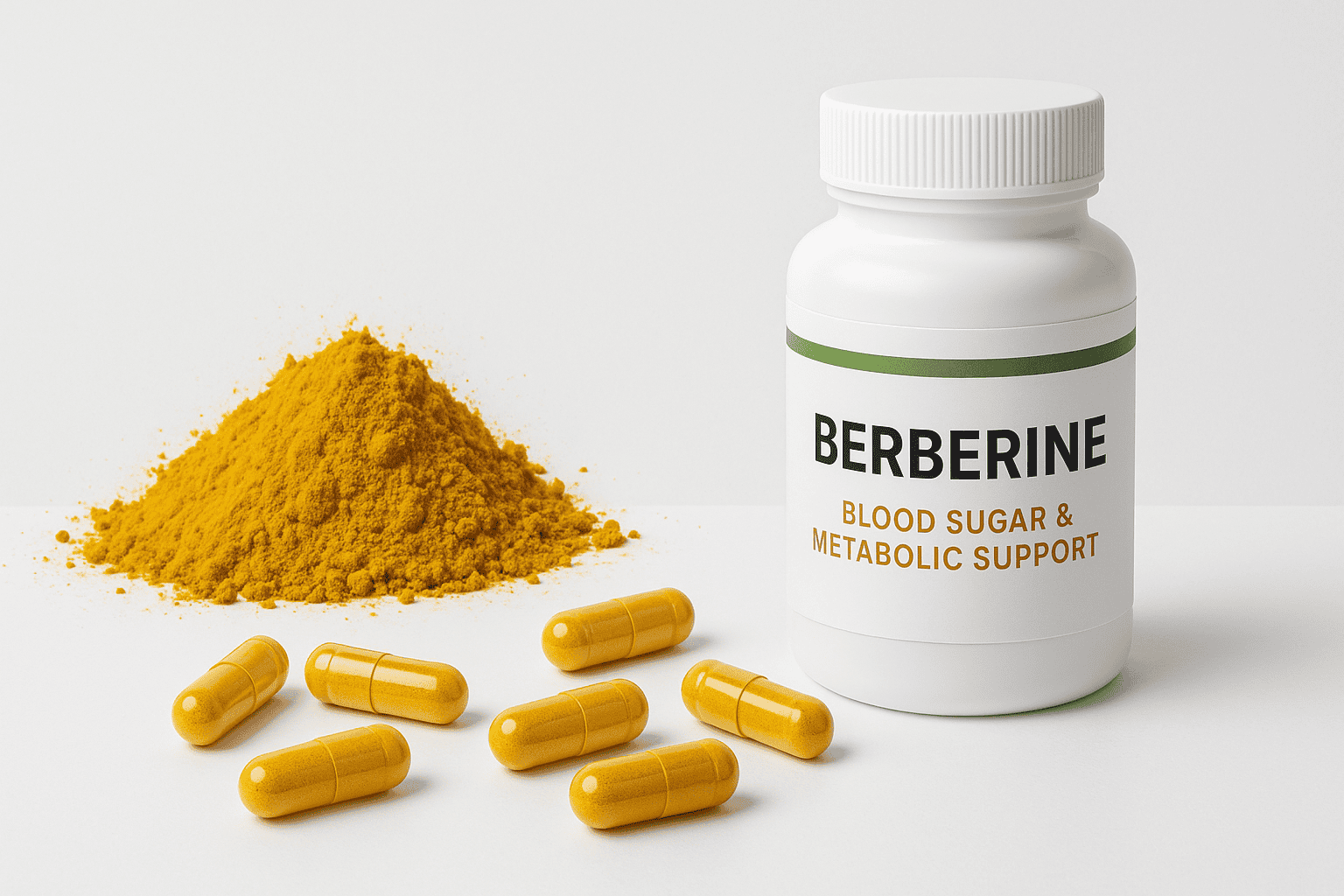
Quick Answer: Berberine is generally well tolerated in short-term studies when used at typical doses (often 500 mg two to three times daily with meals), but GI side effects are common and drug interactions can be significant. It should be used cautiously—especially if you take prescription medications for blood sugar, blood pressure, cholesterol, clotting, or immunosuppression. Pregnancy and breastfeeding are contraindications.

Key Takeaways
- Berberine has real pharmacologic activity; treat it with the same respect you would give a medication.
- Most side effects are gastrointestinal and often dose-related.
- Interaction risk is the biggest safety issue, not just mild stomach upset.
- Start low, take with meals, and titrate only if tolerated.
- People on multiple prescriptions should get pharmacist or clinician review before use.
- Short-term trial data are stronger than long-term safety data.
Why Safety Conversations Around Berberine Need to Be Serious
Berberine is frequently discussed in “wellness” language, but it acts more like a drug than a casual micronutrient. Its metabolic effects are exactly why people use it for blood sugar and lipid goals. The same biological potency also means side effects, interactions, and individual variability matter.
In other words: the supplement label does not guarantee low risk.
Common Side Effects (and How Often They Matter)
The most common adverse effects are GI-related:
- Nausea
- Bloating
- Cramping
- Loose stools or diarrhea
- Constipation (in some users)
These effects are usually most noticeable in the first 1–2 weeks and often improve with dose adjustment.
Why GI effects happen
Berberine has low oral bioavailability and significant effects in the gut-liver axis. That combination can irritate digestion in sensitive users, especially with large starting doses.
Practical ways to reduce GI issues
- Start at 500 mg once daily for several days
- Take doses with meals, not on an empty stomach
- Increase gradually to the target dose
- Split dosing rather than taking a single large bolus
- Pause and reassess if GI symptoms are persistent or severe
Serious Safety Topic: Drug Interactions
This is the most important section for most adults.
Berberine can affect drug-metabolizing enzymes and transport systems, which may change blood levels of co-administered medications. The degree of impact varies, but the risk is real enough to require review when prescriptions are involved.
Higher-priority interaction zones
- Diabetes medications (insulin, sulfonylureas, metformin add-on contexts): additive glucose-lowering can increase hypoglycemia risk.
- Anticoagulants/antiplatelets: theoretical and practical concerns about altered metabolism or bleeding risk need clinician guidance.
- Statins and certain cardiovascular drugs: potential metabolism interactions may alter exposure.
- Immunosuppressants (e.g., transplant settings): never self-start berberine in this context.
- Polypharmacy in older adults: cumulative interaction complexity increases quickly.
If you are on multiple meds, the safest path is a pharmacist-led interaction screen before first dose.
Dosing: Evidence-Informed, Tolerance-First
Common study protocol
- 500 mg, two to three times daily with meals
- Daily total often 1,000–1,500 mg
Smart titration framework
- Days 1–5: 500 mg once daily with food
- Days 6–10: 500 mg twice daily if tolerated
- Day 11 onward: up to 500 mg three times daily if needed and tolerated
This protects adherence and lowers drop-out due to GI distress.
Duration and reassessment
Many trials are 8–16 weeks. For practical use, reassess at 8–12 weeks:
- fasting glucose/HbA1c trends (if relevant)
- GI tolerance
- medication changes
- whether benefit justifies continuation
Long-term continuous use should be individualized with clinical oversight.
Who Should Avoid Berberine
Do not use unless explicitly cleared by your physician if any of the following apply:
- Pregnancy
- Breastfeeding
- Pediatric use (insufficient routine safety data)
- Complex liver or kidney disease without medical supervision
- Upcoming surgery/procedures requiring medication planning
- High-risk medication regimens where interaction consequences are serious
When in doubt, defer to medical review instead of “trial and error.”
Product Quality and Label Reliability
Another safety variable is product quality. Supplement quality can vary by brand and lot.
Choose products that provide:
- Third-party testing or verification
- Clear per-capsule berberine amount
- Transparent ingredient list (avoid vague “proprietary blends”)
- Reasonable dosing instructions aligned with published protocols
“More ingredients” is not automatically better; it can increase uncertainty and interaction complexity.
Monitoring Checklist for Safer Use
Before starting:
- List all meds/supplements
- Review for interactions
- Clarify your target outcome (blood sugar, triglycerides, metabolic support)
During use:
- Track GI tolerance daily for first 2 weeks
- Watch for symptoms of low blood sugar if on diabetes meds
- Recheck objective markers after ~8–12 weeks when appropriate
Stop and seek care if:
- persistent severe GI symptoms
- dizziness, faintness, or hypoglycemia symptoms
- unusual bruising/bleeding if on clotting-related medications
- any reaction that feels out of proportion
Lab and Follow-Up Considerations
If you and your clinician decide berberine is appropriate, objective follow-up can make use safer and more rational. Depending on your goals and medical context, useful checks may include fasting glucose, HbA1c, lipid panel, blood pressure logs, and a focused review of side effects. In higher-risk cases, timing these checks around medication adjustments is especially important.
It also helps to document timing and dose in a simple tracker. Many tolerability problems are dose-pattern problems rather than ingredient problems. A person who jumps from zero to full-dose three times daily often reports far more GI disruption than someone who titrates gradually with meals and hydration.
Finally, reassess whether you still need berberine once your broader routine improves. Supplements should serve your plan, not become permanent defaults without periodic review.
Internal Berberine Cluster Links
For a full decision framework, use these related guides:
- Parent guide: Best Berberine Supplements in 2026
- Berberine and Blood Sugar: What the Clinical Evidence Actually Shows
- Berberine and Weight Loss: What It Can Do and What It Can’t
- Berberine vs. Metformin: Evidence, Safety, and Use Cases
FAQ
Is berberine safe for most adults?
It is often tolerated short term, but “safe for most” depends heavily on medication profile and health conditions. Interaction screening is essential.
What is the most common side effect?
GI symptoms (nausea, bloating, cramping, bowel changes) are most common, especially at higher starting doses.
Can I take berberine with metformin?
Sometimes yes, but only with clinician oversight and blood sugar monitoring due to additive effects.
Should berberine be cycled?
There is no universal rule. Reassessment every 8–12 weeks is practical, and long-term plans should be individualized.
Is taking more berberine better?
Not usually. Higher doses often increase side effects without proportionally better outcomes.
Can I use berberine while pregnant?
No. Pregnancy and breastfeeding are standard contraindication zones for self-directed berberine use.
Bottom Line
Berberine can be a useful metabolic support supplement, but safety should be handled proactively. The biggest mistakes are starting too high, ignoring GI tolerance, and overlooking interactions with prescriptions. Start low, take with meals, screen medications, and reassess objectively.




Leave a Reply